1950s Vintage Snapshot Boys Backyard Camp Feather Headbands
📸 Click any thumbnail to inspect Front, Back & Angles (2 Photos)
🔗 Embed / Cite This Archival Image (Free with Attribution)Get HTML Code
© USA RESELL. Bloggers, historians, and website owners may embed this image for free by copying the HTML code below (which includes the required credit link back to this page):
USA RESELL is a living historical archive. Because original artifacts are one-of-a-kind and source records change rapidly, use the button above to check live marketplace availability or locate surviving examples. As an eBay Partner, we may earn a commission on qualifying purchases.
Item Specifications
- Type: Photograph
- Original/Licensed Reprint: Original
- Subject: Children and Youth
- Theme: Americana Domestic and Family Life
- Time Period Manufactured: 1950-1959
- Year of Production: 1955
- Category: Vintage Photography
- Format / Type: Snapshots
Historical Context & Overview
Mid-Century Suburban Play and Outdoor Adventures
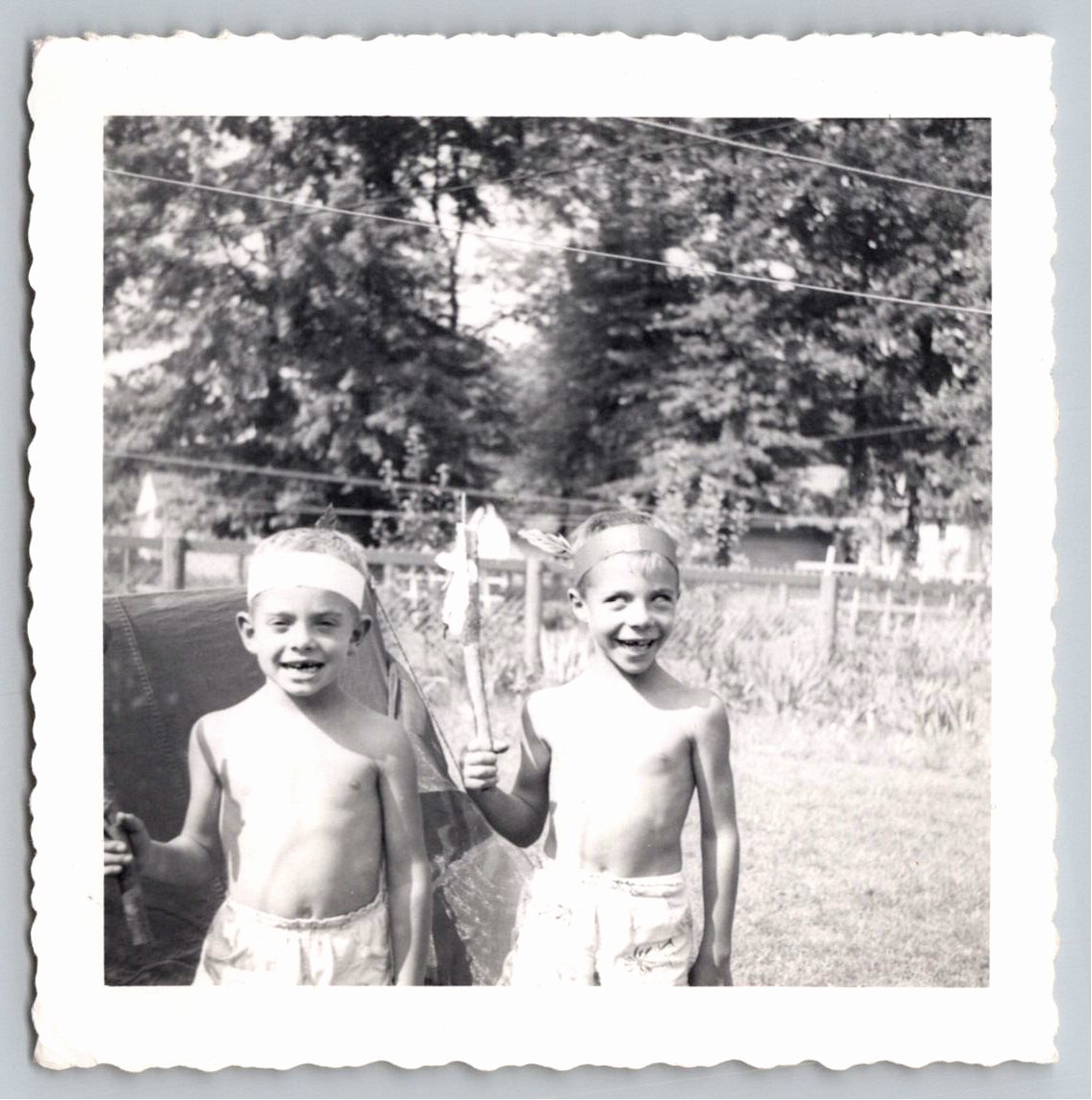
Sunlight, boundless imagination, and spontaneous backyard adventure define this authentic 1950s vernacular photograph. Captured on a bright summer afternoon, the composition showcases two energetic young boys fully immersed in imaginative outdoor roleplay. Sporting handmade feather headbands, the pair beam with wide, uninhibited smiles while clutching makeshift wooden branches as ceremonial play sticks. To the left, the dark sloped fabric of a modest canvas pup tent establishes their open-air campsite, creating a charming focal point of childhood resourcefulness within a safe domestic perimeter.
The background scenery provides an evocative glimpse into post-war American residential living. Softly diffused leafy treetops rise against an open sky, intersected by horizontal overhead utility wires typical of mid-century suburban developments. A weathered wooden picket fence and tall garden foliage outline the boundary of the yard, grounding the image in the quintessential neighborhood atmosphere of the baby boom era. The composition radiates unaffected warmth, preserving a momentary vignette of unrestrained youth where everyday backyard plots transformed into expansive wilderness territories.
The Cultural Tapestry of 1950s Vernacular Photography
During the post-World War II period, amateur family photography experienced an unprecedented golden age across the United States. Affordable, user-friendly roll-film cameras, such as the ubiquitous Kodak Brownie and similar box and viewfinder models, placed image-making into the hands of ordinary parents. Rather than formal studio portraits with stiff postures and artificial backgrounds, families embraced candid snapshots that documented real-life routines, seasonal holidays, and spontaneous play. This snapshot epitomizes that cultural shift, capturing the authentic vitality of mid-century childhood without theatrical staging.
Backyard camping and classic outdoor games were staples of American youth culture in the 1950s, heavily reinforced by popular television westerns, Scouting handbooks, and adventure serials. Children routinely spent whole afternoons outdoors creating spontaneous games out of simple household goods, tree limbs, and surplus canvas tarps. Through the unpretentious lens of vernacular photography, this picture preserves not only the personal memories of two energetic boys, but also the broader cultural fabric of an era centered around domestic stability, neighborhood freedom, and creative exploration.
Physical Attributes, Format, and Collector Appeal
This original black and white print exhibits the distinctive material qualities favored by commercial photo-finishing laboratories of the mid-1950s. Measuring exactly 3.5 by 3.5 inches, the print is framed by decorative scalloped deckle borders cut by specialized laboratory rotary trimmers. Developed using traditional gelatin silver emulsion on sturdy paper stock, the photograph displays natural tonal gradation, crisp highlights on sunlit skin, and rich mid-tone values across the outdoor greenery and canvas tenting.
The reverse side of the photographic paper is entirely blank, exhibiting gentle, natural age toning along the perimeter and a very faint printer's stray mark at the lower margin. Free of album adhesive, scrapbook paper residue, structural tears, or surface creasing, the physical artifact survives in remarkably clean vintage condition. For curators and enthusiasts of vernacular photography, Americana, and twentieth-century social history, this snapshot offers a wonderfully evocative and pristine artifact of mid-century domestic life.