1930s Vintage Neoclassical Civic Building Photograph Print
📸 Click any thumbnail to inspect Front, Back & Angles (2 Photos)
🔗 Embed / Cite This Archival Image (Free with Attribution)Get HTML Code
© USA RESELL. Bloggers, historians, and website owners may embed this image for free by copying the HTML code below (which includes the required credit link back to this page):
USA RESELL is a living historical archive. Because original artifacts are one-of-a-kind and source records change rapidly, use the button above to check live marketplace availability or locate surviving examples. As an eBay Partner, we may earn a commission on qualifying purchases.
Item Specifications
- City: Unspecified
- Country: United States
- Era: Mid-Century
- Subject: Architecture
- Theme: Americana
- Year of Production: Circa 1930
- Category: Vintage Photography
- Format / Type: Vintage Photographs
Historical Context & Overview
Visual & Historical Overview of American Neoclassical Architecture
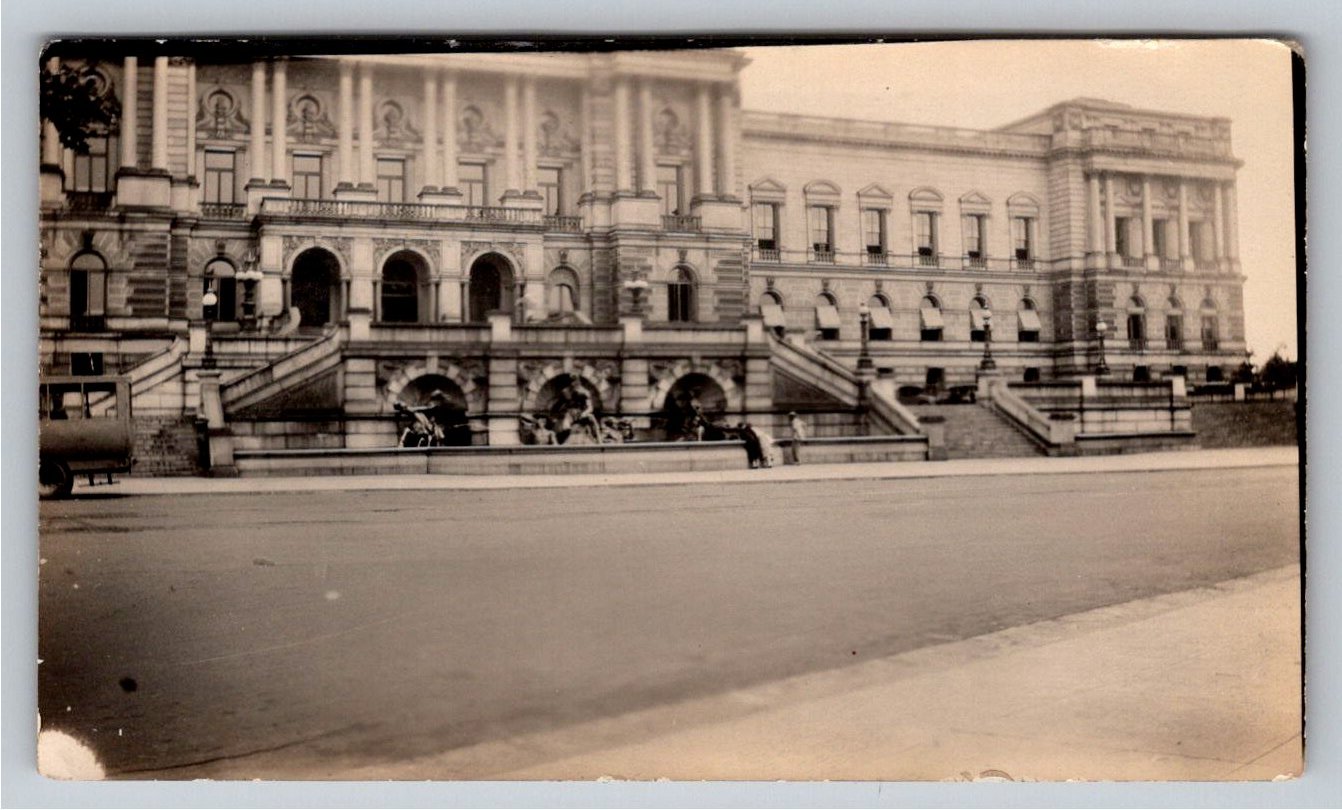
This original black-and-white photograph offers a breathtaking perspective on a monumental public edifice constructed in the classic Neoclassical architectural style. Captured during the 1930s, the image highlights the grandeur of municipal design that defined American public works during the early to mid-20th century. The composition features wide, sweeping stone staircases leading to elevated archways, decorated balustrades, and a row of imposing classical columns that anchor the building's impressive facade.
Framed from across a wide street, the wide-angle view emphasizes the massive scale of the structure in relation to the surrounding landscape. Daylight illuminates the intricate stonework, casting subtle shadows that accentuate the relief carvings, window awnings, and decorative lampposts lining the walkways. The snapshot preserves a moments-in-time slice of historic civic infrastructure, reflecting the optimism and permanent aesthetic values embedded in municipal architecture of the era.
Monuments of Public Design in the 1930s Era
During the 1930s, American architectural projects frequently embraced Neoclassical and Beaux-Arts influences to convey stability, civic pride, and historic continuity. Buildings such as courthouses, libraries, and government centers were designed as enduring monuments meant to inspire public trust. The combination of arched entryways, rusticated lower masonry levels, and symmetrical classical columns shown here represents the gold standard of public construction across major American municipalities during this transformative period.
Street-level details visible in the photograph, including period vehicle silhouettes along the edge and vintage outdoor lighting fixtures, ground the scene firmly in its 1930-1939 timeline. While the exact city remains unrecorded, the stylistic elements strongly point to a prominent state capitol, county seat, or major federal building from the height of early 20th-century urban expansion.
Physical Print Characteristics & Collector Provenance
Measuring approximately 2.4 by 4.2 inches, this vintage snapshot is an authentic gelatin-silver print produced on period matte paper stock. The photographic print displays deep tonal range, crisp contrast, and subtle gradations from deep black shadows to soft mid-tone grays across the stone facade. The reverse side of the print remains entirely blank, free of studio marks, writing, or postal graphics, preserving its status as a clean original personal camera print.
The piece remains in handsome vintage condition, showcasing gentle signs of age consistent with a mid-century archival artifact. Delicate silvering along high-contrast areas, light edge handling, and natural paper toning along the borders add undeniable historic character. Ideal for framing, architectural archives, or black-and-white photography collections, this photograph stands as a remarkable visual artifact of historic American architecture.