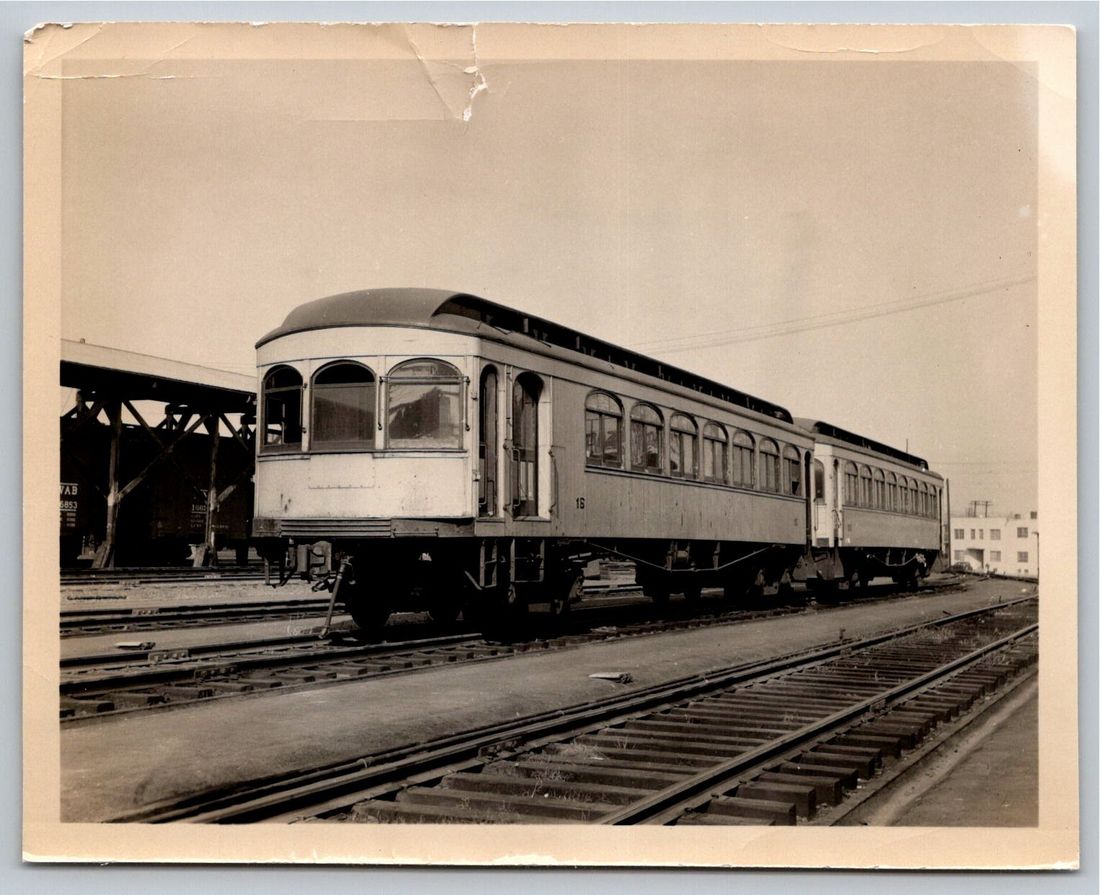
1930s Electric Interurban Trolley Car 16 Photo Print
📸 Click any thumbnail to inspect Front, Back & Angles (2 Photos)
🔗 Embed / Cite This Archival Image (Free with Attribution)Get HTML Code
© USA RESELL. Bloggers, historians, and website owners may embed this image for free by copying the HTML code below (which includes the required credit link back to this page):
USA RESELL is a living historical archive. Because original artifacts are one-of-a-kind and source records change rapidly, use the button above to check live marketplace availability or locate surviving examples. As an eBay Partner, we may earn a commission on qualifying purchases.
Item Specifications
- City: Unspecified
- Country: United States
- Era: 1930-1939
- Subject: Interurban Streetcar Trolley Wabash Railroad
- Theme: Transportation
- Original/Licensed Reprint: Original Vintage
- Category: Vintage Photography
- Format / Type: Vintage Photographs
Historical Context & Overview
Mid-Century Transit History: The Electric Interurban Era
During the early to mid-20th century, electric interurban railways formed the connective backbone of American regional transportation. Combining the rapid, clean power of electric propulsion with heavy-duty rail infrastructure, these interurban cars moved passengers efficiently between outlying towns and dense urban hubs well before municipal buses and personal automobiles dominated the landscape.
This authentic original gelatin-silver photograph captures electric interurban car number 16 sitting idle on heavy steel trackage within an active rail yard environment. Measuring 4.8 by 3.8 inches, the image offers a rich perspective on early industrial rail design, showcasing the vehicle's distinctive arched window framing and heavy composite body construction characteristic of 1930s transit craftsmanship.
Rail Yard Detail and Contextual Features
Beyond the primary focal point of car 16, the photo contains compelling background details that contextualize the era's freight and passenger interchange systems. Visible in the background is an open shed structure alongside a Wabash Railroad freight car designated WAB 6853. This co-location highlights the close physical relationship between electric passenger lines and traditional steam or diesel freight infrastructure during the golden age of American railroading.
Photographic Medium and Collector Value
Printed on classic matte photographic paper, this silver gelatin print exhibits deep contrast, sharp resolution, and impressive tonal balance. The back of the print remains plain and unprinted, featuring mild natural age toning that confirms its origin as a genuine period snapshot rather than a commercial photograph reprint.
Preserved in good vintage condition with minor handling wear along the top edge margin, this piece serves as a remarkable primary visual document for transit historians, streetcar enthusiasts, and collectors of vintage transportation photography.
1930s Vernacular Rail Photography and Fleet Documentation
During the Great Depression era, a dedicated subculture of line-side transit enthusiasts and amateur photography hobbyists emerged across North America. Armed with accessible folding cartridge cameras, these early railfans captured candid snapshot records of individual working vehicles like Car 16 operating across localized electric networks. Photographs from this transitional decade are particularly valuable, as the 1930s represented a pivotal moment when interurban operators maintained aging rolling stock beside active steam railroad interchange points. Vernacular visual records like this print preserve authentic operational nuances—including yard staging routines, heavy dual-coupler setups, and localized fleet numbering—that formal corporate promotional archives frequently overlooked prior to mid-century line retirements.
Archival Preservation and Framing Considerations
To ensure this original snapshot maintains its rich tonal depth and physical integrity for decades to come, proper archival housing is essential for serious transit historians and paper ephemera collectors. Given its matte photographic finish and classic physical footprint, the print displays exceptionally well when mounted in an acid-free, custom window mat paired with UV-filtering glass. Displaying the image in a climate-controlled environment away from direct sunlight prevents emulsion oxidation and paper embrittlement, preserving the sharp focus of the rail yard environment. Whether housed within a dedicated railroadiana collection binder or custom-framed for wall display, this piece offers a compelling historical doorway into early American electric transport.