1940s African American Woman Relaxing in Garden Snapshot
📸 Click any thumbnail to inspect Front, Back & Angles (2 Photos)
🔗 Embed / Cite This Archival Image (Free with Attribution)Get HTML Code
© USA RESELL. Bloggers, historians, and website owners may embed this image for free by copying the HTML code below (which includes the required credit link back to this page):
USA RESELL is a living historical archive. Because original artifacts are one-of-a-kind and source records change rapidly, use the button above to check live marketplace availability or locate surviving examples. As an eBay Partner, we may earn a commission on qualifying purchases.
Item Specifications
- Type: Photograph
- Production Technique: Gelatin-Silver Print
- Original/Licensed Reprint: Original
- Image Color: Black and White
- Material: Paper
- Finish: Matte
- Category: Vintage Photography
- Format / Type: Snapshots
Historical Context & Overview
Visual & Historical Overview of the Mid-Century Backyard Portrait
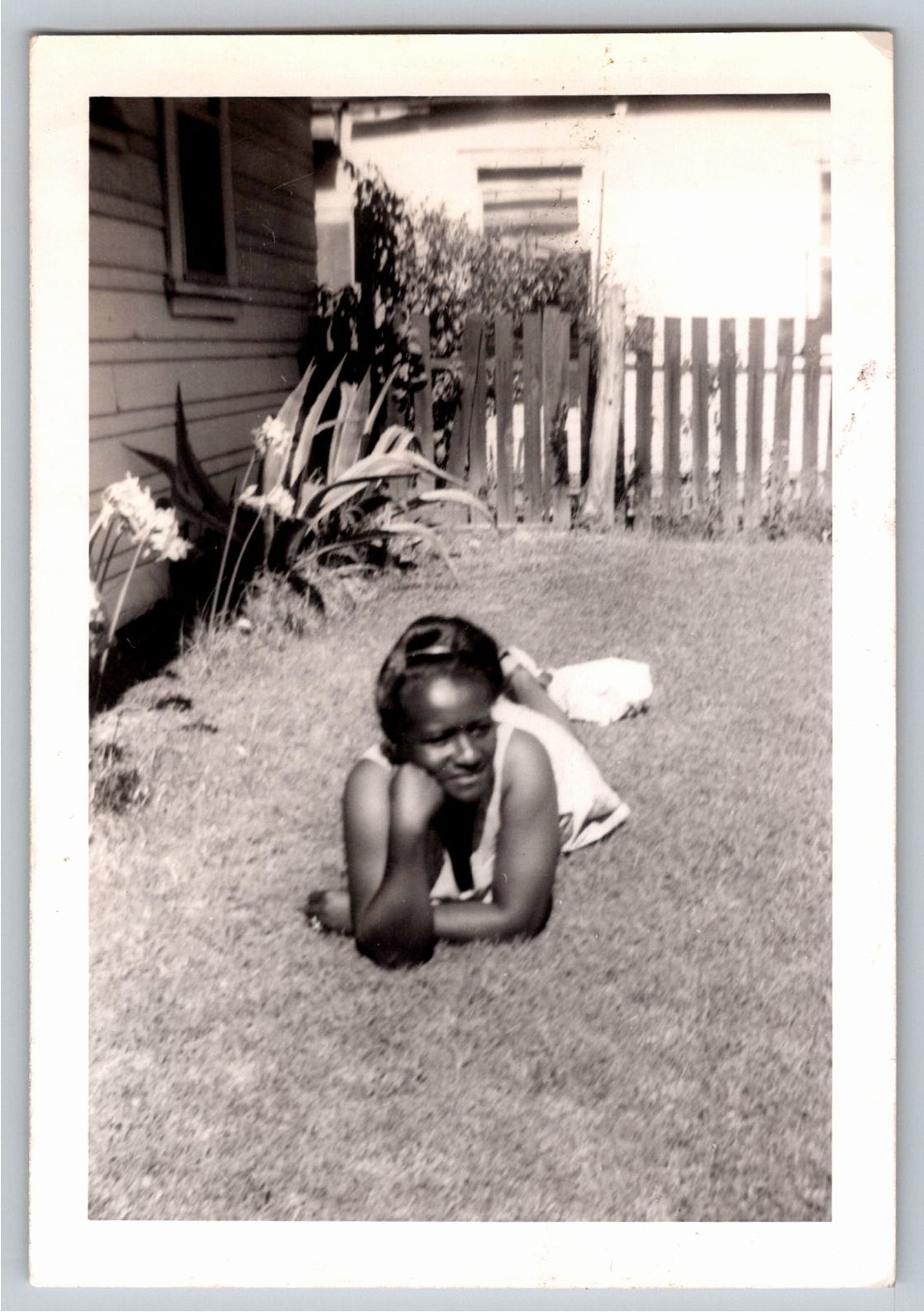
This striking original black-and-white gelatin silver photograph captures a tender, peaceful scene from mid-century American domestic life. Centered in the composition, an African American woman reclines comfortably prone on an open grassy lawn, gently propping her head up with her hand while gazing thoughtfully toward the camera. Her casual warm-weather attire and styled hair speak directly to the personal fashions of the 1940s era, presenting an intimate and candid portrayal rarely depicted in mainstream commercial media of the period.
The outdoor domestic setting provides an evocative window into mid-20th-century residential architecture and landscape design. In the background, tall architectural irises bloom alongside the horizontal wood clapboard siding of a private residence. Beyond the grass stands a rustic vertical picket fence framing adjacent foliage, bathed in strong, direct natural sunlight. The composition radiates warmth and leisure, framing a private backyard sanctuary away from the rapid industrial and social transformations of the mid-1940s.
Vernacular Black Americana and Domestic Candid Photography
Photographic documentation of everyday African American home life during the 1940s remains profoundly important for social historians and visual archivists. Throughout this transformative decade, personal cameras enabled families to author their own visual narratives, creating an unfiltered record of quiet relaxation, family heritage, and domestic pride. Rather than staged commercial studio portraits, snapshots like this emphasize genuine comfort, individual personality, and private moments of repose within personal spaces.
The reverse side of the print is clean and unwritten, bearing only a small processing control mark stamped in blue ink reading "1798" along the lower margin. Such numerical production stamps were typical of regional photo-finishing laboratories during the 1930s and 1940s, applied when film rolls were developed and printed in bulk for everyday consumers. This understated marking underscores the vernacular authenticity of the print, confirming its status as an unvarnished personal memento preserved through generations.
Print Medium, Condition, and Collector Significance
Developed on vintage photographic paper with traditional white borders, this gelatin silver print measures approximately 3.4 inches by 5.0 inches. The image features a smooth matte finish with well-preserved tonal range, demonstrating deep shadow values in the subject’s hair and attire balanced against the bright highlights of the sunlit lawn and garden flowers. The central subject remains sharply rendered, showcasing the fine detail captured by period roll-film optics.
Physically, the photograph is in very good vintage condition, exhibiting modest edge toning and gentle handling along the perimeter consistent with careful family album storage. The margins remain intact without severe tears, heavy creases, or structural losses. For collectors of mid-century Americana, African American cultural history, and original vernacular snapshot photography, this print stands as an evocative and historically valuable original artifact.