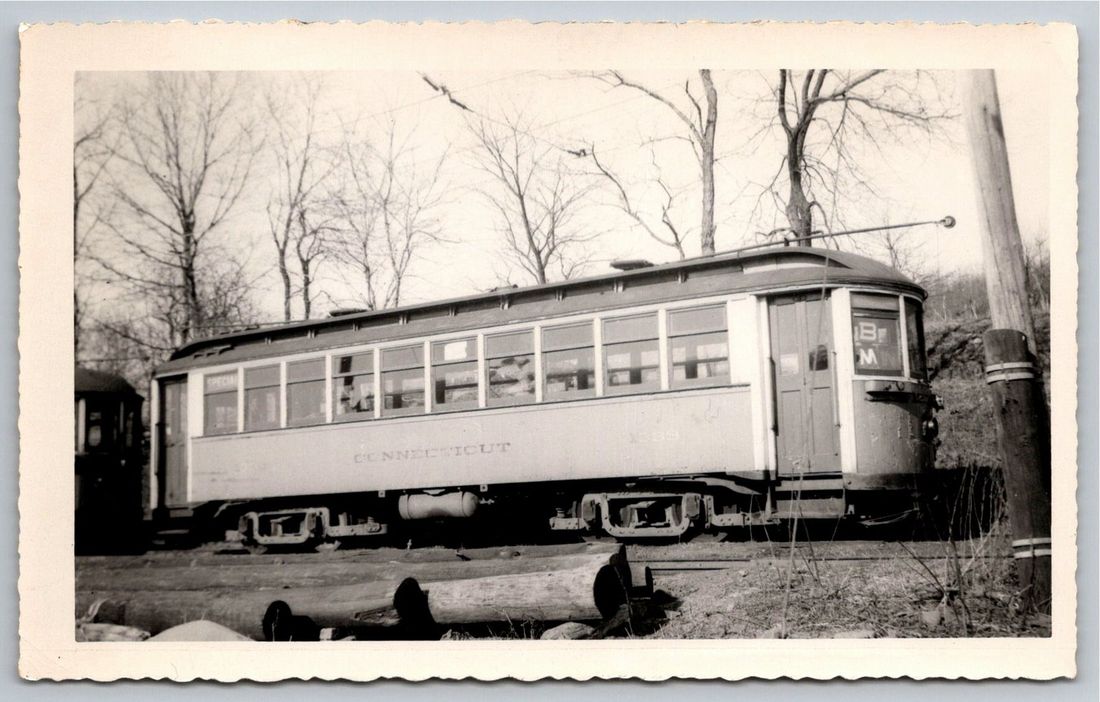
1940s Connecticut Company Streetcar No 1339 Photo New Haven
📸 Click any thumbnail to inspect Front, Back & Angles (2 Photos)
🔗 Embed / Cite This Archival Image (Free with Attribution)Get HTML Code
© USA RESELL. Bloggers, historians, and website owners may embed this image for free by copying the HTML code below (which includes the required credit link back to this page):
USA RESELL is a living historical archive. Because original artifacts are one-of-a-kind and source records change rapidly, use the button above to check live marketplace availability or locate surviving examples. As an eBay Partner, we may earn a commission on qualifying purchases.
Item Specifications
- City: New Haven
- State: Connecticut
- Country: United States
- Era: 1940s
- Subject: Trolley Streetcar Railway
- Theme: Transportation
- Category: Vintage Photography
- Format / Type: Vintage Photographs
Historical Context & Overview
1940s Electric Rail Transit: Connecticut Company Streetcar No. 1339
This authentic 1940s black-and-white photograph captures a vital piece of southern New England's transit heritage: Connecticut Company Streetcar No. 1339. Operating on the New Haven Division, this double-truck wooden box car represents the mid-century electric traction equipment that once formed the backbone of urban and suburban travel throughout Connecticut. Printed on matte paper stock, the photograph measures 5.6 by 3.5 inches and features decorative scalloped deckled edges classic to mid-20th-century photo finishing.
Design Features and Rolling Stock Details
The image highlights the classic structural lines of Car 1339, including its distinctive steam-roof profile, side window paneling, and fully extended overhead trolley pole assembly designed to draw power from catenary lines. Built with double trucks for enhanced stability along regional tracks, wooden streetcars of this design were ubiquitous across New Haven's extensive street railway network prior to the widespread conversion to motor buses.
Collector Provenance & Preservation History
The reverse side of the photograph offers rich historical context documented by past rail historians. Inscribed in blue cursive ink are notes detailing the vehicle's specifications as a wooden double-truck car from the Connecticut Company's New Haven Division. The annotations further record its eventual acquisition by the Branford Electric Railway Association (now widely known as the Shore Line Trolley Museum), noting that the preserved car remained in its original operational configuration.
Additionally, the back bears an original collector stamp from Edward G. Schimke of Hartford, Connecticut, alongside an inverted numeric control mark. Serving as an authentic visual document of American street railway history, this piece provides a window into the golden age of electric transit in New England.
Mid-Century Photographic Processing & Physical Characteristics
Produced around 1945, this photograph utilizes the classic gelatin-silver printing technique standard to mid-20th-century image making. The choice of a smooth matte paper finish reduces surface glare, allowing subtle tonal shifts between shadow areas and bright highlights along the streetcar body to remain remarkably clear. Natural aging over the decades has imparted a soft patina without compromising the structural clarity of Car 1339 or its immediate surroundings. The decorative scalloped border—achieved through specialized deckled cutting blades popular in 1940s photofinishing labs—frames the composition while reinforcing its authenticity as an original period print.
Electric Traction Legacy & Regional Archival Value
During the 1940s, urban transit companies throughout the northeastern United States faced increasing pressure from motor bus adoption and post-war automotive expansion, making contemporary images of operational wooden streetcars exceptionally valuable to researchers. Regional historical collectors like Edward G. Schimke performed an essential service by systematically documenting Connecticut's disappearing electric rail lines before complete service abandonments took effect. By combining clear physical provenance with meticulous handwritten notes on rolling stock specifications, original prints like this serve as vital primary source material for transportation scholars and traction history enthusiasts alike.