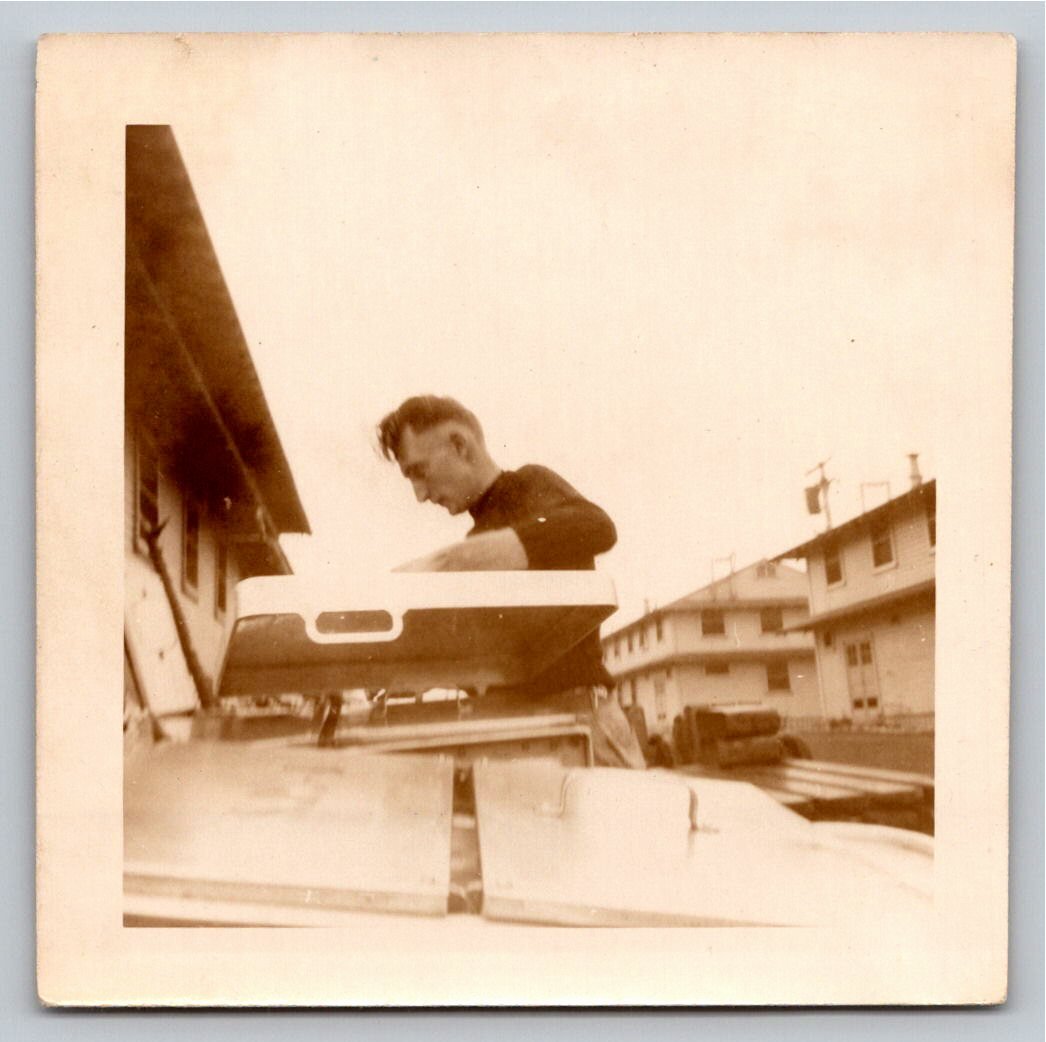
1940s WWII Military Base Barracks Soldier Snapshot Photo
📸 Click any thumbnail to inspect Front, Back & Angles (2 Photos)
🔗 Embed / Cite This Archival Image (Free with Attribution)Get HTML Code
© USA RESELL. Bloggers, historians, and website owners may embed this image for free by copying the HTML code below (which includes the required credit link back to this page):
USA RESELL is a living historical archive. Because original artifacts are one-of-a-kind and source records change rapidly, use the button above to check live marketplace availability or locate surviving examples. As an eBay Partner, we may earn a commission on qualifying purchases.
Item Specifications
- City: Unspecified
- Country: United States
- Era: 1940s
- Subject: Military Personnel Barracks Camp Life
- Theme: Militaria Americana
- Year of Production: 1945
- Category: Vintage Photography
- Format / Type: Snapshots
Historical Context & Overview
Visual & Historical Overview of Military Camp Life
Captured during the 1940s, this candid gelatin-silver snapshot provides an unvarnished window into the daily operational environment of the United States military during the Second World War era. The composition centers on a young serviceman sporting a quintessential wartime high-and-tight fade haircut, caught mid-action as he leans forward to inspect or pack large metal utility boxes and storage containers. Rather than posing formally in dress uniform, the soldier is captured in work attire, emphasizing the constant logistical and maintenance tasks that sustained armed forces away from the front line.
The outdoor setting reveals vital architectural elements indicative of rapid mid-century military infrastructure. In the background, prominent two-story wooden barracks rise against an overcast sky, characterized by standard military cantonment architecture featuring repetitive sash windows, gabled rooflines, and exterior utility lines. These standardized wooden structures were erected by the thousands across military training camps and bases throughout the United States during the World War II mobilization effort, making the physical background an unmistakable marker of the period.
Logistical Routines and Photographic Provenance
Wartime candid photographs often capture details overlooked by official institutional propaganda, and this image highlights the practical reality of supply handling and base upkeep. The heavy metal chests and lidded crates arranged in the foreground illustrate the durable containers used to transport gear, personal effects, or technical equipment across duty stations. The natural light falling across the lids and the soldier's focused expression give this everyday scene an authentic, documentary weight that speaks to the shared experience of millions of recruits moving through mobilization centers.
The reverse of the photograph provides tangible historical context regarding its domestic processing. Imprinted across the back paper surface is a faint diagonal watermark for Eastman Kodak's "Velox" paper, a staple emulsion used widely by commercial photofinishers and home darkroom hobbyists during the 1930s and 1940s. Additionally, a distinctive purple ink laboratory control stamp reading "371U" appears along the bottom edge, denoting the specific photofinishing batch or roll identification assigned by the processing studio when the roll film was developed.
Physical Attributes, Preservation & Collector Significance
Physically, this square-format vintage snapshot measures approximately 3.2 inches by 3.2 inches and retains its original white border margins, typical of roll film cameras popular among service members such as Kodak Brownies or similar medium-format snapshot cameras. The silver gelatin print exhibits a delicate tonal balance, featuring warm sepia-tinged silver values that preserve sharp contrast between the highlighted edges of the storage trunks and the darker tones of the soldier's shirt.
The photograph remains in good vintage condition, exhibiting honest signs of careful handling over several decades. Light edge toning, subtle softening at the extremities, and modest handling marks along the paper border reflect its authentic age without distracting from the central scene. Completely free from severe tears or disfiguring creases, this snapshot stands as an evocative historical artifact, perfect for enthusiasts of World War II military Americana, base architecture, and vernacular 20th-century photography.