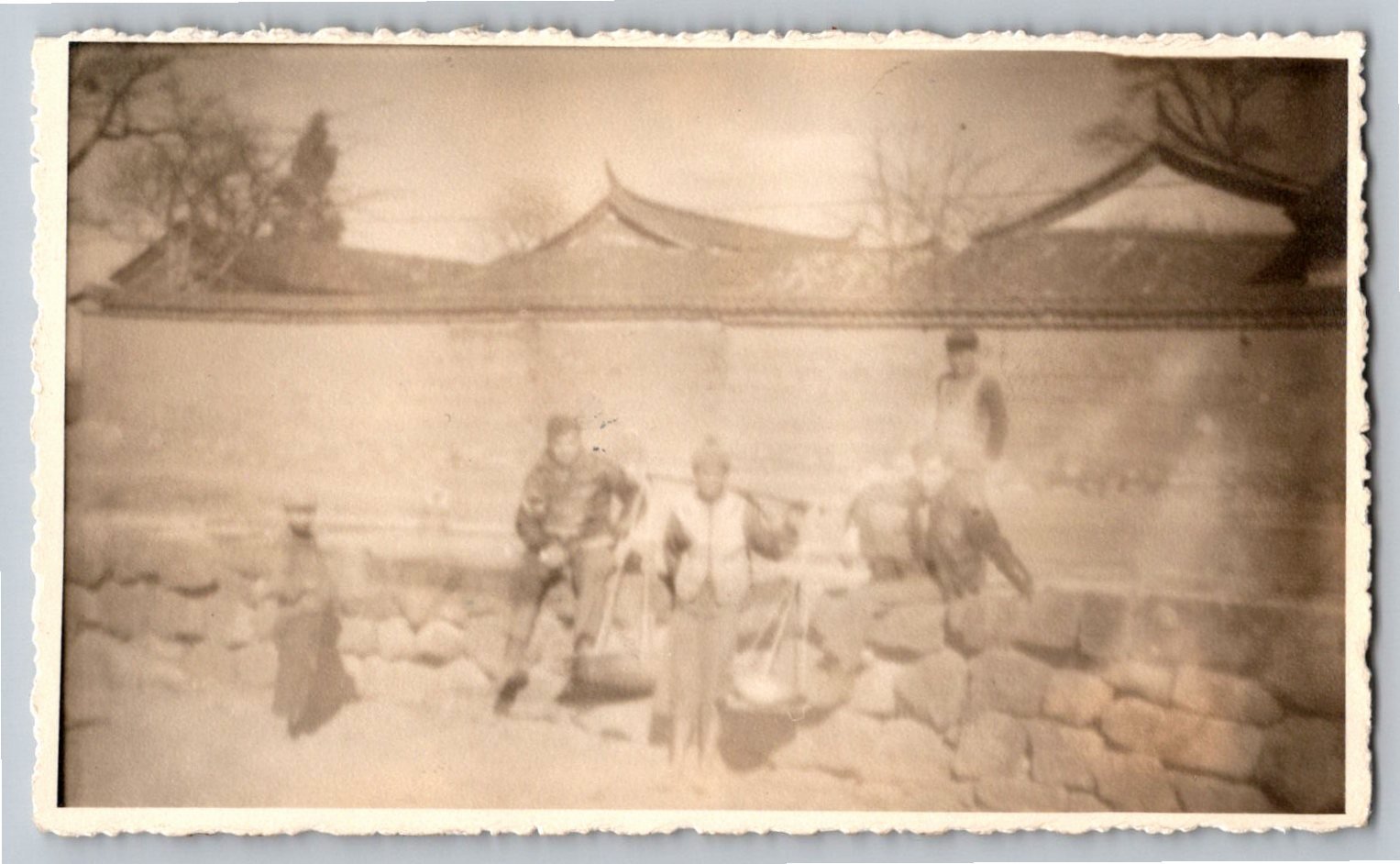
1940s East Asia Snapshot Carrying Pole Vendor Wall Photo
📸 Click any thumbnail to inspect Front, Back & Angles (2 Photos)
🔗 Embed / Cite This Archival Image (Free with Attribution)Get HTML Code
© USA RESELL. Bloggers, historians, and website owners may embed this image for free by copying the HTML code below (which includes the required credit link back to this page):
USA RESELL is a living historical archive. Because original artifacts are one-of-a-kind and source records change rapidly, use the button above to check live marketplace availability or locate surviving examples. As an eBay Partner, we may earn a commission on qualifying purchases.
Item Specifications
- Type: Photograph
- City: Unspecified
- Country: United States
- Era: Mid-20th Century
- Subject: People Street Vendor Carrying Pole Traditional Architecture
- Theme: History Daily Life Asian Culture
- Category: Vintage Photography
- Format / Type: Snapshots
Historical Context & Overview
Visual & Historical Overview: Candid Labor in Mid-Century East Asia
This evocative original mid-20th-century snapshot offers a compelling window into everyday community life in East Asia, captured during the 1930s to 1940s. At the focal point of the composition stands a regional street laborer balancing a resilient shoulder yoke, or carrying pole, rigged with suspended baskets on either side. Gathered around him are several men and local youths taking a moment of respite alongside an imposing retaining wall composed of cut stone and rough masonry. Their casual postures and direct engagement convey an unvarnished authenticity rarely found in staged studio portraits of the period.
Rising prominently above the immediate street scene, an expansive compound wall gives way to sweeping rooftops defined by traditional curved gables and ornate clay tile construction. This distinctive vernacular architecture firmly anchors the scene within historic East Asia, reflecting a landscape where centuries-old design principles coexisted with regional merchant activity. The harmonious interplay between rustic physical infrastructure, domestic architecture, and itinerant working trades provides rich documentary depth to this compact photographic record.
Cultural Significance: The Shoulder Pole and Vernacular Commerce
The carrying pole—known regionally as a biàndān in Chinese tradition—served as an indispensable mode of transit and commerce across East Asian villages and urban lanes for generations. Perfectly balanced across the back of the neck or shoulder, these flexible wooden or bamboo yokes permitted tradesmen, farmers, and peddlers to transport heavy agricultural produce, street food, and household goods through narrow corridors and terraced terrain inaccessible to wheeled vehicles. In this photograph, the suspended twin trays appear ready to transport wares, demonstrating the ingenuity of everyday subsistence labor prior to post-war industrialization.
Furthermore, candid street snapshots from the Republican and wartime eras provide crucial ethnographic context for social historians. While Western travelers and military personnel frequently carried portable roll-film cameras through ports and interior settlements, unposed interactions like this one captured genuine, unvarnished human moments. The congregation of young men perched on the stone ledge illustrates how public thoroughfares and temple or compound perimeters functioned as vital communal gathering spaces for resting workers and neighborhood residents.
Physical Attributes, Condition, and Archival Appeal
Produced as an authentic gelatin silver print on medium-weight photographic paper, this item measures approximately 4.8 by 2.8 inches. It features classic decorative deckled, or scalloped, borders characteristic of private darkroom processing and commercial amateur photo labs active during the 1930s and 1940s. The reverse side remains completely blank and unprinted, confirming its nature as a genuine personal snapshot rather than a commercial photograph. Its tactile quality and subtle matte finish underscore its mid-century origins.
In terms of preservation, the photograph presents mild, age-appropriate sepia fading across the upper portion, along with natural ambient exposure softness and subtle peripheral edge toning. The paper support remains structurally sound with no deep creases, tears, or structural losses. For collectors of vernacular photography, vintage Asian ethnography, and early travel documentation, this original print represents an irreplaceable historical artifact capturing traditional regional lifeways in a transformative era.