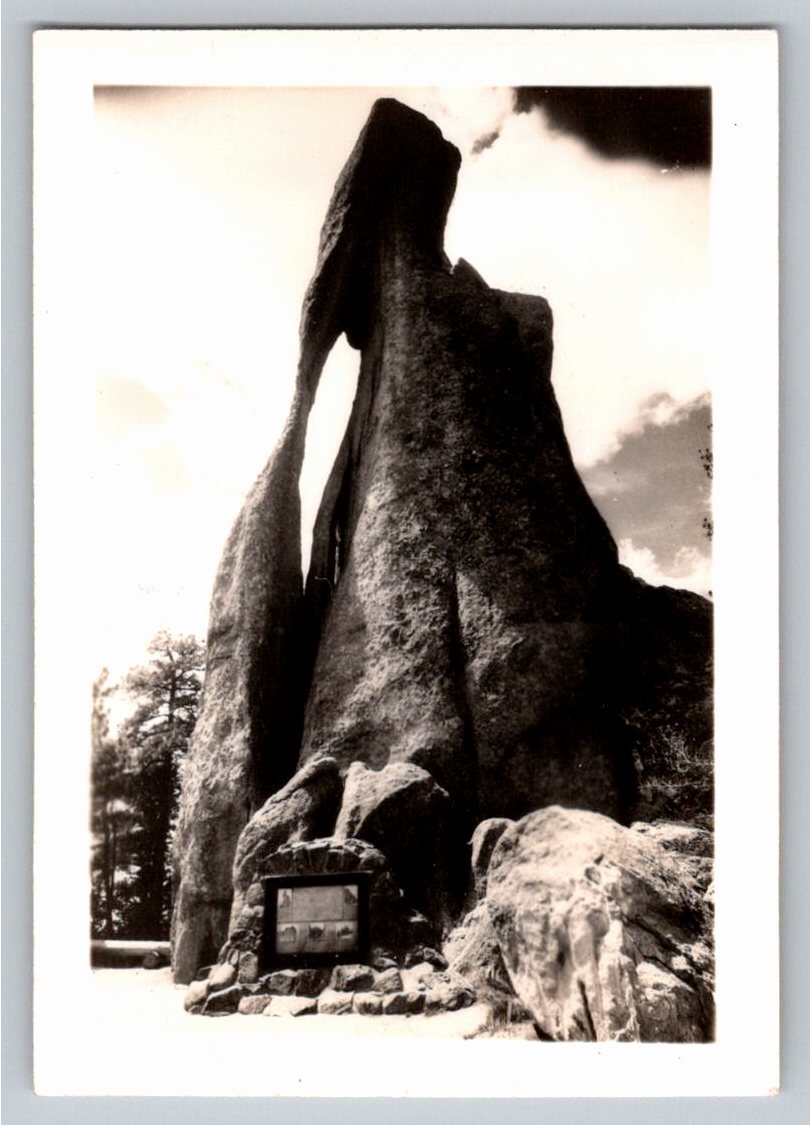
1940 Needles Eye Rock Spire Custer State Park Photo - Mid-Century
📸 Click any thumbnail to inspect Front, Back & Angles (2 Photos)
🔗 Embed / Cite This Archival Image (Free with Attribution)Get HTML Code
© USA RESELL. Bloggers, historians, and website owners may embed this image for free by copying the HTML code below (which includes the required credit link back to this page):
USA RESELL is a living historical archive. Because original artifacts are one-of-a-kind and source records change rapidly, use the button above to check live marketplace availability or locate surviving examples. As an eBay Partner, we may earn a commission on qualifying purchases.
Item Specifications
- City: Custer
- State: South Dakota
- Country: United States
- Era: Mid-Century
- Subject: Needles Eye Rock Formation
- Theme: Americana
- Category: Vintage Photography
- Format / Type: Vintage Photographs
Historical Context & Overview
Visual Overview of the Needle's Eye Formation
Captured in dynamic contrast against a dramatic, cloud-swept sky, this authentic mid-century gelatin silver print depicts the celebrated Needle's Eye rock formation. Located along the winding Needles Highway within South Dakota's Black Hills, the geological marvel stands as a towering granite spire pierced by a slender vertical fissure. The composition emphasizes the sheer verticality of the stone column, framed by native pine boughs and textured foreground boulders, while highlighting the delicate opening carved through the solid rock face.
At the foot of the monolithic spire, an early stone-masonry roadside informational tablet is prominently visible. The marker, constructed from stacked local rock to seamlessly blend with the rugged natural environment, served mid-20th-century motorists touring the scenic corridor. The deep chiaroscuro tones of the print draw out the rough crystalline texture of the ancient granite, immortalizing a signature roadside vista during an iconic era of American highway exploration.
Engineering the Needles Highway and Black Hills Tourism
The Needle's Eye formation is one of the most recognizable natural landmarks within Custer State Park, situated along South Dakota Highway 87. The roadway itself was the ambitious brainchild of South Dakota Governor Peter Norbeck, who personally mapped the route on foot and horseback. Completed in 1922, the roadway was purposefully engineered to navigate around dramatic granite outcroppings, narrow tunnels, and towering natural spires, ensuring visitors experienced the landscape at an intimate, contemplative pace rather than at high speeds.
During the 1930s and 1940s, the emergence of personal automobile travel transformed the Black Hills into a premier family vacation destination. The Needles Highway offered vacationers an engineering marvel that cut directly through the rugged backcountry. Snapshots such as this were treasured keepsakes of cross-country treks, providing motorists tangible evidence of navigating the tight rock clearances, sheer cliffs, and majestic geological sculptures unique to southwestern South Dakota.
Physical Print Characteristics and Collector Value
This original vintage photograph is rendered on traditional glossy photographic paper stock and measures precisely 2.4 by 3.5 inches. It displays classic white border margins typical of personal snapshot formats from the 1940s. The reverse side features a completely unprinted paper back, bearing only a small, period-stamped numeric cataloging imprint reading "13," with no commercial photograph markings, photograph boxes, or mailing lines present.
Preserved in exceptional vintage condition, the photograph exhibits robust silver gelatin tones, deep black values, and clean white highlights. The physical paper remains structurally sound with straight edges and no evidence of tears, creases, pinholes, or abrasive handling wear. As an artifact of mid-century Americana and Western travel ephemera, it represents a pristine historical record of Custer State Park's most enduring landmark.