1943 Willisburg Kentucky Woman in Floral Dress Photo
📸 Click any thumbnail to inspect Front, Back & Angles (2 Photos)
🔗 Embed / Cite This Archival Image (Free with Attribution)Get HTML Code
© USA RESELL. Bloggers, historians, and website owners may embed this image for free by copying the HTML code below (which includes the required credit link back to this page):
USA RESELL is a living historical archive. Because original artifacts are one-of-a-kind and source records change rapidly, use the button above to check live marketplace availability or locate surviving examples. As an eBay Partner, we may earn a commission on qualifying purchases.
Item Specifications
- City: Willisburg
- State: Kentucky
- Country: United States
- Era: 1940s
- Subject: Women Fashion Architecture
- Theme: Americana Domestic and Family Life
- Category: Vintage Photography
- Format / Type: Snapshots
Historical Context & Overview
Visual & Historical Overview: Wartime Summer in Rural Kentucky
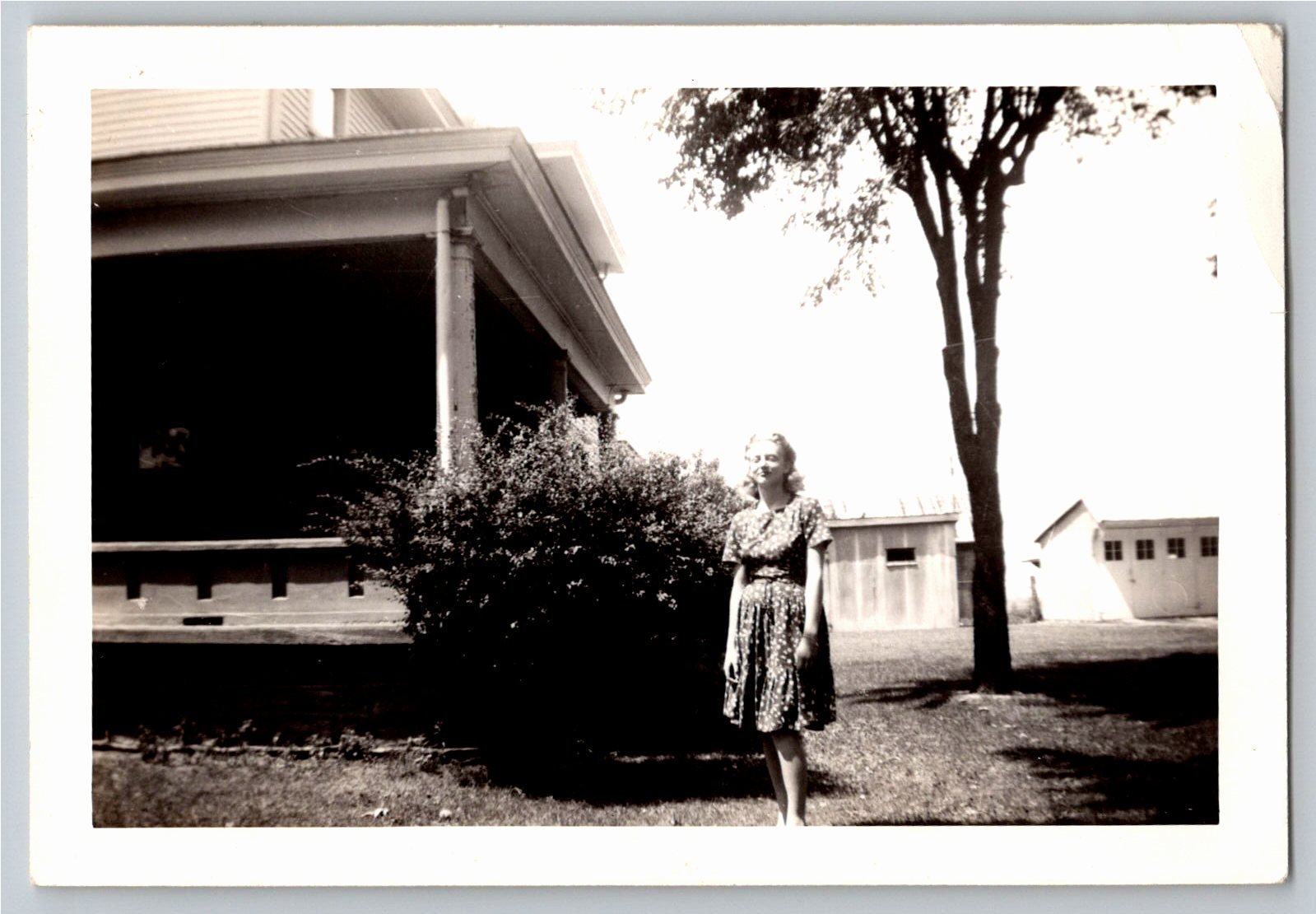
This striking original vintage photograph offers a quiet, unscripted window into civilian life in small-town America during the middle of World War II. Taken in the sunny warmth of August 1943, the composition frames a smiling young woman standing on a manicured residential lawn in Willisburg, Kentucky. Bathed in brilliant outdoor daylight, she wears an quintessential 1940s floral print day dress featuring short sleeves, a cinched belted waist, and a modest, knee-length flared skirt. The natural lighting emphasizes both her relaxed posture and the classic wartime civilian fashion of the era, evoking the timeless spirit of the American domestic homefront.
Behind her looms an attractive two-story residence detailed with prominent architectural columns, decorative porch balustrades, and deep eaves characteristic of early twentieth-century American craftsman styling. A robust ornamental shrub accents the porch foundation, while a mature, slender shade tree rises in the mid-ground. Further back, detached domestic outbuildings and garage structures sit quietly under an expansive summer sky, illustrating the spacious layouts typical of rural Kentucky communities during the 1940s.
Deeper History: Willisburg and Mid-Century Everyday Americana
Willisburg, situated within Washington County, Kentucky, represents the heart of rural bluegrass heritage and agricultural community living. By August 1943, the global conflict of World War II dominated national news, yet domestic family moments like this continued to define everyday resilience across small towns throughout the United States. Casual snapshots captured on family cameras preserved cherished milestones, documenting loved ones at home while brothers, husbands, and neighbors served overseas.
The reverse side of the original print provides invaluable historical documentation inscribed in period blue fountain pen ink: "Joyce - Willisburg, Ky. August, 1943." Stamped neatly along the bottom edge is a classic dark ink developer mark reading "17G," pointing to professional commercial processing common among mid-century drugstores and photography labs. This combination of intimate personal labeling and commercial processing stamps makes the item an evocative artifact of vernacular domestic photography.
Provenance, Physical Dimensions & Collector Significance
Measuring approximately 5.0 by 3.4 inches, this authentic vintage snapshot is rendered on original glossy paper stock with clean white outer borders. The high-contrast tones showcase deep blacks beneath the porch roof and bright highlights across the lawn, demonstrating the tonal richness of genuine mid-century photographic emulsion. It remains in very good vintage condition, exhibiting only light handling wear along the perimeter and a minor faint corner bend consistent with decades of careful placement inside a historic family photo album.
For collectors of vernacular photography, vintage fashion, and World War II homefront memorabilia, this piece stands out for its clarity and contextual documentation. Capturing an identified subject against well-preserved regional architecture, it represents a remarkable tangible slice of mid-century Kentucky social history that will enhance any Americana photographic archive.