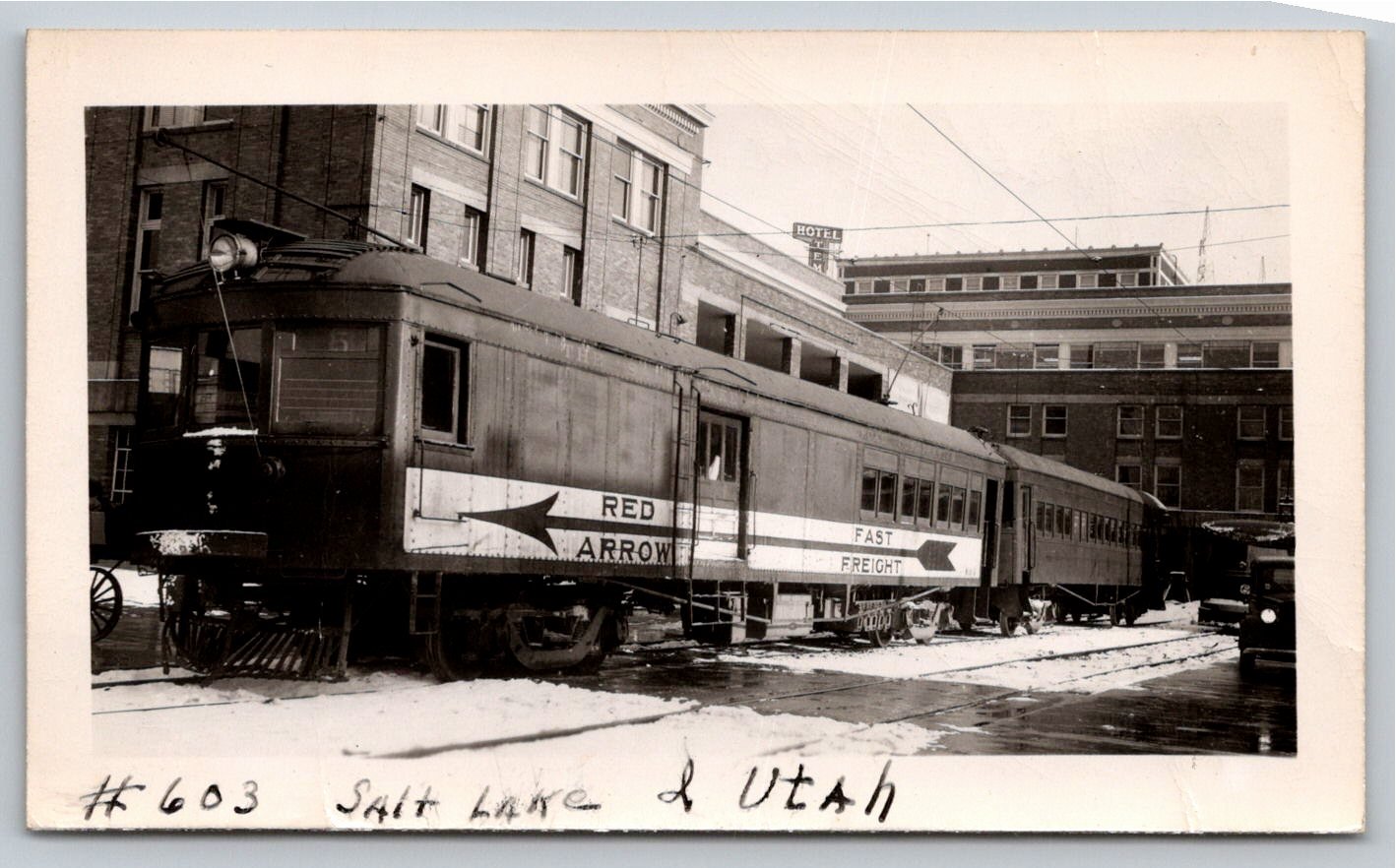
1936 Salt Lake & Utah Railroad Interurban Car 603 Photo
📸 Click any thumbnail to inspect Front, Back & Angles (2 Photos)
🔗 Embed / Cite This Archival Image (Free with Attribution)Get HTML Code
© USA RESELL. Bloggers, historians, and website owners may embed this image for free by copying the HTML code below (which includes the required credit link back to this page):
USA RESELL is a living historical archive. Because original artifacts are one-of-a-kind and source records change rapidly, use the button above to check live marketplace availability or locate surviving examples. As an eBay Partner, we may earn a commission on qualifying purchases.
Item Specifications
- City: Salt Lake City
- State: Utah
- Country: United States
- Era: 1930s
- Subject: Interurban Electric Train
- Theme: Transportation
- Category: Vintage Photography
- Format / Type: Vintage Photographs
Historical Context & Overview
This original vintage black-and-white photograph captures a rare moment in Utah transit history, displaying Salt Lake & Utah Railroad electric interurban motor car #603 idling along an urban track in Salt Lake City during the 1930s. The electric freight motor is detailed with its famous "RED ARROW FAST FREIGHT" emblem, flanked by painted directional arrows across its side paneling.
The Orem Line and Wasatch Front Transit
Popularly known as the Orem Line, the Salt Lake and Utah Railroad was established to provide high-voltage electric interurban passenger and freight connections across the rapidly expanding Wasatch Front. Operating from 1914 through its eventual abandonment in 1946, the line stretched from Salt Lake City south through Provo to Payson. Electric motor cars like #603 served as the backbone of regional commerce, offering rapid transportation before interstates and heavy trucking dominated Western shipping routes.
Photographic Details and Architecture
The glossy vintage print provides exceptional clarity, highlighting intricate mechanical components of car #603 including its roof-mounted trolley pole assembly, heavy undercarriage wheel trucks, cowcatcher grill, and front headlight. Additional electric passenger cars line the snow-dusted street behind the primary freight unit, backed by multi-story brick commercial architecture characteristic of mid-century downtown Salt Lake City, complete with a background hotel sign.
Measuring approximately 4.4 by 2.6 inches, this authentic vintage snapshot includes handwritten ink identification on the front margin reading "#603 Salt Lake & Utah" and pencil notations on the reverse side. It remains an invaluable artifact for railway enthusiasts, interurban transit historians, and collectors of vintage Utah railroad ephemera.
Gelatin-Silver Photography and 1930s Traction Craft
Produced during the height of the 1930s interurban era, this glossy gelatin-silver print showcases the exceptional photographic craftsmanship typical of period rail documentation. The chemical stability of the silver halide emulsion preserves razor-sharp monochrome contrast, capturing fine structural details ranging from individual heavy-gauge steel rivets along the cab body to the complex wiring of the overhead electric propulsion system. Because mid-century transit photographers frequently utilized medium-format film, images like this 1936 capture provide modern archivists with high-density visual evidence of early 20th-century electric traction motors, structural undercarriage assemblies, and localized municipal infrastructure.
Historical Provenance and Western Interurban Legacy
As original primary-source ephemera, surviving photographs of specialized electric freight units like motor car #603 hold immense historical value for railway archivists and regional transit collectors alike. Following the post-World War II automotive boom and the widespread abandonment of interurban electric railways across the American West, physical artifacts and candidate field snapshots became the primary tangible links to these lost high-voltage rail corridors. The authentic period handling marks, subtle marginal patina, and contemporary handwritten annotations on this print underscore its provenance, making it a coveted archival piece for those preserving the legacy of Utah's pioneer electric traction networks.