1950s La Brea Tar Pits Saber-Tooth Cat Statues Photo LA
📸 Click any thumbnail to inspect Front, Back & Angles (2 Photos)
🔗 Embed / Cite This Archival Image (Free with Attribution)Get HTML Code
© USA RESELL. Bloggers, historians, and website owners may embed this image for free by copying the HTML code below (which includes the required credit link back to this page):
USA RESELL is a living historical archive. Because original artifacts are one-of-a-kind and source records change rapidly, use the button above to check live marketplace availability or locate surviving examples. As an eBay Partner, we may earn a commission on qualifying purchases.
Item Specifications
- City: Los Angeles
- State: California
- Country: United States
- Era: 1950s
- Subject: La Brea Tar Pits Prehistoric Animal Statues
- Theme: Americana
- Category: Vintage Photography
- Format / Type: Snapshots
Historical Context & Overview
Mid-Century Fascination at Rancho La Brea
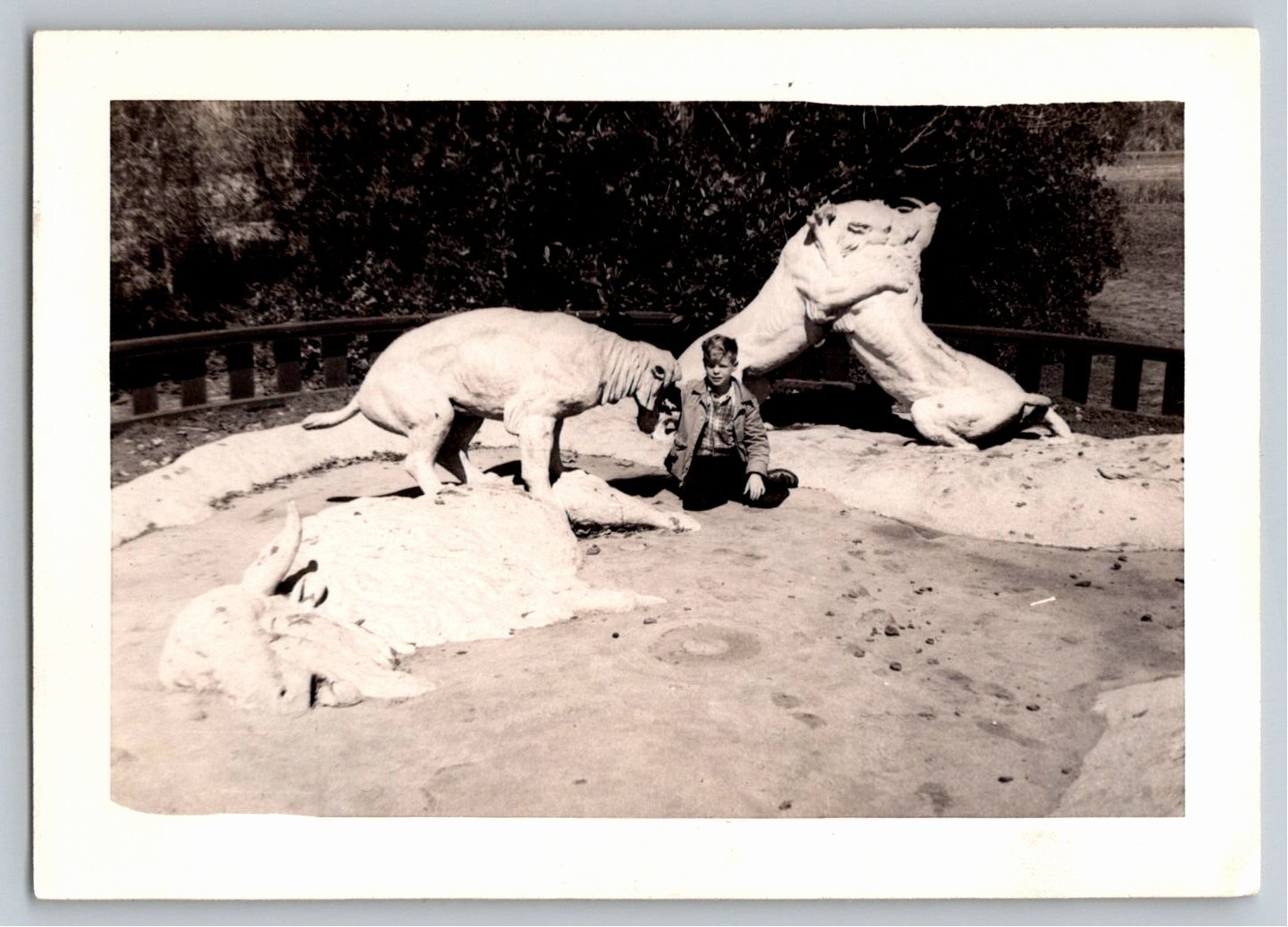
During the mid-twentieth century, Rancho La Brea and Hancock Park in Los Angeles stood as one of Southern California's most popular destinations for traveling families and science enthusiasts alike. This original black-and-white snapshot preserves an iconic moment of mid-century exploration, featuring a young boy seated right in the heart of an open-air paleontological installation. Dressed in classic period attire—a plaid collared shirt and tailored jacket—the youngster poses calmly amid a dramatic, life-sized diorama depicting prehistoric predator and prey interactions.
Surrounding the young visitor are sculpted prehistoric beasts, most notably the famed Saber-toothed cat (Smilodon fatalis), California's official state fossil. To his left stands a prowling cat carefully inspecting the scene, while behind him another feline leaps into the air with arched posture. At the lower left of the frame lies the recumbent body of an Ice Age mammal mired in simulated asphalt, capturing the tragic natural process that trapped thousands of Pleistocene creatures thousands of years ago.
Public Art and Paleontology in Postwar Los Angeles
The outdoor animal sculptures of Hancock Park were conceived to bridge rigorous scientific excavation with public education and spectacle. As Los Angeles expanded rapidly throughout the postwar decade, civic leaders and museum curators recognized the educational value of transforming the tar seeps into an immersive park environment. These sculpted installations allowed visitors to visualize the sheer scale and ferocity of extinct megafauna that once roamed the Los Angeles Basin, long before modern freeways and urban sprawl defined the landscape.
For mid-century vacationers touring California by automobile, a stop along Wilshire Boulevard to witness the bubbling tar pits and pose alongside life-size prehistoric beasts was an unforgettable highlight. Casual family snapshots like this one reflect the innocent wonder of postwar tourism, documenting how public art transformed scientific discovery into approachable roadside Americana. The composition captures both the educational mission of the park and the playful spirit of mid-century childhood.
Print Characteristics, Condition, and Archival Provenance
Printed on classic photographic paper measuring approximately 4.5 by 3.2 inches, this original vintage print displays the deep tonality and rich contrast emblematic of 1950s darkroom development. Crisp white borders frame the scene, emphasizing the rich mid-tones of the foliage and the pale finish of the concrete animal figures. The reverse side remains entirely unwritten, bearing only a single authentic vintage laboratory control number stamped in black ink as "445" along the lower right margin.
Free from commercial photograph markings, stamp boxes, or dividing lines, this artifact survives as an authentic private personal photograph rather than a mass-market souvenir. The physical condition is exceptionally well preserved, showing only subtle, natural age toning consistent with historical paper ephemera. With clean margins, sharp focus, and unbent corners, this snapshot represents a delightful historical document celebrating Southern California paleontology, vintage park installations, and roadside travel culture.