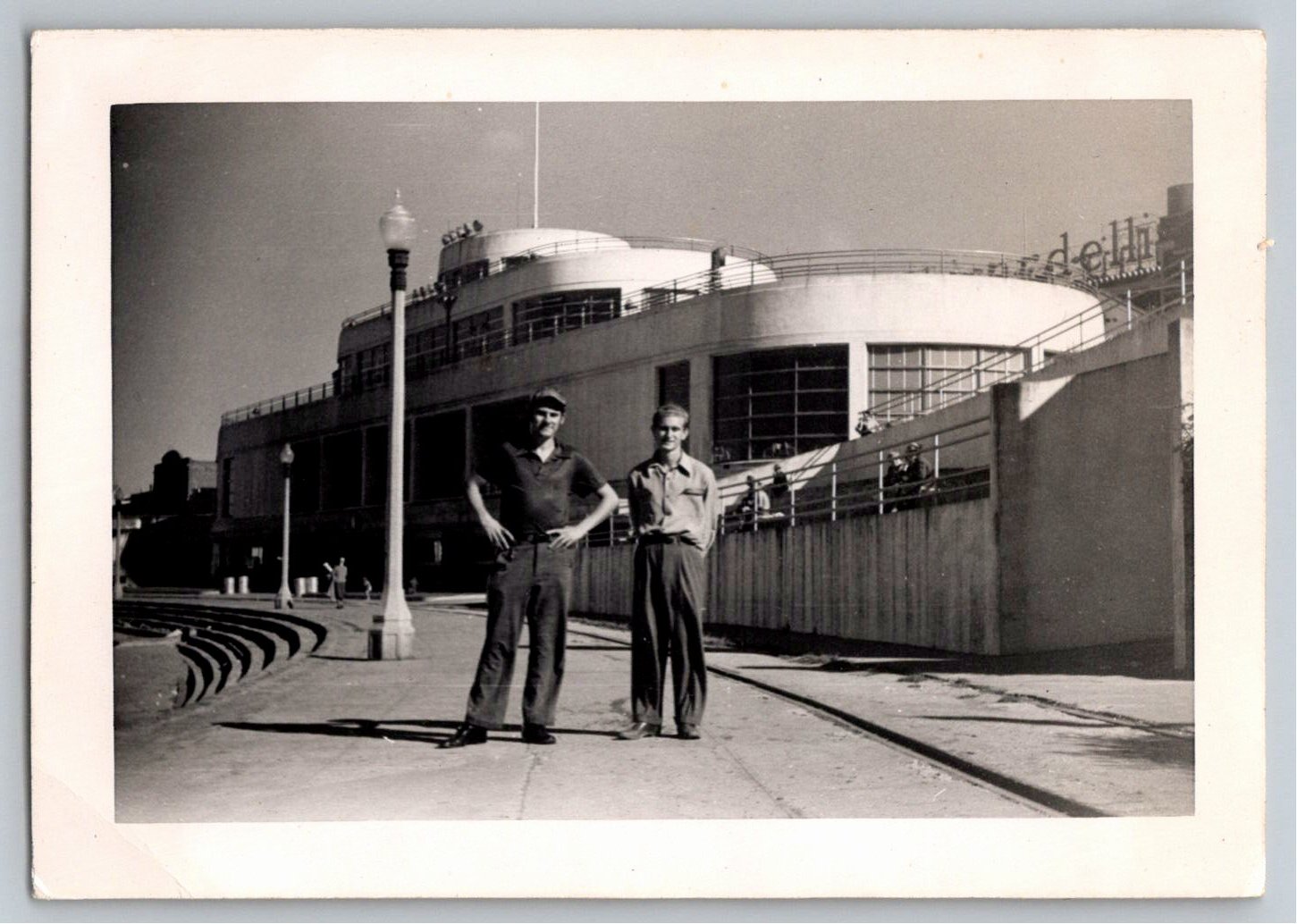
1940s WWII Soldiers Aquatic Park San Francisco Photo
📸 Click any thumbnail to inspect Front, Back & Angles (2 Photos)
🔗 Embed / Cite This Archival Image (Free with Attribution)Get HTML Code
© USA RESELL. Bloggers, historians, and website owners may embed this image for free by copying the HTML code below (which includes the required credit link back to this page):
USA RESELL is a living historical archive. Because original artifacts are one-of-a-kind and source records change rapidly, use the button above to check live marketplace availability or locate surviving examples. As an eBay Partner, we may earn a commission on qualifying purchases.
Item Specifications
- City: San Francisco
- State: California
- Country: United States
- Era: World War II (1939-1945)
- Subject: Aquatic Park Bathhouse Military Servicemen Architecture
- Theme: Americana Architecture Militaria History
- Category: Vintage Photography
- Format / Type: Vintage Photographs
Historical Context & Overview
Visual Overview of Wartime Aquatic Park
This striking original silver gelatin photograph captures two young American servicemen standing on the promenade of San Francisco’s famed Aquatic Park during the height of the Second World War. Positioned along the curving shoreline walkway, the foreground figure stands confidently with his hands planted on his hips, wearing a standard military garrison cap and well-fitted service trousers. His companion stands adjacent, looking directly into the camera lens with a candid expression of quiet resolve that characterized countless young men passing through the Pacific theater staging grounds during the early 1940s.
Behind the servicemen stands the architectural tour de force of the Aquatic Park Bathhouse, accompanied by cast-iron light stanchions and the sweeping tiers of curved concrete bleachers. In the upper background, the iconic rooftop letters of the Ghirardelli chocolate factory peek above the rounded pavilion parapet, cementing the unmistakable geography of San Francisco's northern waterfront. The stark midday California sunlight casts sharp, defined shadows across the concrete, emphasizing the bold geometry of the structure and the everyday poise of soldiers momentarily away from combat duty.
WPA Architecture and Wartime Military Requisition
Constructed between 1936 and 1939 under the federal auspices of the Works Progress Administration (WPA), the Aquatic Park Bathhouse represents one of the premier examples of Streamline Moderne architecture in North America. Designed by architects William Mooser II and William Mooser III, the building was conceived intentionally to evoke the sleek nautical lines of a transatlantic luxury ocean liner. Its sweeping tiered decks, horizontal tubular railings, porthole windows, and extensive expanses of steel-framed glass curtain walls celebrate machine-age industrial design on the edge of the bay.
Although intended as a civic recreational palace for local swimmers and tourists, the onset of World War II dramatically shifted the facility’s purpose. In late 1941, the United States military leased the entire Aquatic Park complex to serve as an active coastal defense headquarters, housing garrisoned soldiers and anti-aircraft personnel tasked with safeguarding the Golden Gate. Vernacular snapshots such as this one provide an invaluable historical bridge, documenting the transient moments when wartime military life occupied grand New Deal civic architecture prior to the structure's later post-war conversion into the San Francisco Maritime Museum.
Physical Attributes, Processing Stamp, and Preservation
Dating to circa 1943, this original snapshot measures approximately 3.1 by 4.5 inches, presenting an intimate physical format typical of personal soldier camera snapshots of the period. The reverse side features an unprinted photographic backing free of commercial photograph markings, bearing a stamped photo-finishing laboratory control number reading "< 1884" along the top border. Such alphanumeric production codes were standard among wartime photo processing labs where service personnel dropped off rolls of film while on leave in major port cities.
The print is preserved in very good vintage condition, exhibiting modest edge wear, light corner softening, and subtle handling patina consistent with genuine mid-century gelatin-silver prints. The photographic emulsion retains rich tonal depth, preserving bright highlights on the painted concrete facade and deep, clean shadows through the uniform fabrics. For collectors of World War II militaria, San Francisco maritime history, and WPA-era architecture, this candid piece offers a genuine window into wartime California.