1930s Winter Woodsman Sawing Pine Timber Snow Photo - Snapshots
📸 Click any thumbnail to inspect Front, Back & Angles (2 Photos)
🔗 Embed / Cite This Archival Image (Free with Attribution)Get HTML Code
© USA RESELL. Bloggers, historians, and website owners may embed this image for free by copying the HTML code below (which includes the required credit link back to this page):
USA RESELL is a living historical archive. Because original artifacts are one-of-a-kind and source records change rapidly, use the button above to check live marketplace availability or locate surviving examples. As an eBay Partner, we may earn a commission on qualifying purchases.
Item Specifications
- Type: Photograph
- Original/Licensed Reprint: Original
- Image Color: Black and White
- Production Technique: Gelatin-Silver Print
- Material: Paper
- Finish: Glossy
- Category: Vintage Photography
- Format / Type: Snapshots
Historical Context & Overview
Visual & Historical Overview: Winter Labor in Deep Snow
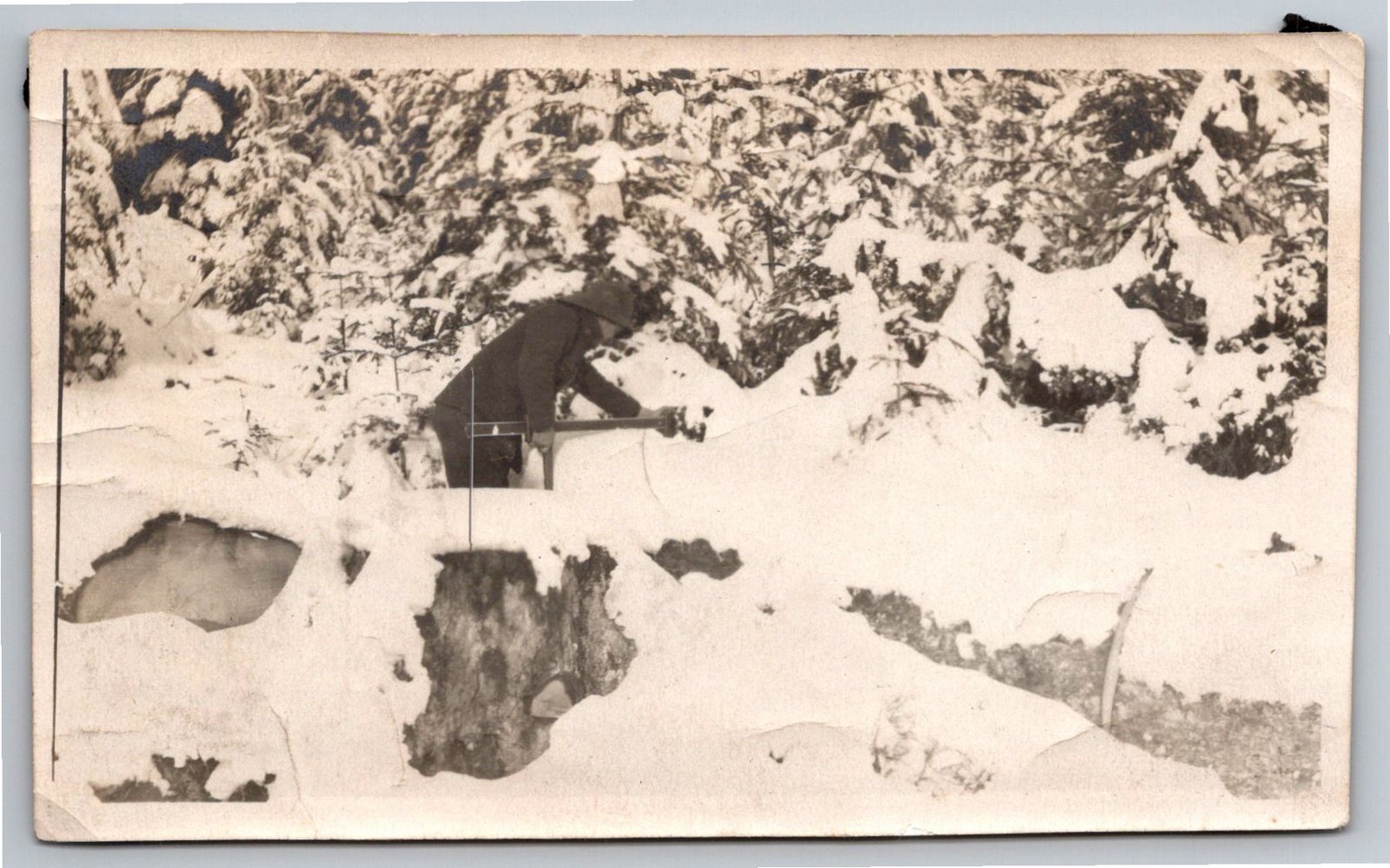
This striking original silver gelatin snapshot from the interwar era presents an evocative scene of manual forest labor during an intense North American winter. At the center of the frame, a solitary woodsman stands waist-deep amidst monumental snowdrifts, leaning into his task with purposeful determination. Clad in a heavy hooded winter coat, insulated work trousers, and thick protective gloves, the figure works methodically to saw through fallen timber or evergreen boughs buried under a dense, unbroken blanket of winter accumulation.
The surrounding environment is blanketed by heavy snowfall, with thick layers of snow clinging to the dense evergreen foliage in the background. The visual composition creates a dramatic dialogue between the deep tonal blacks of the pine trees and the blinding, reflective whites of the drift-swept terrain. It is an unvarnished documentation of rural persistence, capturing a fleeting moment where man contends directly with the formidable elements of the wild outdoors.
Early 20th-Century Forestry and Cold-Weather Americana
During the 1920s and 1930s, winter timber management and domestic wood harvesting required strenuous manual effort. Hand saws, such as buck saws and crosscut blades, were standard gear for clearing blocked trails, gathering fuel, or harvesting timber before modern motorized machinery became universal. The act of cutting wood in such punishing conditions reflects a quintessential aspect of early twentieth-century American resilience, where survival and seasonal maintenance demanded constant physical engagement.
Photographs like this were often taken by companions, fellow laborers, or family members documenting extreme regional blizzards and everyday life in rural outposts. Rather than a staged commercial portrait, this snapshot serves as honest photojournalism of everyday labor, offering modern viewers an unfiltered window into the sheer physical endurance necessitated by remote winter homesteading and forestry traditions.
Physical Specifications, Condition, and Archival Significance
Printed on authentic vintage silver gelatin paper, the photograph measures approximately 5.7 by 3.5 inches, an elongated horizontal format favored by period handheld roll-film cameras. The print demonstrates rich tonal delineation and a traditional glossy finish that accentuates the contrast between the dark coat of the laborer, the textured bark of the conifers, and the sweeping snowfields. The reverse side remains blank of commercial photograph markings, bearing significant remnants of black mounting paper from its time preserved within a vintage family or work scrapbook.
Regarding preservation condition, the artifact displays authentic signs of age and historical handling. These include a distinct vertical crease running through the center-left across the saw area, edge bumping along the perimeter, and light surface handling marks consistent with its era. These physical characteristics corroborate its genuine historical provenance, making it a compelling, collectible artifact for enthusiasts of vernacular photography, vintage Americana, and historic winter forestry.