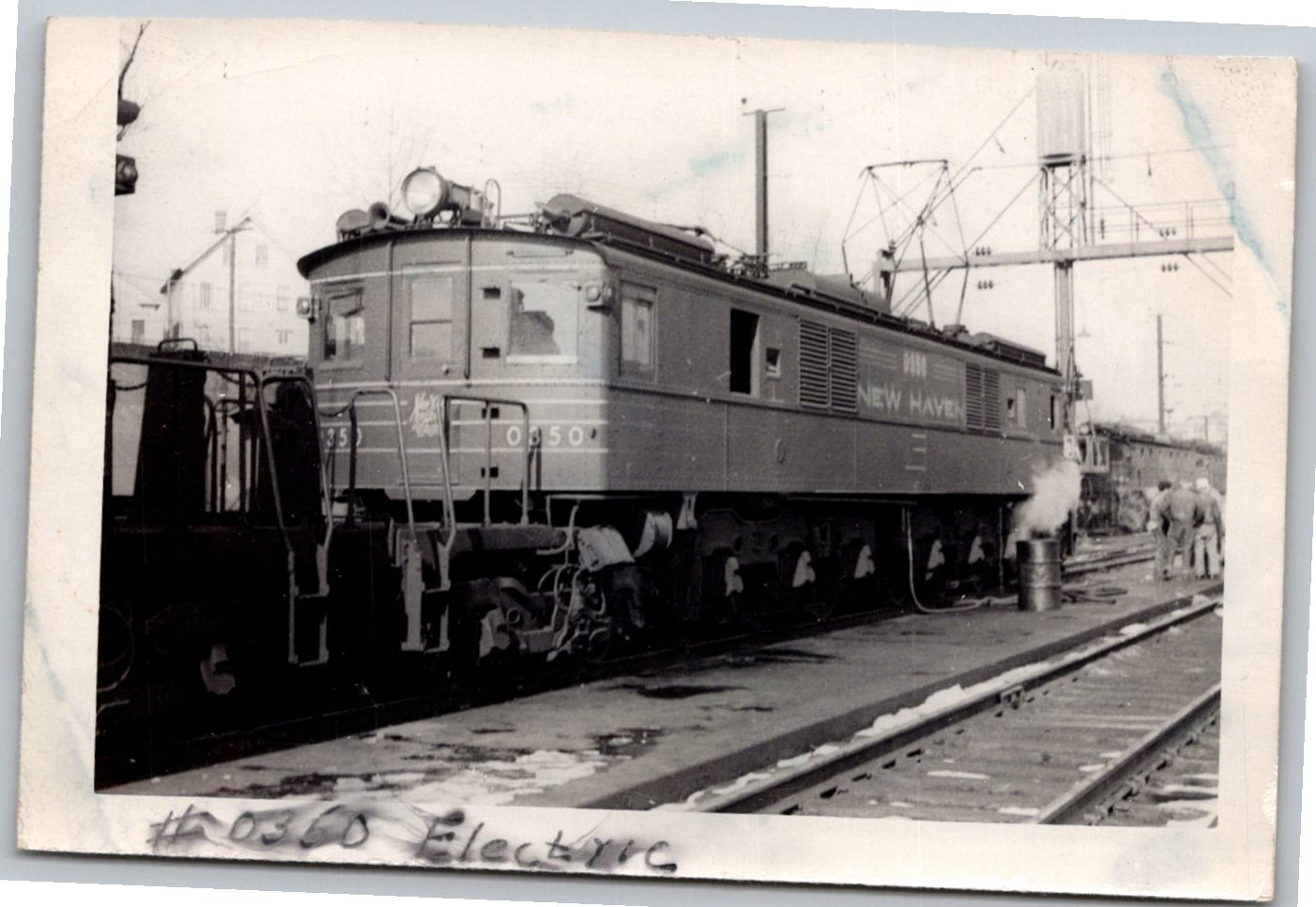
1946 New Haven Railroad Electric Locomotive #0350 Photo
📸 Click any thumbnail to inspect Front, Back & Angles (2 Photos)
🔗 Embed / Cite This Archival Image (Free with Attribution)Get HTML Code
© USA RESELL. Bloggers, historians, and website owners may embed this image for free by copying the HTML code below (which includes the required credit link back to this page):
USA RESELL is a living historical archive. Because original artifacts are one-of-a-kind and source records change rapidly, use the button above to check live marketplace availability or locate surviving examples. As an eBay Partner, we may earn a commission on qualifying purchases.
Item Specifications
- City: Unspecified
- State: Connecticut
- Country: United States
- Era: Mid-20th Century
- Subject: Railroad New York New Haven and Hartford Electric Locomotive
- Theme: Transportation
- Category: Vintage Photography
- Format / Type: Snapshots
Historical Context & Overview
Mid-Century Electrification along the New Haven Corridor
This original 1946 black-and-white gelatin-silver snapshot captures an iconic piece of mid-twentieth-century railroading heritage: the New York, New Haven and Hartford Railroad electric locomotive #0350. Positioned along railyard tracks with towering overhead catenary lines visible in the background, the photograph highlights the heavy boxcab construction that defined high-capacity electrified transport throughout Southern New England during the 1940s.
The image offers a clear side profile of unit #0350, showing off key industrial features including its roof-mounted pantograph gear, front headlamp assembly, and side ventilation grilles. The bold "NEW HAVEN" lettering painted along the cab body stands out prominently against the dark metallic finish of the engine body. Handwritten along the lower white margin is a vintage archival identification marking reading "#0350 Electric," adding authentic historical character to this original period document.
Engineering Excellence by General Electric
Locomotives like the EP-3b class were manufactured by General Electric and equipped with electrics designed to handle heavy mainline passenger and freight traffic between New York City and New Haven, Connecticut. Operating under high-voltage AC overhead wire systems, these powerful locomotives were famous for their exceptional pulling power and rapid acceleration, setting the standard for regional passenger service along the busy Northeast transport corridor.
Printed on single-weight glossy photographic paper of the era, the photograph measures approximately 4.4 by 2.9 inches. The reverse side features a single stamped numerical cataloging code ("259") on a blank back, confirming its status as an authentic period silver halide print rather than a photograph reproduction. Crisp tonal contrast and fine detail make this photographic snapshot a remarkable surviving artifact for railroadiana collectors, transportation historians, and enthusiasts of vintage American motive power.
Preservation of Post-War Railfan Photography
In the immediate aftermath of World War II, dedicated rail enthusiasts and trackside photographers frequently documented regional motive power, capturing authentic working scenes across busy New England classification yards. Snapshot photographs from 1946 serve as vital primary records of daily operations along the New York, New Haven and Hartford lines before mid-century fleet modernizations altered the landscape. The handwritten front identification and faint numeric back-stamp reflect the meticulous filing systems used by period trainspotters and private archivists to catalog their growing photographic collections of operational motive power.
Collector Value and Archival Care
For contemporary collectors of railroadiana, original single-weight silver gelatin prints possess an unmatched tactile and visual depth that digital reprints cannot replicate. The light handling wear and subtle corner curling observed on this piece are characteristic of mid-twentieth-century paper snapshots that spent decades preserved in private photo albums or railfan file boxes. Storing such authentic documents in acid-free archival sleeves ensures that the sharp mechanical detail—from the intricate overhead catenary rigging to the heavy steel plate construction of unit #0350—remains crisp for future generations of rail historians.