1940s Industrial Depot Railroad Crossing Vintage Snapshot
📸 Click any thumbnail to inspect Front, Back & Angles (2 Photos)
🔗 Embed / Cite This Archival Image (Free with Attribution)Get HTML Code
© USA RESELL. Bloggers, historians, and website owners may embed this image for free by copying the HTML code below (which includes the required credit link back to this page):
USA RESELL is a living historical archive. Because original artifacts are one-of-a-kind and source records change rapidly, use the button above to check live marketplace availability or locate surviving examples. As an eBay Partner, we may earn a commission on qualifying purchases.
Item Specifications
- Type: Photograph
- Original/Licensed Reprint: Original
- Image Color: Black and White
- Production Technique: Gelatin-Silver Print
- Material: Paper
- Finish: Matte
- Category: Vintage Photography
- Format / Type: Snapshots
Historical Context & Overview
Mid-Century Vernacular Scene: Industrial Tarmac and Rail Infrastructure
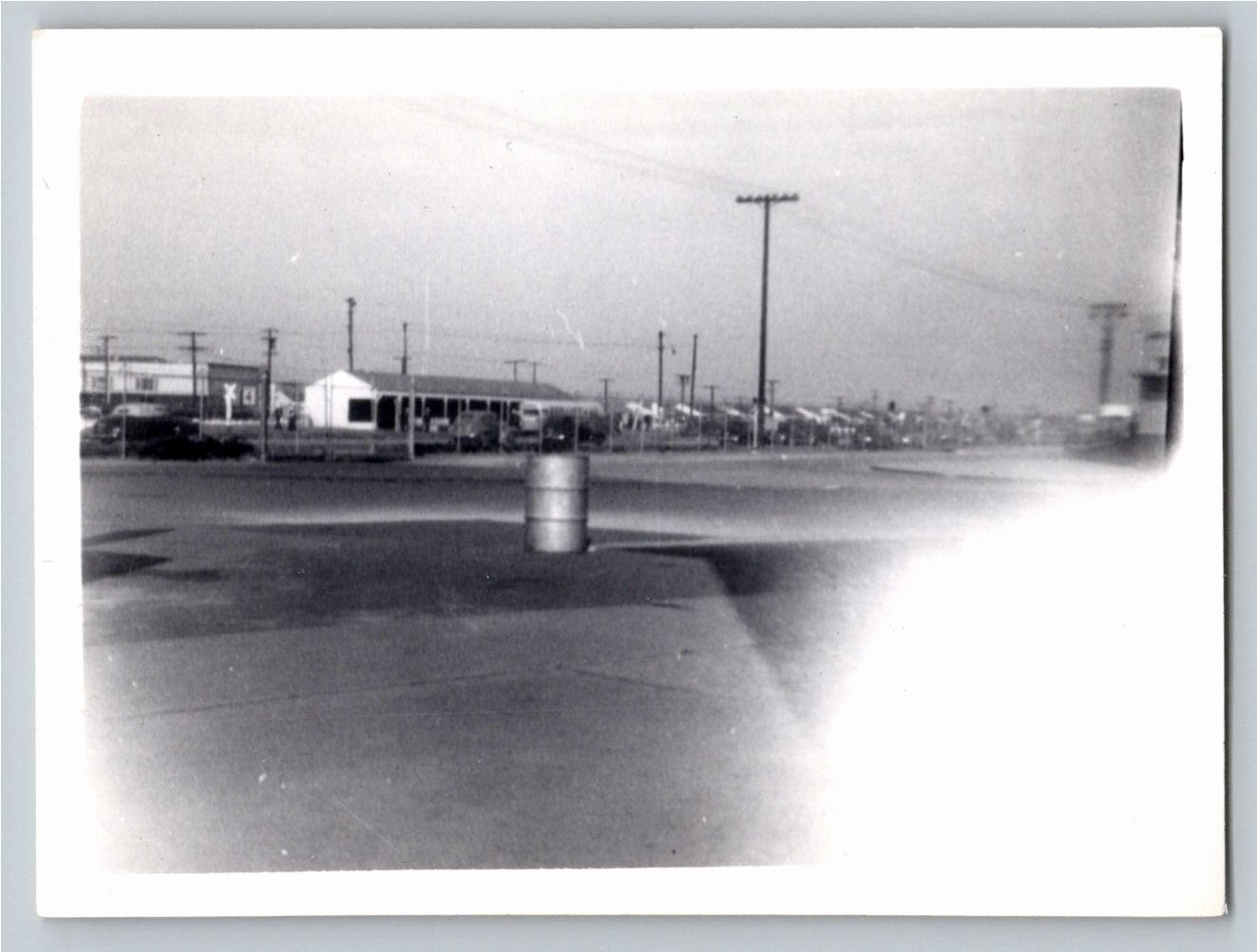
Dating to the mid-1940s, this original gelatin-silver photograph offers an authentic, unvarnished look at American industrial infrastructure during an era of tremendous logistical expansion. The composition centers on a broad, paved expanse or tarmac, punctuated in the middle foreground by a solitary metal barrel drum. Stretching across the midground is a bustling industrial zone where period automobiles are lined up against a wire boundary fence. In the background, utilitarian warehouse structures, storage buildings, and tall wooden telephone poles sketch the everyday working environment of mid-century transport hubs.
To the left, a traditional wooden railroad crossing crossbuck sign is clearly visible, marking the path of an adjacent rail corridor. The combination of fleet automobiles, supply sheds, and heavy rail connectivity illustrates the multi-modal transit networks that powered post-war American industry. This candid moment captures the practical reality of factory yards and freight depots, stripped of romanticized staging and preserved exactly as it appeared to the photographer's eye.
Historical Context: The Post-War Logistics Boom
During and immediately following World War II, industrial shipping facilities across the United States operated at maximum capacity to sustain military supply chains and subsequent peacetime manufacturing. Expansive yards like the one depicted here functioned as vital interchange points between rail lines and road transport. The presence of mid-1940s sedans parked along the perimeter fence reflects the shift toward automobile commuting for industrial labor forces, even as the tracks remained the lifeblood of bulk goods movement.
The casual composition highlights vernacular photography's unique contribution to architectural and cultural history. Rather than a formal promotional shot commissioned by a railroad or factory owner, this snapshot records functional, day-to-day work equipment—such as the lone utility drum used for waste, storage, or traffic control—alongside the sprawling utility lines essential to 20th-century urban and suburban expansion. Such candid documents capture the practical texture of daily life often omitted from official archives.
Physical Medium, Format, and Archival Condition
Measuring approximately 4.1 by 3.0 inches, this piece is printed on authentic silver gelatin photo paper featuring narrow white borders characteristic of mid-century commercial photo finishers. The reverse side is entirely blank, unprinted white paper stock, devoid of photograph divisions or publisher marks, confirming its origin as a genuine amateur snapshot. The image displays solid midground tonal clarity, smooth paper handling, and structurally sound edges without tears, heavy creases, or pinholes.
Of particular interest to collectors of vernacular photography is the subtle flare and light bleed visible across the lower-right quadrant. This artifact represents genuine period camera behavior—likely caused by manual shutter operation, frame advance, or slight lens flare typical of amateur snapshot cameras of the 1940s. For collectors of mid-century transportation, early railroad history, and industrial Americana, this original silver print represents a charming, unedited artifact of 20th-century American commerce.