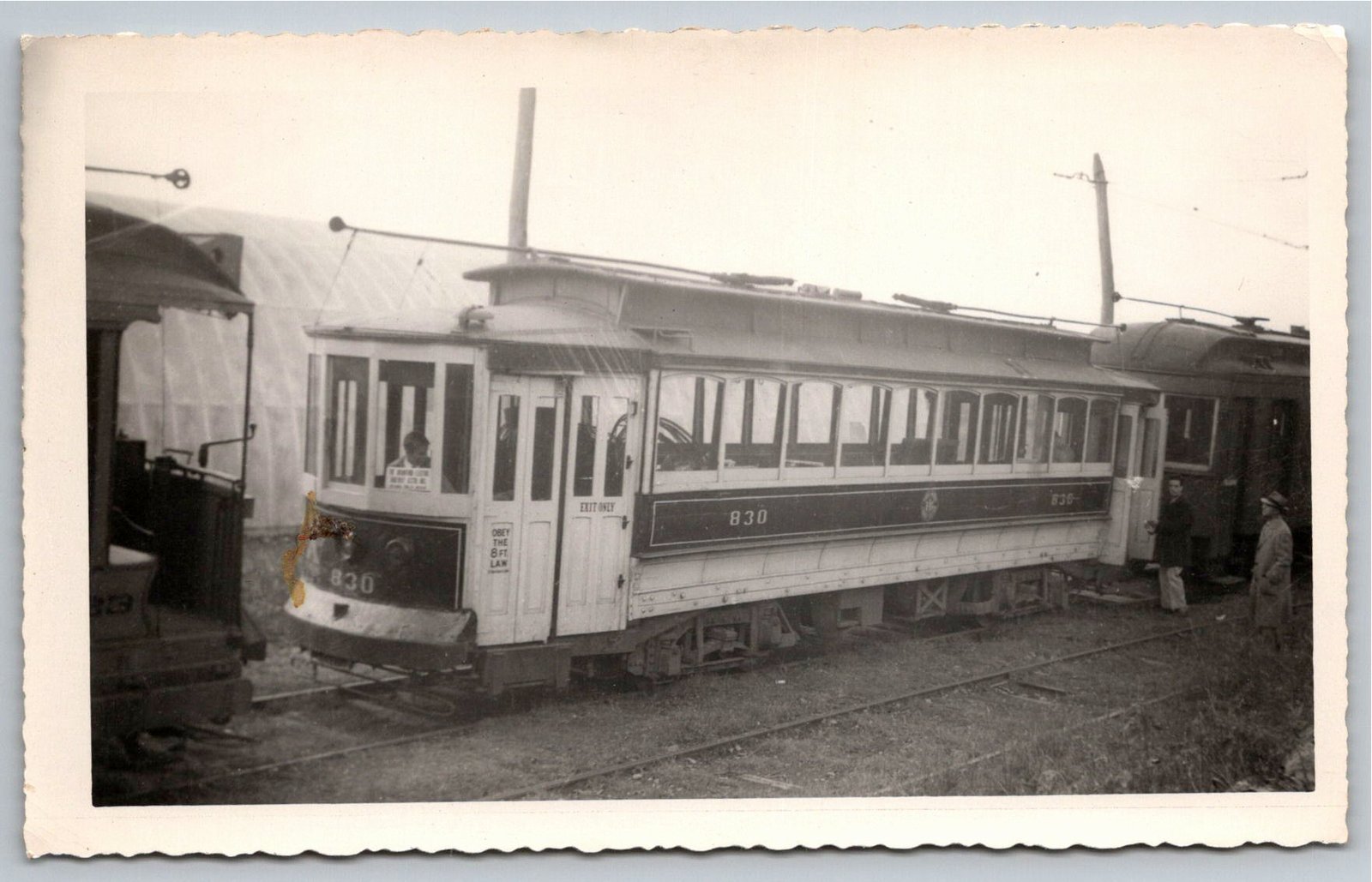
1948 NYC Third Avenue Railway Streetcar No 830 Photo
📸 Click any thumbnail to inspect Front, Back & Angles (2 Photos)
🔗 Embed / Cite This Archival Image (Free with Attribution)Get HTML Code
© USA RESELL. Bloggers, historians, and website owners may embed this image for free by copying the HTML code below (which includes the required credit link back to this page):
USA RESELL is a living historical archive. Because original artifacts are one-of-a-kind and source records change rapidly, use the button above to check live marketplace availability or locate surviving examples. As an eBay Partner, we may earn a commission on qualifying purchases.
Item Specifications
- City: New York
- Country: United States
- Era: Vintage (1930-1960)
- Subject: Streetcar
- Theme: Transportation
- Year of Production: 1948
- Category: Vintage Photography
- Format / Type: Vintage Photographs
Historical Context & Overview
1948 Third Avenue Railway System Streetcar No. 830 Photograph
This original vintage gelatin-silver photograph offers an authentic glance into New York City's public transit history, capturing Third Avenue Railway System (TARS) streetcar No. 830 in a historic yard setting. Produced around 1948, this glossy snapshot features distinctive deckled edges and fine monochromatic contrast that highlights the car's intricate architecture and operational details.
Historical & Architectural Background
Originally constructed in 1908 by the renowned J.G. Brill Company, car #830 provided decades of reliable passenger service across Manhattan and the Bronx under the Third Avenue Railway System network. The photograph captures its classic wooden body structure, upper clerestory roof ventilation, trolley poles, and painted safety messaging—including visible period notices like "OBEY THE 8 FT LAW" and "EXIT ONLY" adjacent to its folding doors.
As streetcar lines were progressively phased out across New York City during the late 1940s in favor of modern motor buses, streetcar No. 830 avoided scrap through acquisition by early transit preservationists. It became part of the collection at the Branford Electric Railway Association (known today as the Shore Line Trolley Museum in East Haven, Connecticut), making this photograph an essential document of early American electric railway conservation.
Collector Provenance & Condition
Measuring 5.6 by 3.5 inches, this photograph remains in sturdy vintage condition with light edge wear consistent with its age and a small historic mark near the lower front bumper area. The reverse side features handwritten blue ink notes reading "#830 - Third Av. Ry. Transit New York City. now Branford Ry. property", accompanied by an authentic rubber stamp from transit collector Edw. G. Schimke of Hartford, Connecticut, alongside an inverted numerical stamp "534". An exceptional acquisition for transit historians and collectors of vintage New York trolley memorabilia.
Mid-Century Photographic Craft & Visual Detail
This original gelatin-silver print demonstrates the classic photographic standards of late 1940s enthusiast imagery. Developing snapshot prints with decorative deckled margins was a popular aesthetic choice among mid-century photo processing labs, adding a distinct period-correct border to the historic composition. The glossy paper stock has retained deep blacks and crisp tonal gradients over the decades, ensuring that subtle structural nuances of car No. 830—from its wood-slatted body construction to the fine metallic details of the roof vents and trolley gear—remain sharp and legible for study.
Preservation Value & Transit Collector Legacy
The clear provenance linking this image to transit historian Edw. G. Schimke highlights the vital role private enthusiasts played in recording American street railway infrastructure before its rapid mid-century decline. During the post-World War II transition from rail lines to municipal bus fleets, dedicated collectors traveled regional networks to photograph, index, and catalog vanishing equipment, creating invaluable primary archives. The collector's rubber stamp and handwritten identification render this piece a verifiable primary document, making it an exceptional addition for archives focused on New York City transportation history and early electric railway preservation.