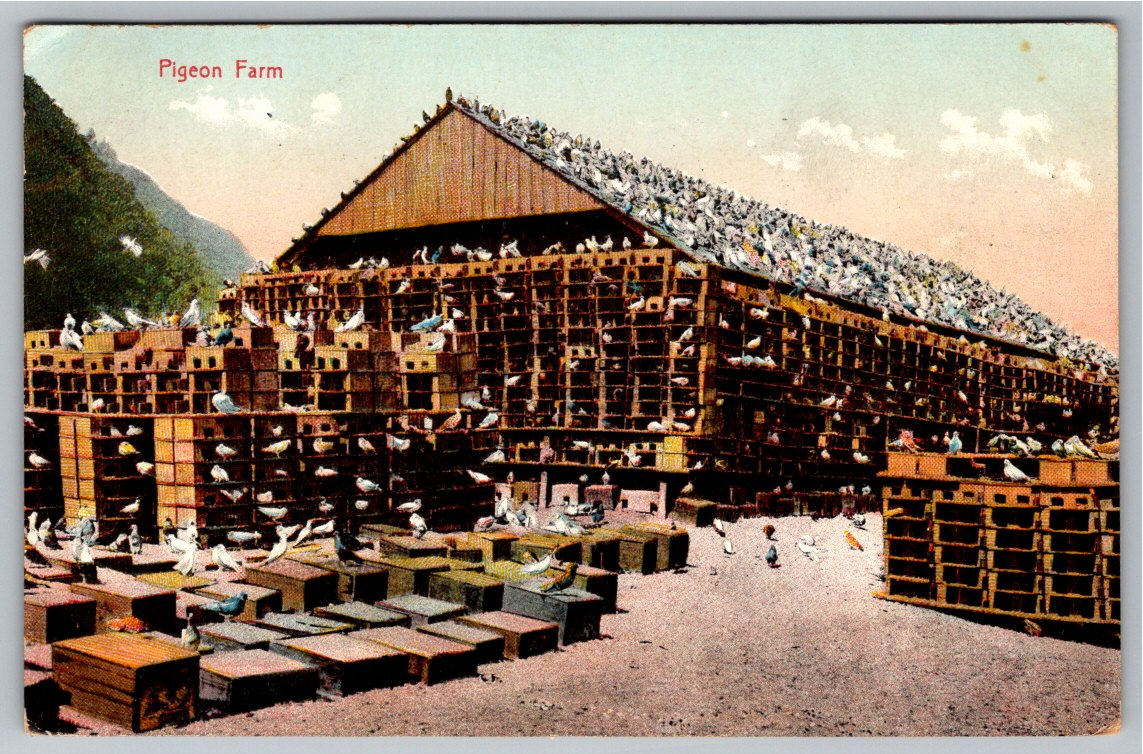
1908 Los Angeles Pigeon Farm Postcard: Historic M. Rieder Color
📸 Click any thumbnail to inspect Front, Back & Angles (2 Photos)
As an eBay Partner, we may earn a commission if you make a purchase.
Item Specifications
- Era: Divided Back (1907-1915)
- Postmark Year: 1908
- Publisher: M. Rieder
- Location: Los Angeles, California
- Subject: Pigeon Farm / Agricultural Tourism
- Printing Technique: Color Lithograph (Printed in Germany)
- Category: Postcards & Ephemera
- Format / Type: Vintage Postcards
Looking for Modern Alternatives?
Explore top-rated, modern Postcards & Ephemera and related historical accessories on Amazon.
Shop Postcards & Ephemera on Amazon →As an Amazon Associate, we earn from qualifying purchases.
Historical Context & Overview
A Window into Early Los Angeles: The Historic Pigeon Farm
In the early decades of the twentieth century, Los Angeles, California, was rapidly transforming from an agricultural settlement into a bustling Western metropolis. Among its most curious and wildly popular tourist destinations was the Los Angeles Pigeon Farm. Featured on this vibrant 1908 color postcard published by M. Rieder, the farm presented an astounding spectacle: tier upon tier of wooden coops built along the banks of the Los Angeles River, teeming with tens of thousands of white and multicolored birds. Sent through the mail with a crisp January 9, 1908 postmark and a one-cent Benjamin Franklin stamp, this original piece of ephemera offers collectors a tangible connection to Southern California’s early promotional boom.
The Rise of a Remarkable Tourist Attraction
Established in the late 1890s by businessman J.Y. Johnson, the Pigeon Farm was located near Dayton Avenue along the Los Angeles River, adjacent to present-day Elysian Park. Originally conceived as a commercial enterprise to supply squab to top-tier hotels and restaurants, the farm quickly grew beyond its utilitarian origins. At its peak, the facility housed upwards of 100,000 birds across sprawling multi-story lofts that stretched hundreds of feet along the riverbed. Passengers riding local electric streetcars frequently paused their journeys to marvel at the sheer scale of the operation, taking in the sight of cloud-like swarms of birds taking flight against the backdrop of the hills. It became one of the most routinely photographed sight-seeing stops in the region.
German Lithography and Publisher M. Rieder
This postcard was produced by Michael Rieder, one of Southern California's premier postcard publishers during the Golden Age of Postcards (roughly 1898 to 1915). Rieder was renowned for documenting the region's landmarks, landscapes, and civic novelties. Like many high-end view-card publishers of the era, Rieder relied on master lithographers in Germany, where full-color printing techniques were unrivaled. The vivid hand-tinted tones, rich wood textures of the nesting boxes, and sharp detail throughout the composition demonstrate the incredible craftsmanship of German color lithography before World War I reshaped global production.
The Tragic End of a Legendary Landmark
The Los Angeles Pigeon Farm’s dramatic history came to a sudden close in February 1914. Devastating winter storms caused the unpaved Los Angeles River to breach its banks in a historic surge. The torrent swept away the sprawling wooden structures, destroying the farm and setting free or drowning thousands of birds. The complex was never reconstructed, leaving visual records—such as this postally used 1908 artifact—as the primary surviving historical records of the site. For urban historians, California vintage collectors, and postcard enthusiasts, this card serves as a captivating relic of a forgotten chapter in Los Angeles history.