1910 Los Angeles Citrus Harvest Vintage Postcard | California
📸 Click any thumbnail to inspect Front, Back & Angles (2 Photos)
As an eBay Partner, we may earn a commission if you make a purchase.
Item Specifications
- Era: Divided Back (1907-1915)
- Publisher: Newman Post Card Co.
- Postmark Date: 1910
- Location: Los Angeles, California
- Subject: Orange Picking Citrus Grove
- Originality: Original Vintage
- Category: Postcards & Ephemera
- Format / Type: Vintage Postcards
Looking for Modern Alternatives?
Explore top-rated, modern Postcards & Ephemera and related historical accessories on Amazon.
Shop Postcards & Ephemera on Amazon →As an Amazon Associate, we earn from qualifying purchases.
Historical Context & Overview
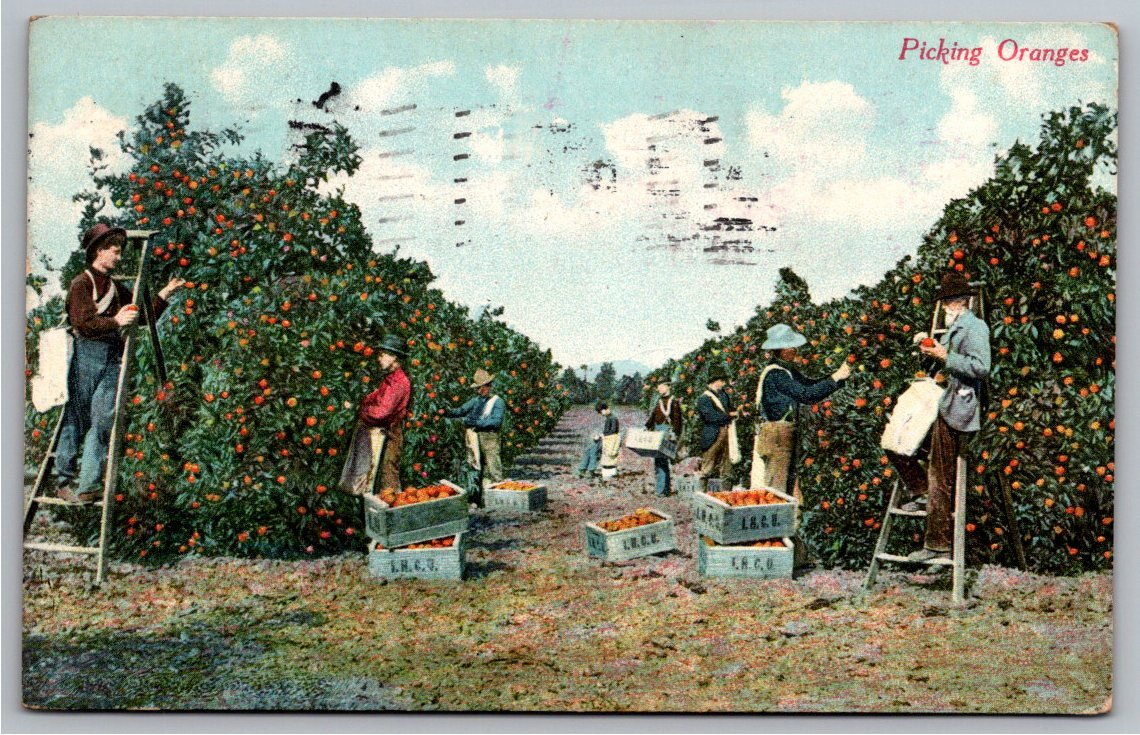
In the early twentieth century, Southern California was promoted to the rest of the nation as a sun-drenched agrarian paradise, a narrative largely driven by the booming citrus industry and the romantic imagery sent across the country on penny postcards. This original 1910 postcard, titled "Picking Oranges," captures that golden era in vivid detail, portraying agricultural laborers harvesting ripe fruit in a lush Los Angeles orange grove.
The Golden Empire of California Citrus
By 1910, orange growing was far more than an agricultural enterprise; it was the bedrock of Southern California's economy and cultural identity. Driven by the introduction of the Washington navel orange in Riverside during the 1870s and the expansion of refrigerated rail transport, citrus groves spread rapidly across Los Angeles, Orange, and San Bernardino counties. Thousands of acres of neatly aligned trees dominated the landscape from the San Fernando Valley to Pomona.
The scene captured on the front of this postcard illustrates the intensive labor required during the peak harvest season. Field workers navigate wooden tripod ladders placed against laden orange trees, carefully transferring fruit into canvas shoulder sacks before emptying them into heavy wooden field crates marked with regional packing house initials. This meticulously organized process ensured that fragile navel and Valencia oranges reached eastern markets in pristine condition.
Promoting the "Road of a Thousand Wonders"
Produced by the prominent Newman Post Card Co. of Los Angeles and San Francisco, this card forms part of a famous promotional series echoing the Southern Pacific Railroad's iconic marketing campaign, "On the Road of a Thousand Wonders." Railroads actively partnered with regional postcard publishers to distribute millions of vibrant lithographic images showing perpetual sunshine, flowering trees, and bountiful harvests. These images lured tourist dollars, prospective settlers, and agricultural investors to the West Coast.
A Handwritten Snapshot from September 1910
The reverse side of the postcard offers a fascinating glimpse into daily American life in 1910. Mailed from Los Angeles on September 27, 1910, at 1:30 PM, the postcard features a crisp circular postmark and a green one-cent Benjamin Franklin stamp. The message, written in elegant ink script by a sender named Lee, is addressed to a recipient in St. Louis, Missouri, in care of the famous Barr's Dry Goods Company at 8th and Olive Streets.
Lee writes of domestic life and recovery: "Frankie broke his arm a few weeks ago getting along fine. Ruth starts to school tomorrow..." Such candid personal messages ground the grandeur of California's agricultural mythos in the authentic, human experiences of turn-of-the-century families communicating across the continent.
Significance for Ephemera Collectors
For collectors of California agriculture, Southern Pacific Railroad memorabilia, and early divided-back postcard history, this 1910 example represents an exceptional intersection of industrial history, rail marketing, and personal correspondence. Its vivid colors, authentic postmark, and clear publisher details make it a standout artifact from the zenith of the Golden State's citrus boom.