1920s Woman in Cloche Hat Seaside Boardwalk Photograph
📸 Click any thumbnail to inspect Front, Back & Angles (2 Photos)
🔗 Embed / Cite This Archival Image (Free with Attribution)Get HTML Code
© USA RESELL. Bloggers, historians, and website owners may embed this image for free by copying the HTML code below (which includes the required credit link back to this page):
USA RESELL is a living historical archive. Because original artifacts are one-of-a-kind and source records change rapidly, use the button above to check live marketplace availability or locate surviving examples. As an eBay Partner, we may earn a commission on qualifying purchases.
Item Specifications
- City: Unspecified
- Country: United States
- Era: Interwar (1918-1939)
- Subject: Women Fashion Boardwalk
- Theme: Americana Leisure Seaside
- Year of Production: 1925
- Category: Vintage Photography
- Format / Type: Vintage Photographs
Historical Context & Overview
Visual & Historical Overview of 1920s Promenade Leisure
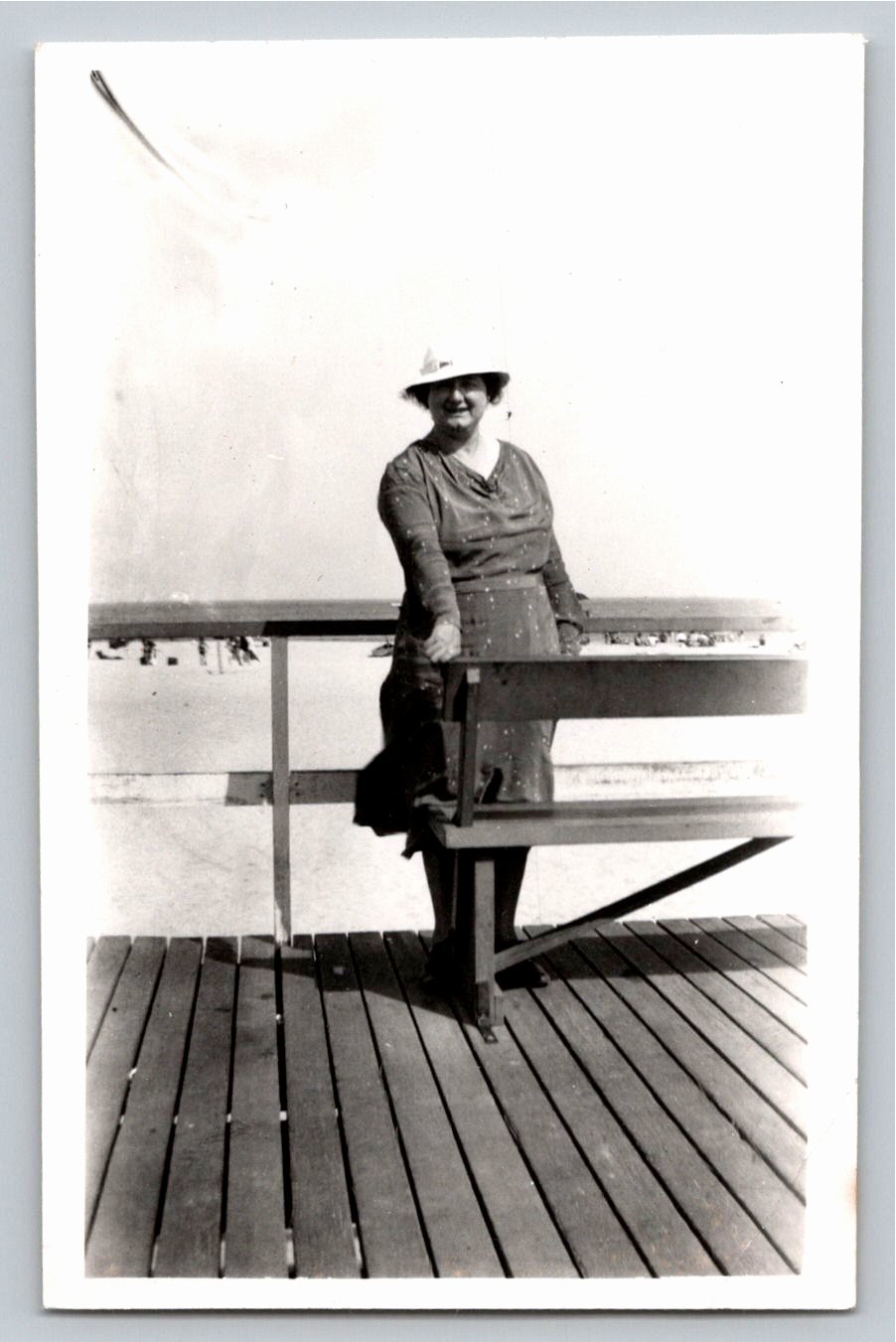
This original black-and-white gelatin silver snapshot presents an authentic glimpse into American coastal leisure during the Roaring Twenties. Centered in the composition stands a smiling woman resting her hand upon a wooden seaside promenade bench. Her ensemble epitomizes everyday mid-1920s daytime fashion: a soft cloche bucket hat framing her face, paired with a relaxed, dropped-waist day dress featuring full-length sleeves and a draped cowl neckline. The breezy, sun-drenched atmosphere is palpable, capturing an unstudied moment of recreation away from the fast pace of urban life.
Behind her, the architectural elements of the pier and boardwalk lead the eye toward an expansive sandy beach dotted with distant vacationers enjoying the shoreline. The strong coastal daylight washes softly over the sky, lending the scene an ethereal quality typical of outdoor amateur photography from the era. A faint visual anomaly in the upper-left quadrant—reminiscent of a distant kite trailing in the sea breeze or an idiosyncratic darkroom development trace—further emphasizes the spontaneous vernacular nature of this seaside portrait.
Seaside Culture and Women’s Everyday Interwar Fashion
During the Interwar era, boardwalks across American resort towns—from Atlantic City and Coney Island to the bustling piers of Southern California—served as vibrant public stages. Accessible passenger rail networks and the widespread adoption of automobiles enabled families and solo travelers alike to flock to the coast for holiday weekends. Strolling along wooden planks overlooking the ocean became a definitive social ritual, where holidaymakers showcased contemporary styles while taking in fresh maritime air.
The woman’s attire reflects the significant liberation in women's fashion that took place throughout the 1920s. Moving away from restrictive corsetry and voluminous Victorian silhouettes, garments transitioned to loose, tubular cuts that allowed ease of movement and self-expression. The iconic cloche hat, pulled down low over the brow, complemented modern bobbed hairstyles and shielded travelers from coastal winds. Her pleasant demeanor and accessible style demonstrate how high-fashion trends translated directly into the everyday wardrobes of ordinary American women.
Print Characteristics, Condition, and Archival Provenance
Measuring approximately 2.7 inches by 4.2 inches, this photograph is rendered on authentic silver gelatin fiber-base paper. The surface retains a subtle, vintage semi-gloss finish that accentuates the textured planks of the boardwalk, the linear slats of the open-back bench, and the soft drapery of her dress. The reverse side is entirely blank save for an isolated faint pencil mark near the center, confirming that the piece was printed as a private personal keepsake rather than a mass-market commercial photograph or souvenir print.
Preservation across nearly a century remains commendable. The print displays strong focal clarity, rich mid-tone values, and sharp detail throughout the primary subject. Wear is minor, consisting of light edge handling and gentle, natural paper toning consistent with decades of storage in a private family scrapbook album. Free of major tears, creases, or surface losses, this snapshot stands as a tangible and evocative artifact of early twentieth-century American leisure history.