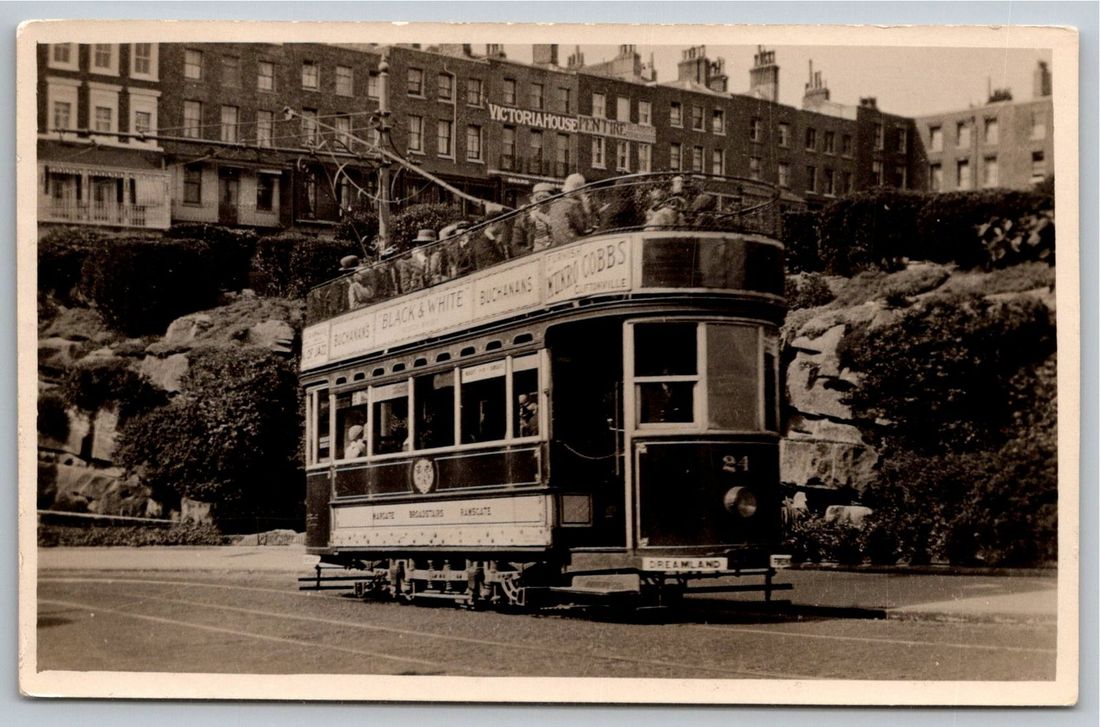
1920s Isle of Thanet Electric Tram No 24 Photo Margate Kent
📸 Click any thumbnail to inspect Front, Back & Angles (2 Photos)
🔗 Embed / Cite This Archival Image (Free with Attribution)Get HTML Code
© USA RESELL. Bloggers, historians, and website owners may embed this image for free by copying the HTML code below (which includes the required credit link back to this page):
USA RESELL is a living historical archive. Because original artifacts are one-of-a-kind and source records change rapidly, use the button above to check live marketplace availability or locate surviving examples. As an eBay Partner, we may earn a commission on qualifying purchases.
Item Specifications
- City: Margate
- State: Kent
- Country: United Kingdom
- Era: 1910-1920s
- Subject: Electric Tram Streetcar
- Theme: Transportation
- Category: Vintage Photography
- Format / Type: Vintage Photographs
Historical Context & Overview
A Window into Coastal Kent’s Transit History: Isle of Thanet Tram No. 24
This striking original 1920s black-and-white photograph offers a detailed view of seaside public transit during the interwar era along the coast of Kent, England. Captured on glossy silver gelatin photographic paper, the image highlights Car No. 24, a double-decker open-top electric streetcar operated by the Isle of Thanet Electric Tramways and Lighting Company. The tram is shown navigating the tracks in Margate, framed by a steep rock retaining wall and traditional Victorian townhouses—identified in the background as Victoria House and Pentire—overlooking the line.
Commercial Advertising and Destination Markings
The vehicle itself is packed with period-accurate details that make it an exceptional historical document. Prominently mounted along the upper deck railing are classic commercial advertisements of the 1920s, including banners for Buchanan's Black & White Scotch Whisky and Munro Cobbs of Cliftonville. Lower panels indicate destination routes linking the major coastal destinations of Thanet: Margate, Broadstairs, and Ramsgate, alongside a specific bumper sign designating service to Margate's famous seaside amusement destination, Dreamland.
Passengers line the open upper deck, capturing the breezy, summer tourist atmosphere that defined Thanet's coastal resorts during the early decades of the twentieth century.
The Isle of Thanet Electric Tramways Network
Inaugurated in 1901 and operating until 1937, the Isle of Thanet Electric Tramways provided a crucial transport link between the seaside towns of eastern Kent. The system connected railway terminals, residential neighborhoods, and seafront promenades, facilitating both local commerce and the massive influx of summer holidaymakers. Double-decker trams like Car No. 24 were the backbone of the fleet, offering scenic open-air seating on their upper decks during pleasant weather.
Format and Preservation State
Measuring 5.4 by 3.4 inches, this piece is preserved as a standalone photographic snapshot on heavy silver gelatin stock rather than a mass-produced photograph. The reverse features plain white paper with pencil and blue ink collector notations reading "Thanet" and "ISLE OF THANET (KENT)", with no printed photograph layout or publisher mark. Crisp contrast, deep tonal range, and light vintage aging make this an outstanding artifact for transport historians and collectors of Kent ephemera.
The Interwar Transit Experience in Seaside Kent
During the 1920s, electric streetcars like Car No. 24 represented the peak of convenience for seaside holidaymakers traveling between Margate, Broadstairs, and Ramsgate. Prior to the widespread adoption of municipal motorbuses in the late 1930s, these open-top double-deckers served as the primary arterial link along the Thanet coastline. They transported thousands of urban vacationers from railway terminals directly to beach promenades, scenic cliff walks, and bustling entertainment centers like Dreamland. The presence of hyper-local advertising alongside national spirits branding illustrates the vibrant commercial ecosystem that thrived along these heavily traveled coastal transit lines during the interwar resort boom.
Collector Significance and Archival Value
For transport ephemera enthusiasts and Kent regional historians, candid photographic snapshots of specific fleet vehicles hold distinct archival value compared to mass-produced commercial photographs. Because this print features an unprinted reverse free of publisher markings or photograph dividing lines, it survives as a genuine vintage snapshot taken by an eyewitness holidaymaker or transit enthusiast of the era. The sharp depiction of Car No. 24's mechanical fixtures, route boards, and surrounding seaside architecture—preserved with strong tonal contrast and minor physical aging—makes it a compelling historical record of early twentieth-century British street tramways.