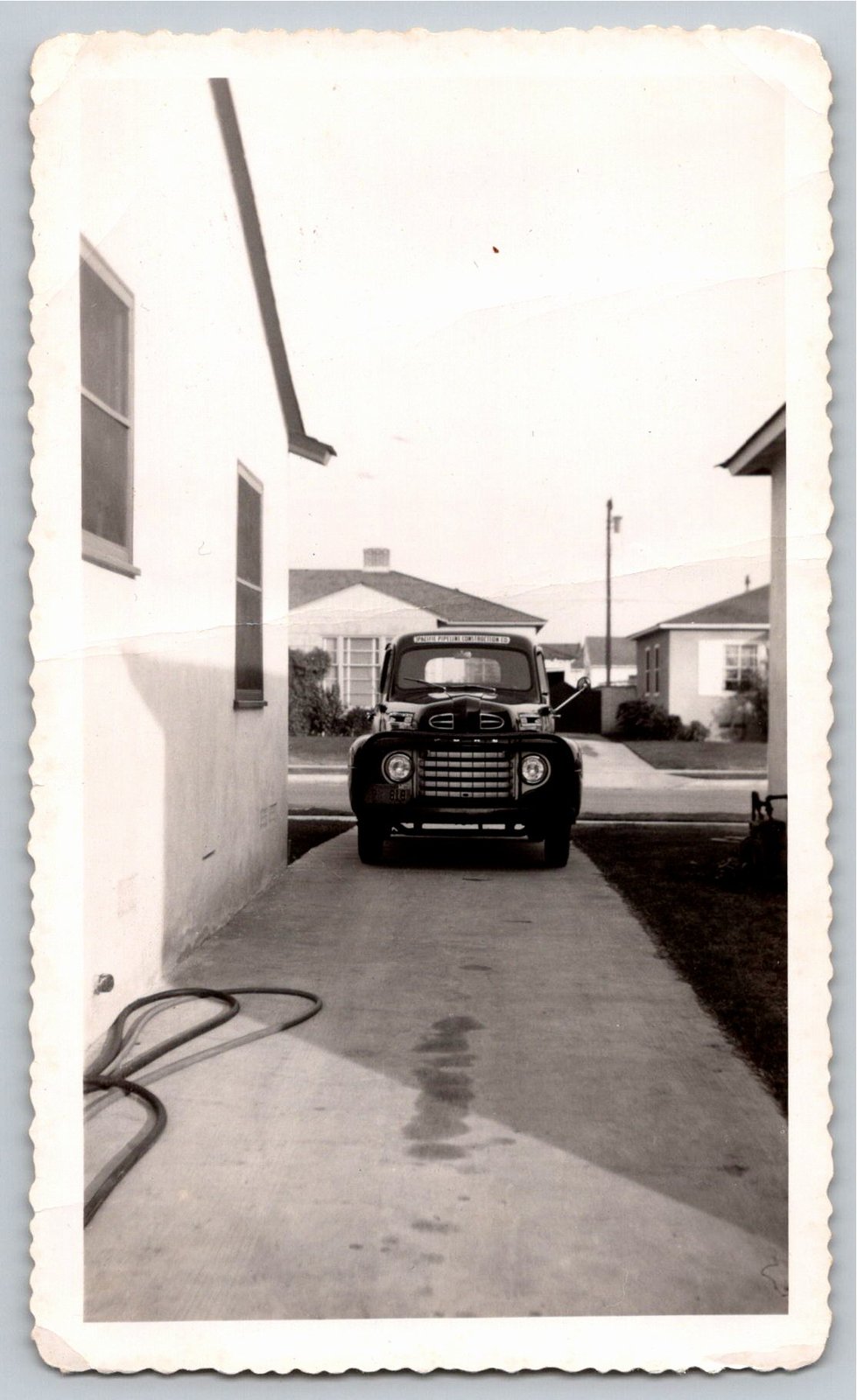
1948 Ford F-1 Truck Pacific Pipeline Construction Photo
📸 Click any thumbnail to inspect Front, Back & Angles (2 Photos)
🔗 Embed / Cite This Archival Image (Free with Attribution)Get HTML Code
© USA RESELL. Bloggers, historians, and website owners may embed this image for free by copying the HTML code below (which includes the required credit link back to this page):
USA RESELL is a living historical archive. Because original artifacts are one-of-a-kind and source records change rapidly, use the button above to check live marketplace availability or locate surviving examples. As an eBay Partner, we may earn a commission on qualifying purchases.
Item Specifications
- Type: Photograph
- Production Technique: Gelatin-Silver Photograph
- Original/Licensed Reprint: Original
- Year of Production: 1948
- Time Period Manufactured: 1940-1949
- Image Color: Black and White
- Category: Vintage Photography
- Format / Type: Vintage Photographs
Historical Context & Overview
Visual & Historical Overview of the Post-War Ford Work Truck
This striking original vintage photograph presents an authoritative, head-on view of a late 1940s Ford F-Series commercial truck positioned squarely within a narrow residential driveway. Centered within the frame, the vehicle showcases the rugged aesthetic that defined American light-duty hauling immediately following the conclusion of World War II. Mounted atop the cab roof is a distinctive exterior sun visor prominently painted with commercial fleet lettering for the Pacific Pipeline Construction Co., signifying its vital role in the massive infrastructural expansion sweeping across the western United States.
The surrounding setting provides an atmospheric time capsule of mid-century suburban life. A smooth concrete driveway leads back toward modest stucco residential homes with low-pitched roofs, characteristic of post-war California development. Utility poles rise against gently sloping hills in the distance, while foreground details—such as a garden hose coiled loosely near the house wall and natural fluid stains along the pavement—lend the scene an authentic documentary quality. The composition expertly balances the domestic environment with the unyielding presence of heavy industrial utility.
Industrial Utility and the First-Generation F-Series Era
Introduced in late 1947 for the 1948 model year, Ford's "Bonus-Built" F-Series represented the company's first completely redesigned civilian truck chassis developed after the war. Distinct from pre-war platforms that shared tooling with passenger vehicles, models like the F-1 were purpose-engineered from the ground up to endure punishing commercial duties. The truck featured in this image displays the signature horizontal barred grille, integrated round headlamps, and split-pane windshield that came to symbolize American industrial strength during the late 1940s and early 1950s.
Contractors like the Pacific Pipeline Construction Co. relied heavily on these reliable workhorses to facilitate energy expansion, municipal utility installation, and suburban pipeline grids. Equipping work trucks with customized exterior sun visors and prominent company insignias not only offered drivers relief from harsh sun exposure during long days on job sites but also served as roaming mobile billboards. This snapshot captures that exact cross-section of working-class pride and corporate development during the golden age of American road transport.
Format, Paper Characteristics, and Archival Collector Appeal
Physically, this authentic gelatin-silver photograph measures approximately 3.4 by 5.8 inches and is rendered on durable vintage photographic paper stock. The print is framed by decorative scalloped deckled edges, a popular finishing technique utilized by mid-century photo processing labs. The emulsion exhibits crisp focus, balanced midtones, and rich, deep shadows, highlighting fine mechanical nuances from the bumper bracketry to the hood trim.
The reverse side of the print remains clean and unwritten, bearing only a small, sharp stamped archival inventory number "784" in dark ink along the upper perimeter. The print demonstrates remarkable preservation, showing no tears, pinholes, or damaging surface creases, with only minimal handling wear consistent with its age. For historians of vintage automotive design, commercial fleet culture, and twentieth-century Americana, this photograph stands as an evocative, unvarnished portrait of post-war industrial enterprise.