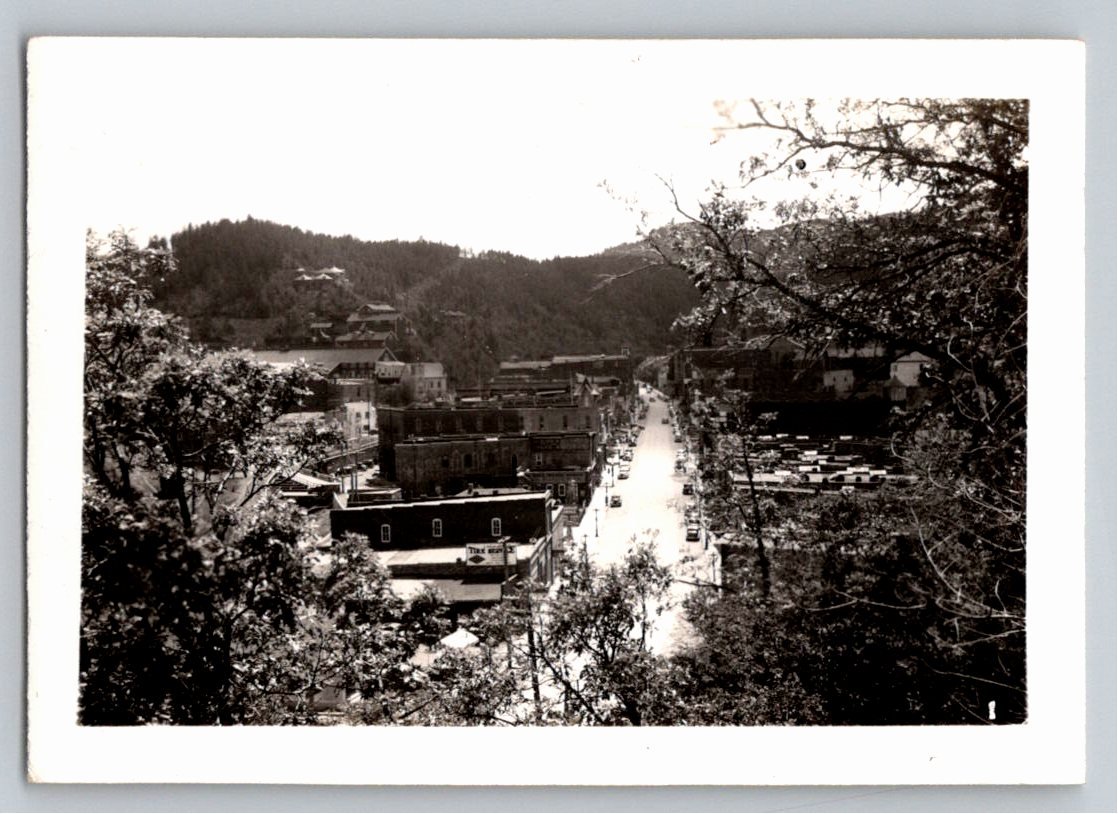
1940s Mountain Town Main Street Aerial View B&W Photo
📸 Click any thumbnail to inspect Front, Back & Angles (2 Photos)
🔗 Embed / Cite This Archival Image (Free with Attribution)Get HTML Code
© USA RESELL. Bloggers, historians, and website owners may embed this image for free by copying the HTML code below (which includes the required credit link back to this page):
USA RESELL is a living historical archive. Because original artifacts are one-of-a-kind and source records change rapidly, use the button above to check live marketplace availability or locate surviving examples. As an eBay Partner, we may earn a commission on qualifying purchases.
Item Specifications
- City: Unspecified
- Country: United States
- Era: 1940s
- Subject: Main Street Mountain Town Small Town Architecture
- Theme: Americana Community Life Transportation Topographical
- Year of Production: 1945
- Category: Vintage Photography
- Format / Type: Snapshots
Historical Context & Overview
Visual & Historical Overview: A Mountain Settlement from Above
Framed by natural oak boughs and dense hillside foliage, this original 1940s black-and-white snapshot presents an elevated perspective overlooking an American mountain community. The composition captures the town's central corridor as it cuts through the valley floor, flanked by multi-story masonry commercial buildings, local retail storefronts, and orderly rows of parked mid-century automobiles. Prominent along the street level is a visible commercial rooftop sign advertising "Tire Service," providing a clear visual cue to the automotive reliance and roadside commerce defining mid-20th-century small-town life.
Beyond the primary commercial block, the surrounding topography dominates the scene. Rolling ridges, covered in thick stands of conifer and deciduous timber, envelop the settlement and emphasize its isolated geographic setting. Whether established around mining, timber production, or rail transportation, mountain enclaves of this era developed compact downtown centers bounded tightly by steep hillsides. This vernacular snapshot preserves that exact balance between human industry and rugged wilderness during the post-World War II period.
Mid-Century American Townscapes & Vernacular Photography
During the 1930s and 1940s, portable medium-format roll film cameras allowed travelers, motorists, and residents to document regional landscapes with remarkable clarity. Rather than purchasing standard commercial photographs, visitors frequently climbed local scenic outlooks or hilltops to photograph panoramic vistas of towns they passed through. This print exemplifies that tradition of mid-century vernacular photography, capturing everyday civic life, architectural scale, and natural geography in an unvarnished personal format.
The print features a tiny, discreet number "1" in the lower right corner of the image area, matched precisely on the reverse side by a small, singular stamped number "1." This systematic numbering suggests the snapshot belonged to an organized travel series, personal itinerary, or a carefully indexed family travel album documenting a journey across the American interior. The absence of commercial publisher logos or promotional text indicates it was made and preserved as an authentic private keepsake.
Physical Specifications, Photographic Medium & Preservation
This original photograph is developed on traditional gelatin-silver paper and measures approximately 3.4 by 2.4 inches. Developed with a glossy surface finish, the print exhibits a full tonal scale with deep shadows in the wooded foreground and crisp highlights throughout the sunlit streetscape. The back of the photographic paper is entirely plain apart from the singular stamped numeral, remaining free of commercial photograph markings, address lines, or adhesive album residue.
In terms of physical preservation, this vintage print remains in very good condition. The paper stock retains flat structural integrity, showing minimal edge wear and sharp corners consistent with careful archival storage. The emulsion is bright and stable, free from significant handling scuffs, creases, or surface discoloration. As an authentic piece of mid-century Americana, it serves as a valuable primary document for collectors of vernacular townscapes, vintage regional photography, and historic American geography.