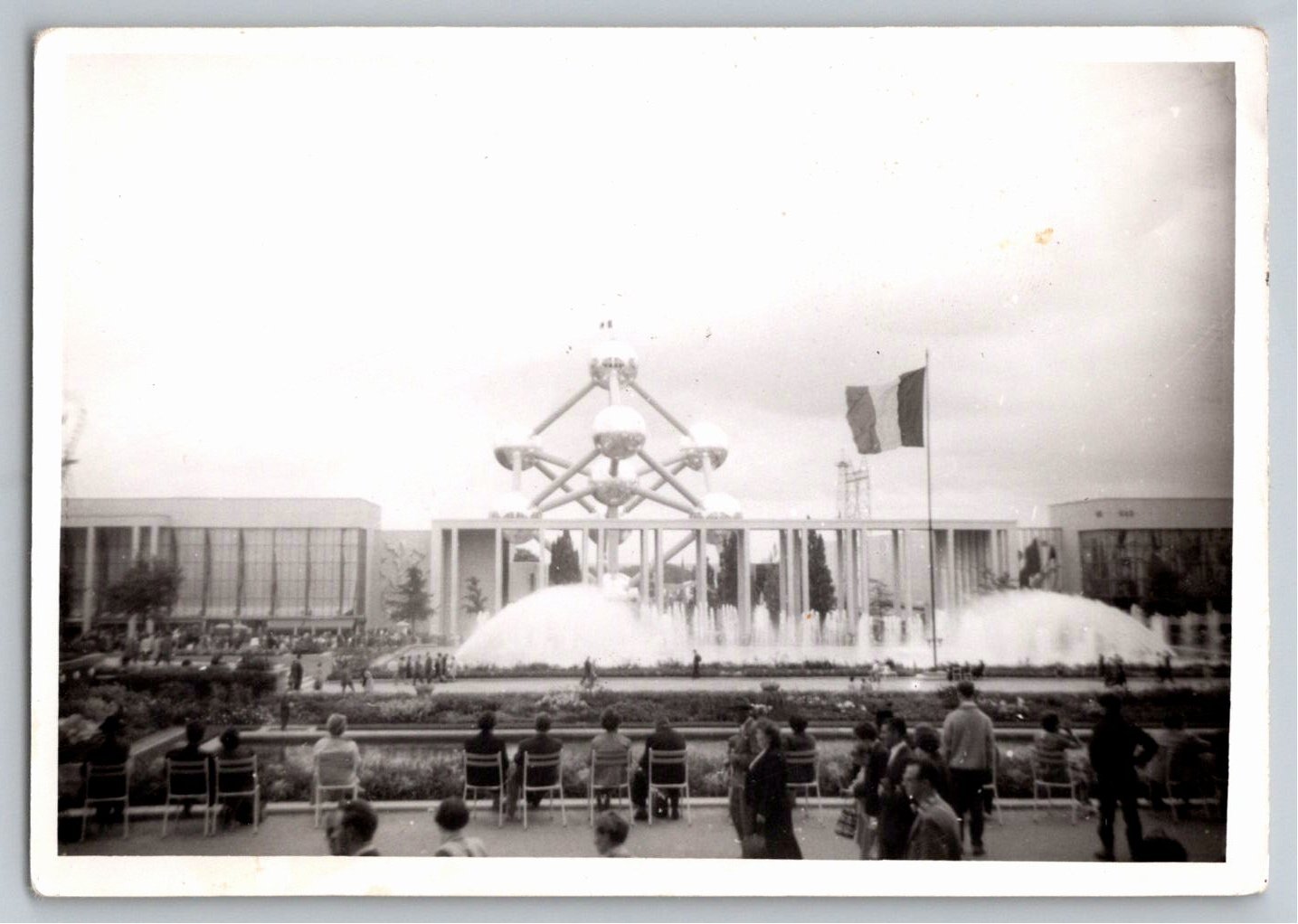
1958 Brussels World's Fair Atomium Fountain Photo Expo 58
📸 Click any thumbnail to inspect Front, Back & Angles (2 Photos)
🔗 Embed / Cite This Archival Image (Free with Attribution)Get HTML Code
© USA RESELL. Bloggers, historians, and website owners may embed this image for free by copying the HTML code below (which includes the required credit link back to this page):
USA RESELL is a living historical archive. Because original artifacts are one-of-a-kind and source records change rapidly, use the button above to check live marketplace availability or locate surviving examples. As an eBay Partner, we may earn a commission on qualifying purchases.
Item Specifications
- City: Brussels
- State: Unspecified
- Country: Belgium
- Country/Region of Manufacture: United States
- Era: 1950s
- Subject: Expo 58 Atomium Worlds Fair
- Category: Vintage Photography
- Format / Type: Snapshots
Historical Context & Overview
Mid-Century Modernism and the 1958 Brussels World's Fair
Captured during the vibrant run of Expo 58, this original vintage snapshot offers an authentic, ground-level glimpse into one of the twentieth century's most iconic international gatherings. Held on the Heysel Plateau in Brussels, Belgium, the 1958 Brussels World's Fair was the first major universal exposition staged in the aftermath of World War II. In this candid black-and-white view, mid-century fairgoers gather in rows of casual lawn chairs and stroll across wide pedestrian promenades, captivated by the grand technological spectacle before them.
Dominating the center of the composition is the newly constructed Atomium, standing as a triumphant beacon of postwar optimism. Flanked by sprawling modernist pavilions featuring clean horizontal lines, expansive glass facades, and minimalist colonnades, the central plaza is alive with kinetic energy. Tiered water fountains erupt in sweeping plumes of spray along the lower concourse, while a tricolor flag flutters boldly in the breeze, establishing an atmosphere of international goodwill, celebration, and forward-looking scientific achievement.
The Atomium: Engineering, Symbolism, and Atomic-Age Optimism
Conceived by Belgian engineer André Waterkeyn alongside architects André and Jean Polak, the Atomium rose 335 feet into the sky to serve as the definitive centerpiece of Expo 58. Designed to depict the unit cell of an iron crystal magnified 165 billion times, the structure's interconnected steel-clad spheres paid homage to metallurgy, scientific progress, and peaceful atomic energy. Rather than weaponization, the exposition championed international collaboration, humanism, and the promising dawn of the Space Age, drawing over forty million international visitors during its six-month tenure.
This candid snapshot documents the lively interaction between visitor and monumental architecture. Rather than a staged commercial photograph, the amateur photographer framed the scene from behind seated spectators, capturing the relaxed yet awe-inspiring mood of an afternoon spent exploring cutting-edge pavilions. The expansive water cascades in the foreground provided refreshing mist and dramatic movement, beautifully anchoring the soaring geometry of Waterkeyn's metallic marvel against the pale summer sky.
Physical Attributes, Studio Markings, and Archival Preservation
Measuring approximately 3.1 by 4.5 inches, this original vintage photograph was developed using traditional gelatin-silver chemistry on period single-weight paper stock. It features a smooth, glossy surface finish bordered by narrow white margins, characteristic of professional laboratory processing for tourist snapshots in the late 1950s. The reverse side remains unwritten and clean, bearing only a small, authentic studio processing stamp marked "315" near the center, preserving its unblemished archival state.
The photograph remains in very good vintage condition, exhibiting robust paper integrity, gentle softening at the corners, and minor edge handling consistent with period personal photo albums. Natural atmospheric exposure in the upper sky registers authentic mid-century tonal contrast, while retaining sharp clarity across the architectural facades, cascading water jets, and attendee silhouettes. As an original primary document of Expo 58, this snapshot represents an evocative collectible for historians of world's fairs, atomic-age architecture, and twentieth-century photography.