1958 Mid-Century Home Interior Snapshot Work Clothes Photo
📸 Click any thumbnail to inspect Front, Back & Angles (2 Photos)
🔗 Embed / Cite This Archival Image (Free with Attribution)Get HTML Code
© USA RESELL. Bloggers, historians, and website owners may embed this image for free by copying the HTML code below (which includes the required credit link back to this page):
USA RESELL is a living historical archive. Because original artifacts are one-of-a-kind and source records change rapidly, use the button above to check live marketplace availability or locate surviving examples. As an eBay Partner, we may earn a commission on qualifying purchases.
Item Specifications
- City: Unspecified
- Country: United States
- Era: 1950s
- Subject: Domestic Life and Vernacular Interior
- Theme: Americana
- Year of Production: 1958
- Category: Vintage Photography
- Format / Type: Snapshots
Historical Context & Overview
A Candid Look at Mid-Century Domestic Space
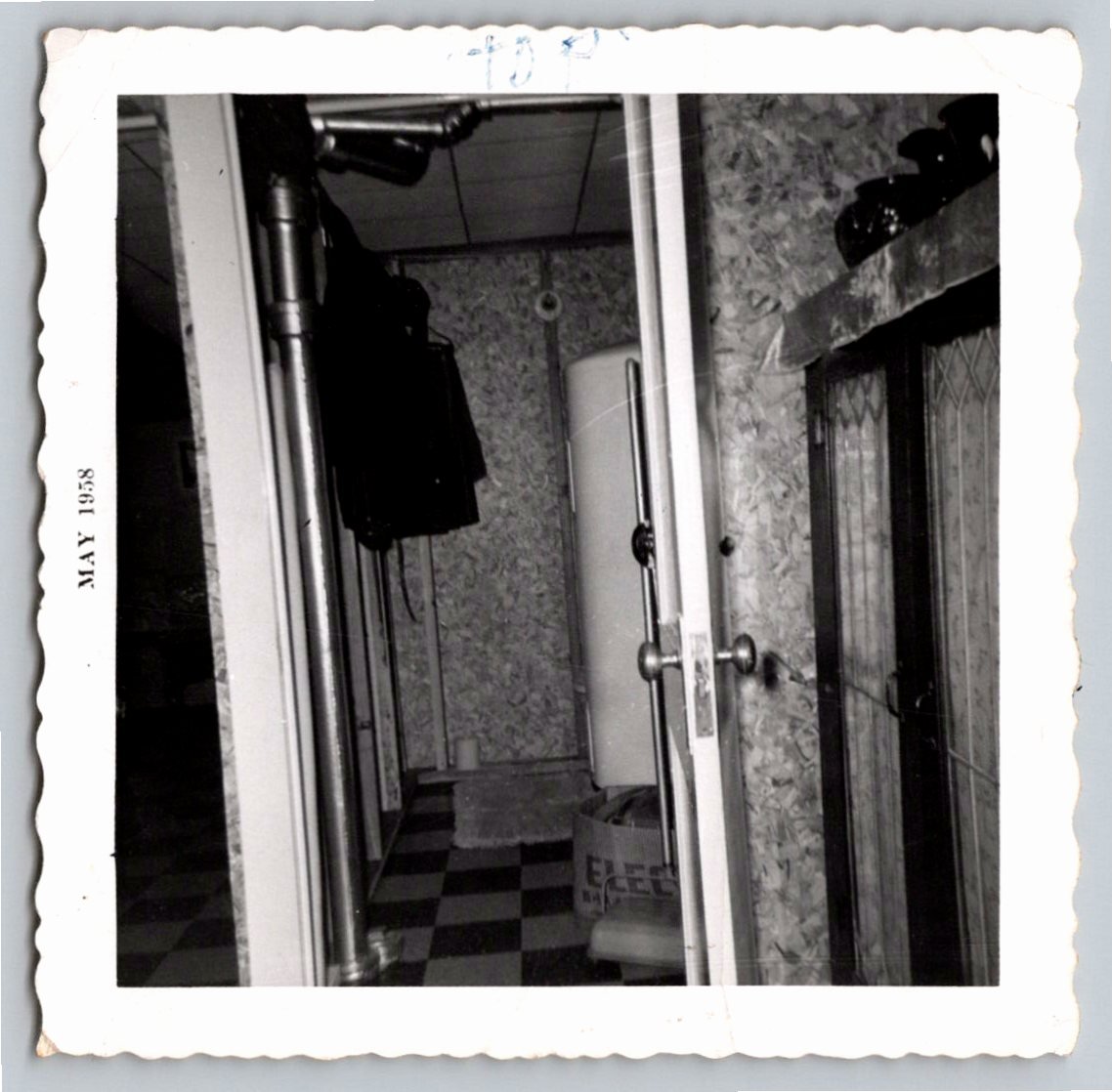
Dating precisely to May 1958 via a machine-stamped margin, this original vintage snapshot provides an unvarnished portal into mid-century American daily living. Rather than the manicured, hyper-stylized living rooms often featured in period advertising catalogs, this composition documents the genuine, utilitarian backbone of a working household. The camera peers past an open interior door fitted with a standard mid-century knob and latch into a compact dressing nook or utility alcove, offering visual testimony to the authentic materials and domestic layouts of the late Eisenhower era.
The interior scene is defined by its quintessential period details, most notably the bold checkerboard linoleum floor tiles that stretch across the threshold. Overhead pipes and an exposed vertical plumbing riser anchor the room's utilitarian nature, running parallel to dark jackets and utility workwear neatly suspended on wall hooks. In the background, a compact hot water heater or rounded vintage appliance sits against patterned wallpaper, while the foreground frames a classic wood-trimmed display cabinet featuring leaded or divided-light panes and decorative glassware resting along its upper ledge.
Vernacular Humor and the Story of "Pete's Room"
The reverse side of the print transforms this interior architectural view into a deeply personal artifact of vernacular Americana. Inscribed in flowing blue ballpoint cursive, the photographer left a humorous narrative: "This is Petes room where he hangs his work clothes you can see the roll of Toilet Paper. I told Pete he should have been setting on the stool I was holding the camera a little crooked." Accompanied by stamped photo-finishing production number 2620, the inscription injects lighthearted mid-century marital banter directly onto the photographic object.
Vernacular photography often captures the intimate subtext of postwar life that professional photojournalists overlooked. The writer's playful teasing regarding the crooked frame and Pete's absence from the stool illustrates how consumer cameras—such as the ubiquitous Kodak Brownie—were integrated into everyday domestic routines. Instead of reserving film solely for formal holidays and graduations, everyday families increasingly chronicled the quirky, mundane corners of their homes, establishing an invaluable visual record of working-class domesticity.
Print Characteristics, Condition, and Archival Value
Measuring approximately 3.5 by 3.4 inches, this vintage black-and-white print exhibits the charming scalloped or deckled borders characteristic of commercial photofinishing labs operating in the late 1950s. The photographic paper delivers rich tonal depth, characterized by crisp deep blacks in the hanging coats, bright whites along the doorway and water tank, and well-balanced mid-tones throughout the patterned wallpaper and linoleum flooring. The edge processing remains clean and structurally sound, showing only gentle, age-appropriate handling typical of well-preserved family albums.
For collectors of vernacular photography, domestic architectural historians, and scholars of mid-century material culture, this 1958 snapshot holds substantial documentary appeal. It encapsulates the convergence of blue-collar labor, residential utility spaces, period manufacturing finishes, and spontaneous familial affection. Preserved in very good vintage condition with an intact narrative on its reverse, it stands as an exceptional artifact of postwar American life.