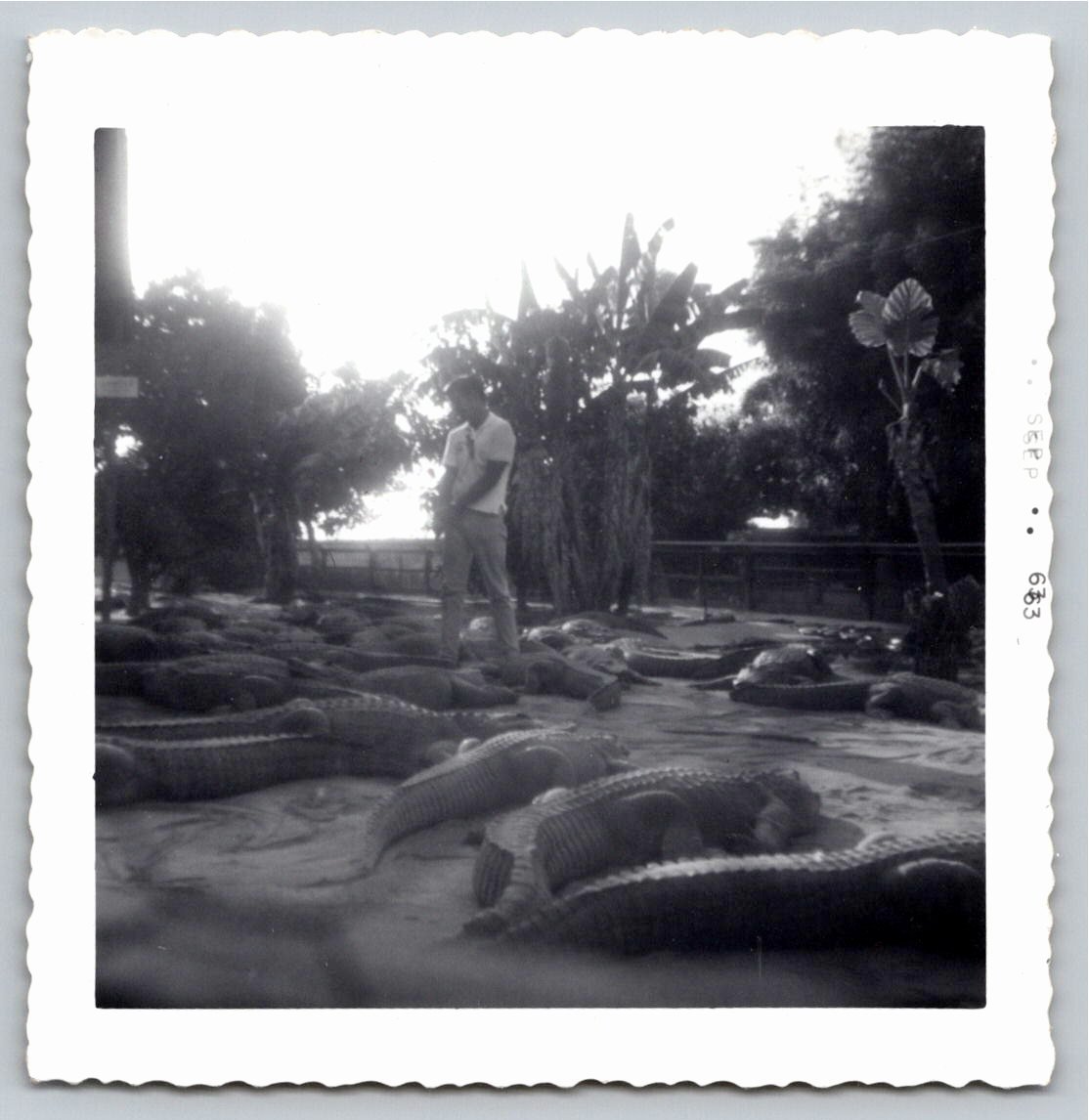
1963 Florida Alligator Farm Handler Reptile Pit Snapshot
📸 Click any thumbnail to inspect Front, Back & Angles (2 Photos)
🔗 Embed / Cite This Archival Image (Free with Attribution)Get HTML Code
© USA RESELL. Bloggers, historians, and website owners may embed this image for free by copying the HTML code below (which includes the required credit link back to this page):
USA RESELL is a living historical archive. Because original artifacts are one-of-a-kind and source records change rapidly, use the button above to check live marketplace availability or locate surviving examples. As an eBay Partner, we may earn a commission on qualifying purchases.
Item Specifications
- City: Unspecified
- State: Florida
- Country: United States
- Era: 1960s
- Subject: Alligator Farm Alligators Reptiles Animal Handler Roadside
- Theme: Americana Animals and Dinosaurs Oddities
- Category: Vintage Photography
- Format / Type: Snapshots
Historical Context & Overview
Mid-Century Florida Tourism and the Alligator Pit
In this evocative September 1963 snapshot, the golden era of Florida roadside attractions comes alive through a strikingly casual display of danger. Standing in the center of a wide sandy enclosure, a lone animal keeper or handler pauses calmly amidst dozens of mature alligators sprawled across the enclosure floor. The foreground is blanketed with the heavily textured, armored backs and long tails of basking reptiles, their scales highlighted by direct sunlight and high-contrast shadow. Lush subtropical foliage, including banana trees and palm fronds, rises behind the perimeter fence, framing the enclosure in authentic Sunshine State ambiance.
The visual composition captures the surreal nature of mid-century vacation sightseeing, where close encounters with prehistoric predators were marketed as must-see entertainment. The handler, dressed in a standard light-colored work shirt and trousers, displays complete nonchalance while occupying the same physical ground as apex predators. The sheer density of reptiles resting side by side in the sandy pit creates an unforgettable tableau of mid-twentieth-century exotic animal exhibition before modernized barrier standards transformed zoo design.
The Golden Age of Roadside Reptile Attractions
During the postwar boom of the 1950s and 1960s, before Interstate highways bypassed local scenic routes and giant corporate theme parks centralized tourist traffic, regional Florida attractions flourished along corridors like U.S. Route 1 and Route A1A. Historic destinations such as the St. Augustine Alligator Farm, founded in 1893, alongside numerous independent roadside reptile gardens, drew millions of traveling families. These parks combined zoological exhibition with carnival-style spectacle, featuring daring keepers who wrestled gators, performed feeding demonstrations, and routinely navigated packed pits without modern protective barriers.
Photographs taken by visiting tourists were prized souvenirs, preserved in family photo albums as proof of exotic southern adventures. The casual interaction depicted in this image reflects the working culture of roadside handlers who developed intimate knowledge of reptilian basking behavior and body language. During sunny autumn afternoons, cold-blooded alligators gathered closely together to absorb thermal energy, allowing confident handlers to walk carefully through designated pathways within the enclosures without provoking predatory responses.
Physical Print Characteristics and Archival Provenance
This original black-and-white print exemplifies the distinct physical aesthetic of early 1960s consumer photography. Printed on traditional fiber-base gelatin-silver photographic paper, the square snapshot measures approximately 3.4 by 3.5 inches. Its perimeter is trimmed with delicate scalloped deckle edges, an ornamental die-cut finishing flourish widely popular during the era. Along the right-hand border margin, an authentic automated photofinishing imprint reads "• • SEP • • 63", conclusively dating the processing of the film to September 1963.
The reverse side remains unwritten, showing only faint natural age patina and clean paper fiber characteristic of well-kept vintage snapshots. The emulsion retains crisp dynamic range, preserving remarkable surface detail on the reptilian hide and foliage without significant fading, creases, or surface tears. For collectors of vernacular roadside Americana, vintage Florida ephemera, and herpetological history, this piece serves as an exceptional tangible window into a vanishing chapter of American leisure culture.