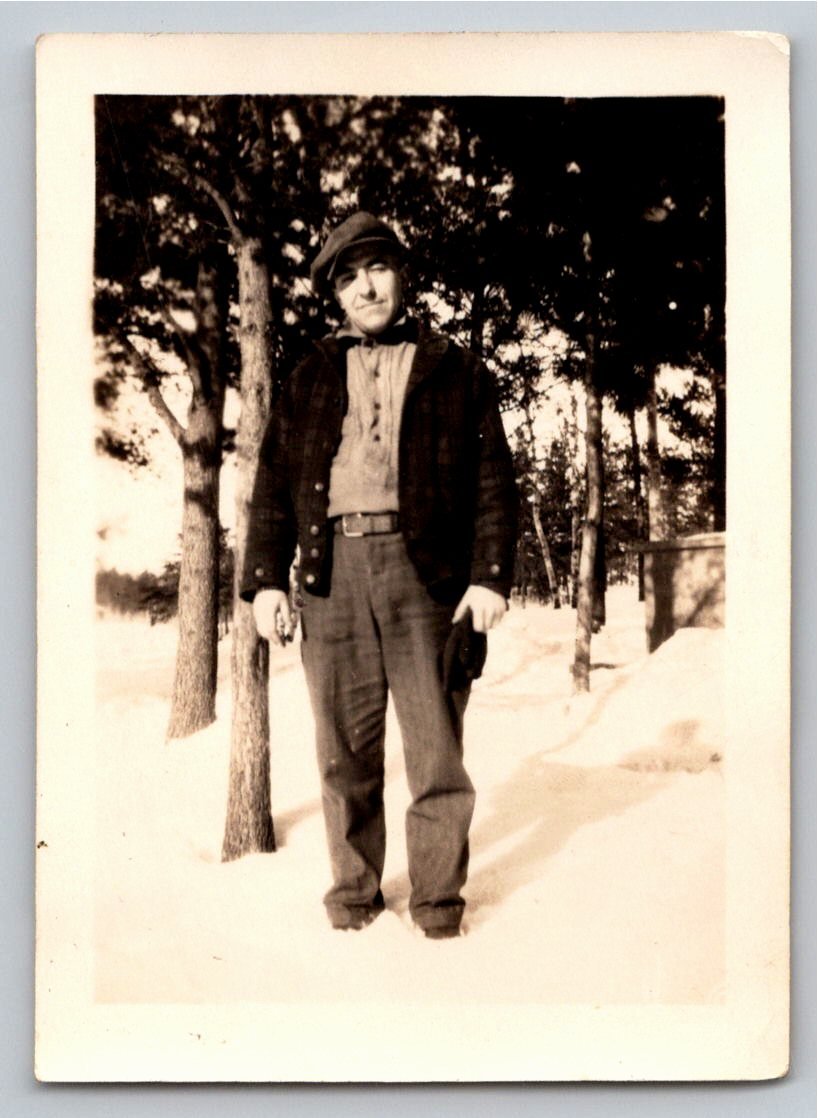
1920s Winter Working Man in Flat Cap Snow Snapshot Photo
📸 Click any thumbnail to inspect Front, Back & Angles (2 Photos)
🔗 Embed / Cite This Archival Image (Free with Attribution)Get HTML Code
© USA RESELL. Bloggers, historians, and website owners may embed this image for free by copying the HTML code below (which includes the required credit link back to this page):
USA RESELL is a living historical archive. Because original artifacts are one-of-a-kind and source records change rapidly, use the button above to check live marketplace availability or locate surviving examples. As an eBay Partner, we may earn a commission on qualifying purchases.
Item Specifications
- City: Unspecified
- Country: United States
- Era: 1920s
- Subject: Men Winter Working Class Snow
- Theme: Americana Occupational Domestic and Family Life
- Year of Production: 1925
- Category: Vintage Photography
- Format / Type: Snapshots
Historical Context & Overview
Visual & Historical Overview of Early Twentieth-Century Workwear
Captured amidst a wintry woodland setting, this candid 1920s snapshot presents an evocative portrait of early twentieth-century American working-class life. The central subject, identified on the reverse simply by his first name, stands knee-deep in freshly fallen snow among slender pine or evergreen trees. Sunlight filters through the winter canopy, casting crisp, elongated shadows across the bright white ground and emphasizing the rich tonal contrast inherent in vintage photographic emulsions.
The man is attired in standard, utilitarian cold-weather garments characteristic of the interwar era. He wears a classic woolen tweed flat cap, often referred to as a newsboy or driver cap, tilted forward against the elements. His ensemble includes a durable, buttoned mackinaw-style work jacket over a collared work shirt, sturdy trousers cinched with a belt, and heavy boots built to withstand the freezing conditions. In his hand, he loosely grasps a heavy glove or pair of mittens, pausing briefly for the camera on an otherwise cold, routine morning.
Everyday Americana and the Inscribed Snapshot
Beyond its aesthetic appeal, this print offers a direct window into the intimate rhythms of vernacular photography during the 1920s. On the reverse, a handwritten vintage cursive inscription reads: "Ben on his way to work." This simple, five-word annotation transforms the photograph from an anonymous archival image into a poignant personal record, capturing an ordinary moment of daily labor that was preserved by a family member or close friend before he set out into the snow.
The proliferation of roll film and portable handheld cameras during the 1920s allowed regular families across the United States to document the unvarnished realities of everyday life without visiting formal portrait studios. Images such as this document regional labor, winter commuting, and domestic textiles in their natural environment. The combination of spontaneous posing and unscripted backdrop preserves historical costume and working conditions with an authenticity that studio portraits rarely achieved.
Material Specifications, Condition, and Collector Appeal
This authentic black-and-white gelatin silver photograph is printed on original medium-weight photographic paper stock with a subtle semi-gloss finish. Measuring approximately 2.4 by 3.4 inches, the physical dimensions reflect the popular vest-pocket contact print formats of the 1920s. The image displays a well-balanced tonal range, shifting gracefully between deep charcoal shadows, sepia undertones, and crisp, snow-covered highlights.
Preserved in remarkable condition, the photograph exhibits only light handling wear along the original white border margins, consistent with decades of careful album storage. The reverse shows natural, uniform age toning that highlights the dark penmanship of the original cursive note. For collectors of vernacular photography, vintage occupational memorabilia, and early American textiles, this authentic snapshot provides an exceptional, tangible connection to working-class winter life in the 1920s.