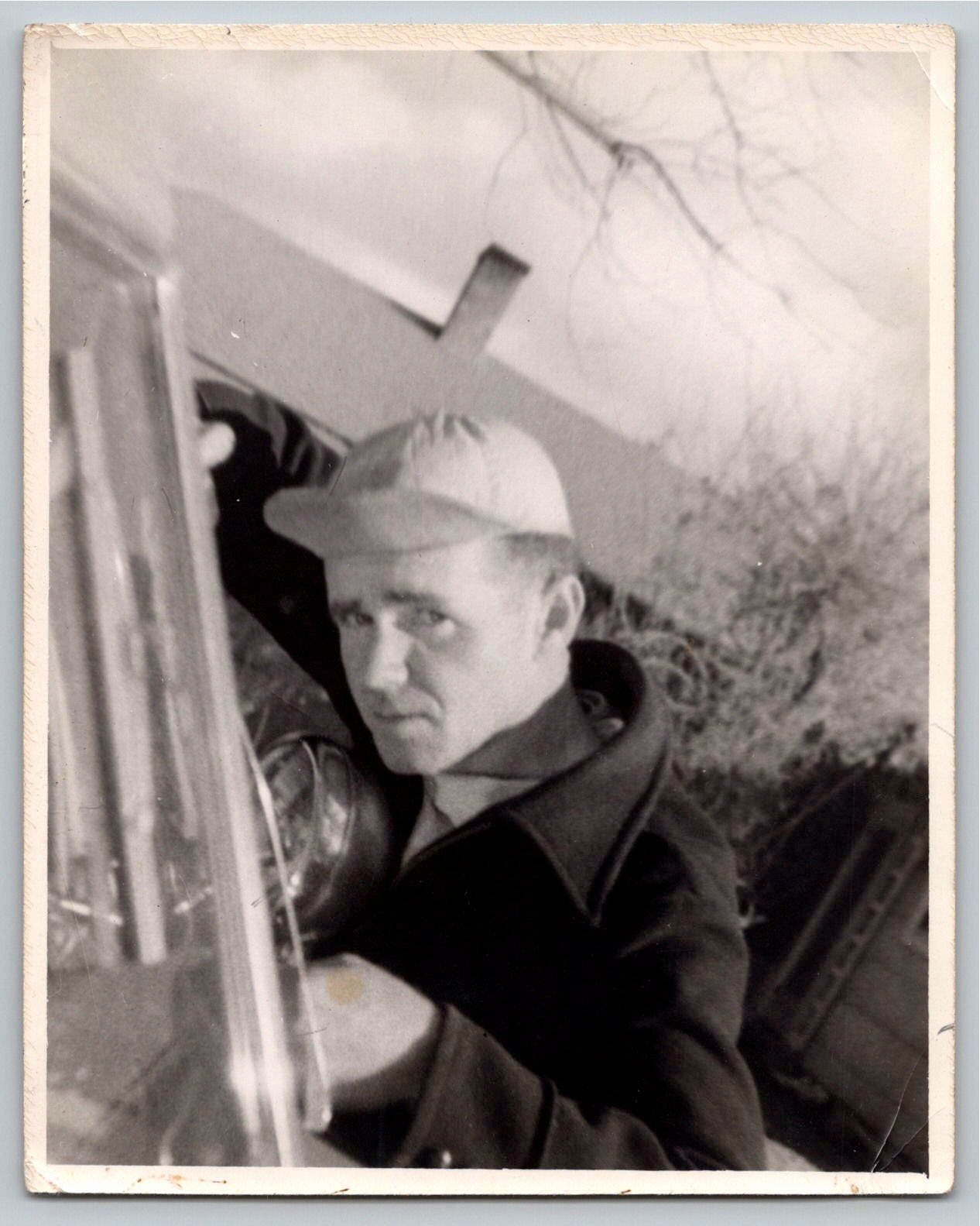
1930s Snapshot Photo Handsome Man in Cap with Roadster Car
📸 Click any thumbnail to inspect Front, Back & Angles (2 Photos)
🔗 Embed / Cite This Archival Image (Free with Attribution)Get HTML Code
© USA RESELL. Bloggers, historians, and website owners may embed this image for free by copying the HTML code below (which includes the required credit link back to this page):
USA RESELL is a living historical archive. Because original artifacts are one-of-a-kind and source records change rapidly, use the button above to check live marketplace availability or locate surviving examples. As an eBay Partner, we may earn a commission on qualifying purchases.
Item Specifications
- City: Unspecified
- Country: United States
- Era: 1930-1939
- Subject: Men Automobile Roadster
- Theme: Americana Transportation People
- Year of Production: 1935
- Category: Vintage Photography
- Format / Type: Snapshots
Historical Context & Overview
Visual & Historical Overview of Pre-War Motoring Americana
This striking original black-and-white gelatin silver snapshot offers an authentic, unvarnished glimpse into 1930s American life. The composition centers on a handsome young man sporting a soft-brimmed cap and a heavy, wide-collared wool overcoat or pea jacket, leaning comfortably against the windshield frame and cowl of an open roadster. His direct, contemplative gaze engages the viewer, evoking the resilient, effortless style characteristic of pre-World War II youth culture during the height of the Great Depression era.
The framing highlights intriguing mechanical and atmospheric elements of early automotive design. Natural winter light glints off the polished chrome of the vehicle's auxiliary cowl lamp and windshield support bracket. Set against a backdrop of leafless tree branches, a softly pitched residential roofline, and a towering brick chimney under an overcast sky, the scene captures an intimate moment of personal pride connected to the freedom of the open road.
Automotive Culture and Vernacular Street Photography in the 1930s
During the 1930s, the private automobile evolved from a luxury plaything into a central pillar of American personal independence and social identity. Posing casually alongside one's roadster or coupe was a favorite subject for domestic photographers, turning modest suburban driveways and rural lanes into impromptu outdoor portrait studios. Vehicles of this period, with their sweeping fenders, freestanding headlamps, and heavy chrome hardware, represented modern engineering and aspirations of mobility despite widespread economic hardship.
As amateur snapshot cameras such as Kodak Brownies became ubiquitous, everyday citizens began chronicling their own daily environments rather than visiting formal photography studios. This vernacular portrait captures that exact cultural shift. The photographer chose a dynamic, slightly angled perspective that frames the subject tightly with his machine, creating an artistic, candid balance between the human figure and the sculpted metalwork of early automotive manufacturing.
Physical Dimensions, Print Technique, and Archival Condition
Printed on traditional single-weight photographic paper, this original snapshot measures approximately 3.9 by 5.0 inches (roughly 10 x 12.7 cm). A notable physical characteristic is the decorative scalloped deckled edge running along the upper margin, a distinctive finish produced by local drugstore photo labs and processing houses of the 1930s and 1940s. The reverse of the print is completely blank, free of any photograph divisions, studio ink stamps, or personal handwritten inscriptions.
The photograph survives in good vintage condition, exhibiting gentle handling patina consistent with its nine-decade history. Observable traits include slight corner softening, a tiny, faint surface blemish near the subject's lower hand, and minor edge wear. On the reverse, a small isolated brown spot or foxing mark is visible, which remains strictly confined to the backing paper without bleeding through or compromising the primary visual composition. It remains an evocative, highly collectible piece of early twentieth-century automotive and social ephemera.