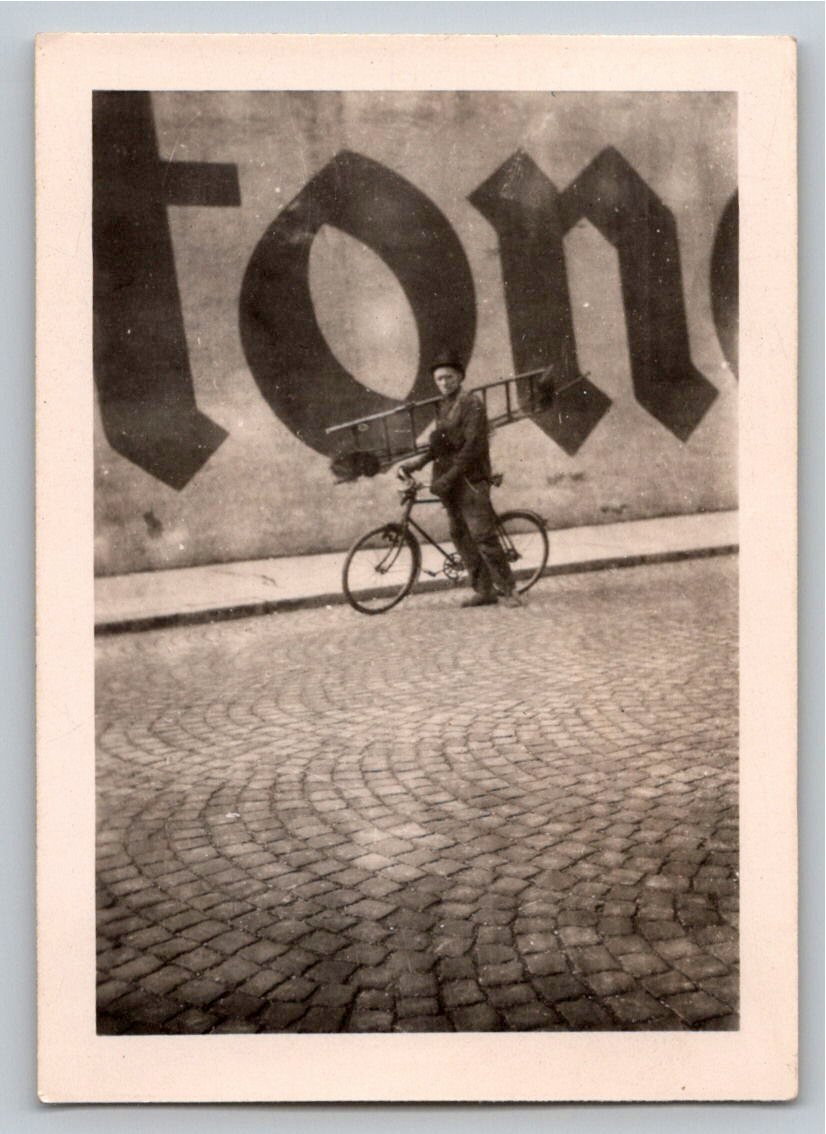
1930s Chimney Sweep with Bicycle & Ladder Snapshot Photo
📸 Click any thumbnail to inspect Front, Back & Angles (2 Photos)
🔗 Embed / Cite This Archival Image (Free with Attribution)Get HTML Code
© USA RESELL. Bloggers, historians, and website owners may embed this image for free by copying the HTML code below (which includes the required credit link back to this page):
USA RESELL is a living historical archive. Because original artifacts are one-of-a-kind and source records change rapidly, use the button above to check live marketplace availability or locate surviving examples. As an eBay Partner, we may earn a commission on qualifying purchases.
Item Specifications
- City: Unspecified
- Country: United States
- Era: 1930s
- Subject: Chimney Sweep Bicycle Trades and Occupations Cobblestone Street
- Theme: Occupational Americana
- Year of Production: circa 1930
- Category: Vintage Photography
- Format / Type: Snapshots
Historical Context & Overview
Visual & Historical Overview of the Chimney Sweep
This striking original vintage snapshot photograph offers an evocative look into early twentieth-century working-class urban life, dating to circa 1930. The central focus is an itinerant chimney sweep paused alongside his utility upright diamond-frame bicycle. Dressed in utilitarian dark work garments and a rounded flat cap, the tradesman balances the heavy burdens of his craft: an extendable wooden section ladder rests effortlessly across his shoulder, intertwined with coiled flexible sweeping rods and bristled circular brushes. His relaxed, direct stance conveys both the stamina and routine pride common among urban trade laborers who serviced residential hearths and coal flues during this era.
Equally compelling is the photographer’s dynamic compositional framing, which emphasizes the rhythm of the city environment. The sweep stands positioned near the curb of a sweeping cobblestone roadway, where individual stone pavers radiate outward in an intricate fan or arched arrangement. In the background, painted directly onto an aged stucco masonry wall, are massive, stylized blackletter gothic letters displaying the segment "ton." This bold architectural typography provides a stark graphic counterpoint to the working figure, elevating the image from a simple occupational record into an artistic slice of Depression-era street photography.
Urban Labor and the Traditional Tradesman's Routine
During the 1920s and 1930s, sweeping chimneys remained an essential municipal trade vital for household heating safety and fire prevention. As residential communities relied heavily on coal and wood for domestic stoves, the build-up of flammable creosote and thick soot posed constant residential hazards. Tradesmen operated as highly mobile independent operators, navigating urban blocks efficiently by bicycle long before motorized service fleets became ubiquitous. A sturdy two-wheeler allowed sweeps to transport specialized tools, heavy rods, and ladders directly through dense neighborhoods without the ongoing expense of keeping a horse or automobile.
The monumental painted lettering on the building facade reflects the prevalent commercial sign-painting techniques of the interwar period. Giant Gothic or Fraktur lettering often adorned industrial warehouses, breweries, or regional business premises across European and transatlantic urban centers. The unhurried presence of the tradesman amidst such bold graphic advertising encapsulates the lived reality of working neighborhoods, capturing an organic moment where commercial infrastructure, cobblestone craftsmanship, and daily labor intersected.
Physical Print Characteristics, Provenance & Collector Value
This original snapshot is produced as an authentic gelatin-silver print on vintage photographic paper stock, measuring approximately 2.5 by 3.5 inches. The front is cleanly framed by its original integral white borders, preserving the composition exactly as exposed and trimmed in the darkroom. The surface exhibits a subtle vintage semi-gloss sheen, rendering rich shadow tones in the laborer's clothes and clear midtone gradations throughout the textured cobblestone street. The reverse is plain photographic paper exhibiting soft, natural ambient age-toning and a single, faintly stamped numeric production mark reading "2."
Physical preservation is notably high, with the photographic artifact remaining completely free from pinholes, heavy creasing, album adhesion residue, or paper tears. Its sharp focal clarity and balanced exposure preserve intricate mechanical details, from the bicycle's spoke construction and crank assembly to the worn grain of the ladder rungs. For dedicated collectors of early occupational photography, transport history, cycling memorabilia, and vintage vernacular streetscapes, this snapshot represents an exceptional, authentic document of interwar daily trade life.