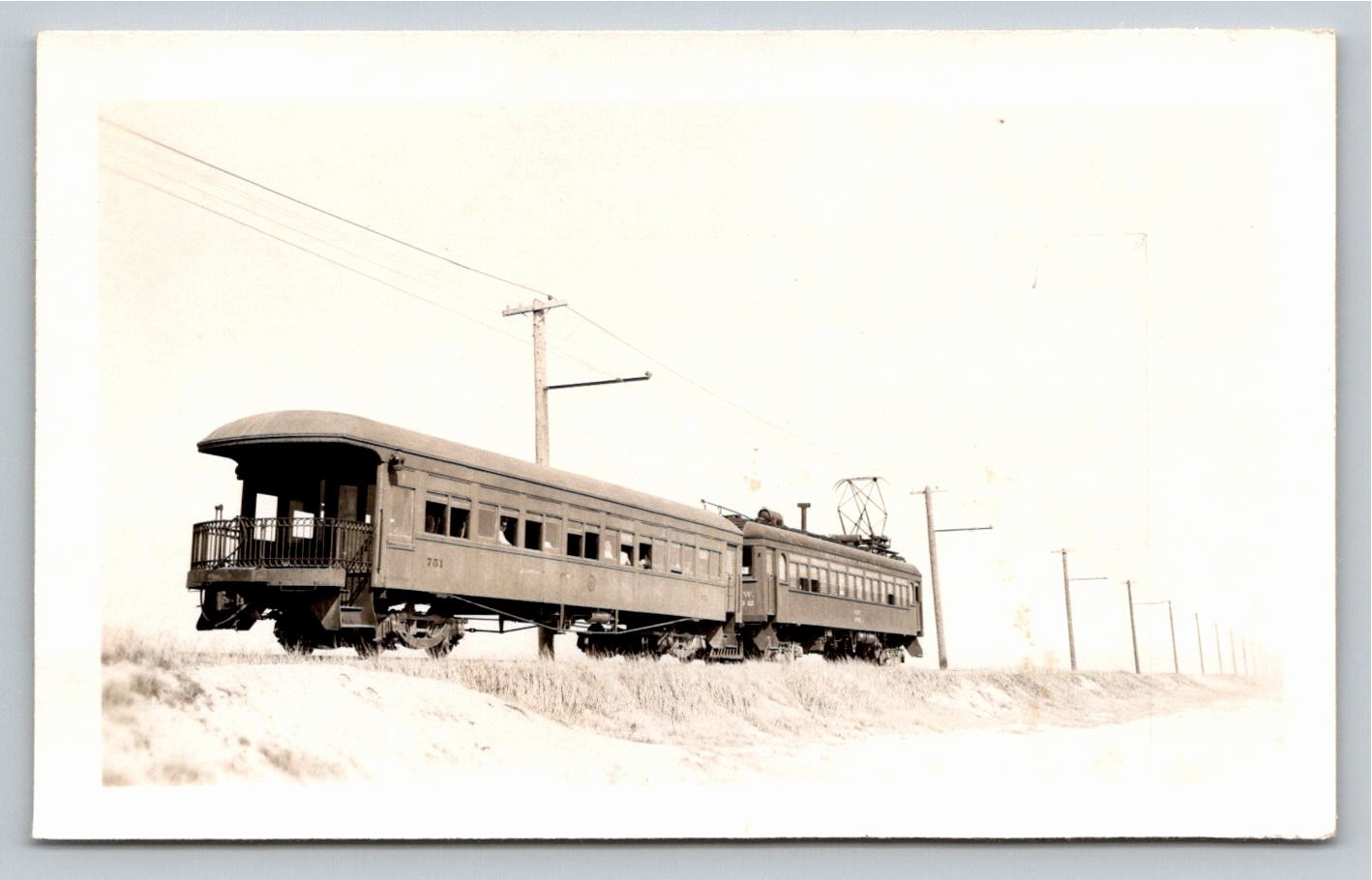
Salt Lake & Utah Railroad Interurban Car 751 Vintage Photo
📸 Click any thumbnail to inspect Front, Back & Angles (2 Photos)
🔗 Embed / Cite This Archival Image (Free with Attribution)Get HTML Code
© USA RESELL. Bloggers, historians, and website owners may embed this image for free by copying the HTML code below (which includes the required credit link back to this page):
USA RESELL is a living historical archive. Because original artifacts are one-of-a-kind and source records change rapidly, use the button above to check live marketplace availability or locate surviving examples. As an eBay Partner, we may earn a commission on qualifying purchases.
Item Specifications
- City: Unspecified
- State: Utah
- Country: United States
- Era: 1910-1940s
- Subject: Interurban Electric Railway Car #751
- Theme: Transportation
- Category: Vintage Photography
- Format / Type: Vintage Photographs
Historical Context & Overview
A Window into Utah's Interurban Railway Era
This authentic black-and-white snapshot offers a rare look at the golden age of American electric transit, specifically detailing car #751 of the Salt Lake & Utah Railroad. Operating famously as the "Orem Line," this interurban electric railway connected Salt Lake City with agricultural and industrial communities stretching south through Provo to Payson from 1914 until service ceased in 1946. Interurban lines like the Salt Lake & Utah were vital arteries of regional passenger and express transit before widespread highway development transformed Western travel.
Engineering and History of Niles Car #751
Manufactured in 1916 by the renowned Niles Car and Manufacturing Company of Niles, Ohio, car #751 was designed as a heavy steel parlor observation car. Built to handle high-speed electric operation across open right-of-way, the unit features an open rear observation balcony equipped with ornamental wrought railing—a classic structural touch designed for high-class passenger service. In this photograph, the car is captured coupled to another passenger motor unit, silhouetted along a rural stretch lined with wooden catenary poles and overhead electrical wiring.
Preservation and Collector Value
Following the total abandonment of the Salt Lake & Utah system in 1946, car #751 achieved legendary status among rail preservationists. In 1949, it was acquired by the Bay Area Electric Railroad Association (BAERA) and moved to California for historical stewardship. Printed on vintage single-weight paper stock with a clean matte finish, this candid historical photograph includes handwritten period identification on the blank reverse referring to its eventual preservation by the Bay Area Association. It serves as an exceptional piece of ephemera for enthusiasts of electric interurbans, Utah transit history, and Niles rolling stock.
3>Gelatin-Silver Printcraft and Visual DetailMeasuring approximately 4.4 by 2.7 inches, this original gelatin-silver print captures Car 751 with exceptional structural clarity and rich tonal contrast. The clear sky background sharply illuminates the heavy steel body construction, double-truck wheel assemblies, and overhead electrical rigging. Printed on period single-weight paper stock featuring a smooth matte finish, the print exhibits a light age-appropriate patina around the edges—an authentic marker of mid-century silver halide processing that adds character without compromising detail.
Provenance and Collector Legacy
The reverse side of the photograph features neat period ink handwriting reading "751 Salt Lake & Utah Bay Area Assn Car." This handwritten inscription offers key archival provenance, documenting the photographic record kept by early railfans who tracked the unit's historic 1949 transition to California. Field-captured images featuring explicit handwritten equipment identifications are highly valued by transport historians seeking to verify surviving equipment rosters and post-abandonment movements.
Preserved without major creases, pinholes, or edge tears, this snapshot stands as a well-maintained survivor of regional transit ephemera. It represents a noteworthy addition for specialists in Utah transport heritage, Niles Car and Manufacturing Company documentation, and 20th-century American electric interurban photography.