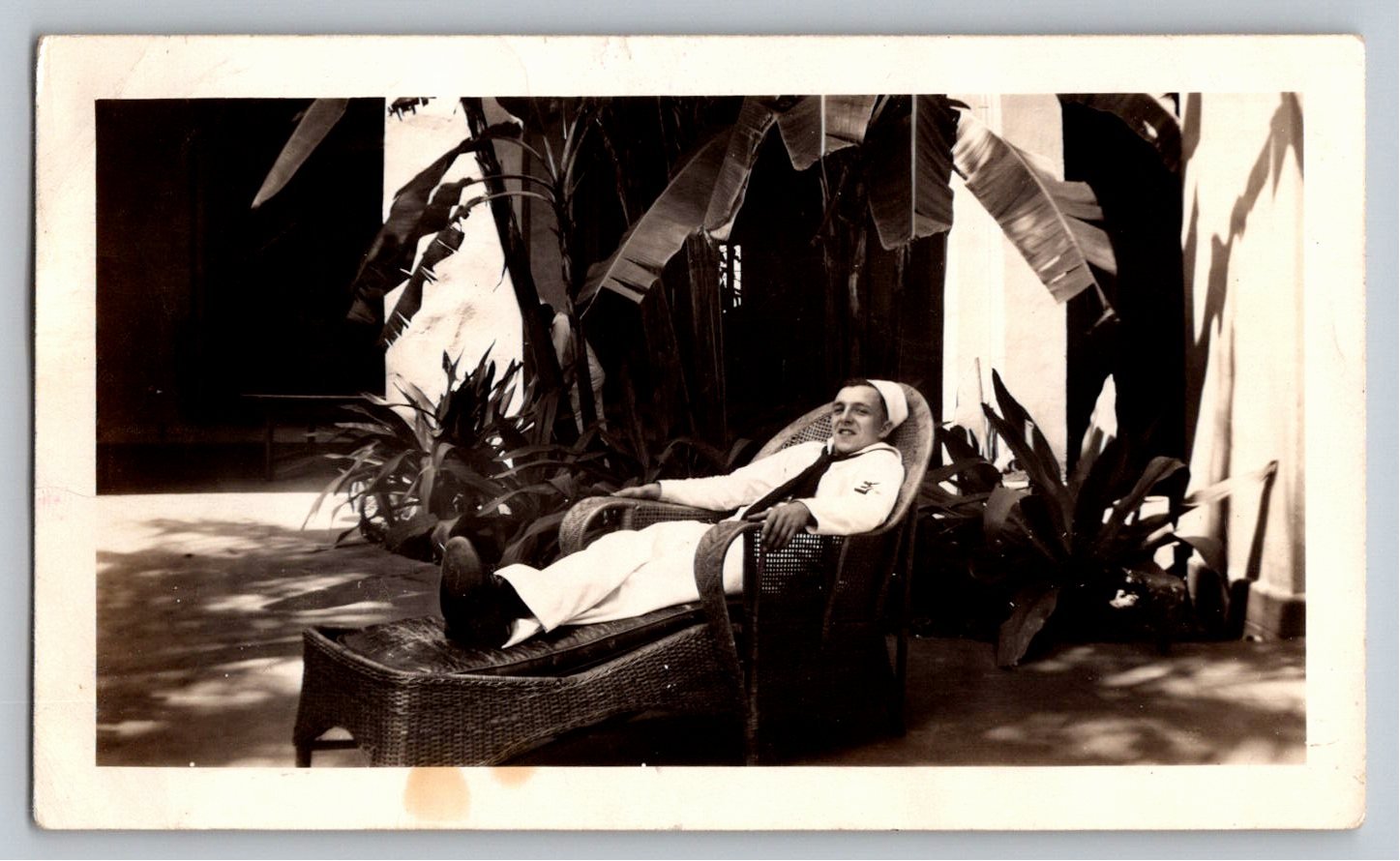
1944 WWII US Navy Sailor in Dress Whites Photo Snapshot
📸 Click any thumbnail to inspect Front, Back & Angles (2 Photos)
🔗 Embed / Cite This Archival Image (Free with Attribution)Get HTML Code
© USA RESELL. Bloggers, historians, and website owners may embed this image for free by copying the HTML code below (which includes the required credit link back to this page):
USA RESELL is a living historical archive. Because original artifacts are one-of-a-kind and source records change rapidly, use the button above to check live marketplace availability or locate surviving examples. As an eBay Partner, we may earn a commission on qualifying purchases.
Item Specifications
- City: Unspecified
- Country: United States
- Era: WWII (1939-1945)
- Subject: US Navy Sailor Tropical Courtyard Wicker Furniture
- Theme: Militaria Americana
- Year of Production: 1944
- Category: Vintage Photography
- Format / Type: Snapshots
Historical Context & Overview
Visual & Historical Overview: A Respite in the Pacific Theater
This striking original vintage photograph captures a candid, serene moment during the height of the Second World War. Reclining comfortably across a woven wicker chaise lounge, an American sailor beams at the camera, projecting ease and youth against a backdrop of deep conflict. Dressed impeccably in official United States Navy summer dress whites, he wears the traditional dark neckerchief and white canvas "dixie cup" cap tilted naturally back on his head. The composition radiates warmth and leisure, illuminated by the bright, high sun casting strong shadows across the courtyard pavement.
Towering banana leaves and broad tropical plants frame the seated serviceman, offering a distinct sense of geography. While the specific base is unrecorded, the architecture and botanical elements strongly suggest a naval station or rest camp located in Hawaii, the South Pacific, or a balmy southern domestic base such as Florida or San Diego. Candid snapshots of this nature served as vital personal touchstones, documenting brief respites from shipboard drills, combat operations, and relentless wartime discipline.
Uniform Details and Photographic Processing Traditions
The serviceman’s uniform provides clear visual markers characteristic of the 1940s United States Navy enlisted personnel. The pristine summer whites, featuring dark piping and rated arm insignia, symbolize both military pride and the strict standards maintained even when ashore on liberty. His relaxed posture in an ornate woven wicker chair—furniture commonly found in tropical officer clubs, base courtyards, and island hotels requisitioned by military authorities—creates an evocative juxtaposition between formal naval service and leisurely retreat.
The reverse side of the photographic paper bears tangible evidence of period commercial film development. Stamped neatly in vibrant violet studio ink is the processing tracking code "896 U," supplemented by a delicate graphite pencil notation "26." These lab stamps were customary among base exchange photo counters and civilian processing shops catering to transient servicemen, allowing individual negative rolls to be tracked and organized for troops eagerly awaiting physical prints to send home to loved ones.
Material Format, Physical Condition, and Archival Significance
Rendered via the classic gelatin silver developing process on glossy photographic stock, the print measures approximately 4.5 by 2.7 inches with its original white borders intact. The exposure exhibits rich tonal depth, spanning bright paper highlights on the sailor’s uniform to deep, velvety blacks within the shaded foliage and undercarriage of the wicker chair. The sepia-leaning contrast remains crisp and sharp, revealing fine textures in the hand-woven cane seating and crisp cotton fabric.
Surviving in very good vintage condition, this authentic vernacular photograph shows only minor, gentle signs of historical handling. Subtle age toning is apparent along the lower margin, accompanied by faint edge wear typical of items lovingly preserved within personal military scrapbooks. As a genuine piece of vernacular World War II Americana, this photograph stands as an intimate, humanizing record of naval life, preserving a quiet moment of happiness amid a turbulent era.