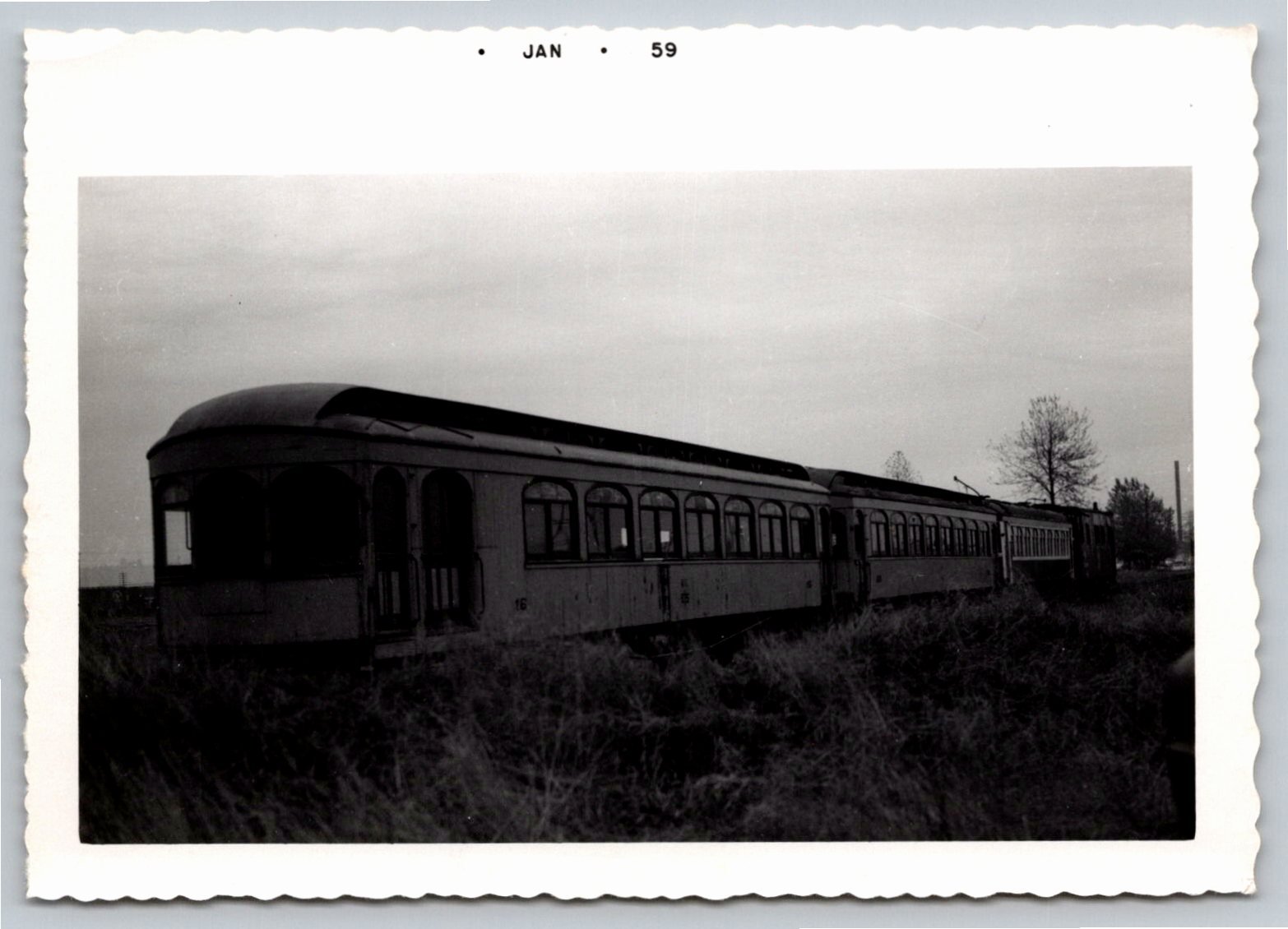
1959 Electric Interurban Trolley Streetcar Vintage Photo
📸 Click any thumbnail to inspect Front, Back & Angles (2 Photos)
🔗 Embed / Cite This Archival Image (Free with Attribution)Get HTML Code
© USA RESELL. Bloggers, historians, and website owners may embed this image for free by copying the HTML code below (which includes the required credit link back to this page):
USA RESELL is a living historical archive. Because original artifacts are one-of-a-kind and source records change rapidly, use the button above to check live marketplace availability or locate surviving examples. As an eBay Partner, we may earn a commission on qualifying purchases.
Item Specifications
- City: Unspecified
- Country: United States
- Era: 1950s
- Subject: Interurban Streetcar Trolley
- Theme: Transportation
- Year of Production: 1959
- Category: Vintage Photography
- Format / Type: Vintage Photographs
Historical Context & Overview
Mid-Century Electric Interurban Streetcar Transit Snapshot
Electric interurban railways represented a transformative era in American transportation, bridging the gap between urban streetcar lines and long-distance steam railroads. This original black-and-white photograph, stamped JAN • 59 on its upper margin, offers a vivid historical look at a pair of classic interurban passenger cars positioned along an overgrown, grass-lined right-of-way during the twilight era of regional electric transit.
Architectural & Mechanical Details
The lead car featured in this mid-century snapshot highlights distinctive early 20th-century electric transit design, including classic arched upper window framing, side boarding doors, and a long structural body built for passenger capacity. Farther back along the train, an overhead trolley pole mechanism is visible, engineered to draw direct electric current from overhead catenary wires—a system pioneered by electrical transit pioneers like Frank Julian Sprague.
Physical Characteristics & Condition
Measuring 4.9 by 3.5 inches, this photograph displays characteristic decorative scalloped deckle edges typical of mid-20th-century photo finishing. The print retains rich contrast and detail across the passenger car bodies, tracks, and surrounding natural foliage. The reverse side remains unwritten white photo stock stamped with a faint green processing control number near the lower edge, confirming its authentic provenance as a period snapshot.
The Twilight of North American Interurban Networks
By January 1959, when this silver-gelatin snapshot was developed, traditional electric interurban railways were rapidly disappearing across the United States. The aggressive expansion of paved interstate highways, post-war automobile adoption, and widespread municipal transit conversions to diesel motor buses caused hundreds of interurban systems to shut down or undergo scrap operations. Consequently, candid vernacular photographs captured during this final decade of operation serve as vital historical records, preserving the physical memory of interurban rolling stock that was otherwise dismantled before formal transit preservation movements took hold.
Mid-Century Railfan Photography & Archival Value
This snapshot reflects the rise of mid-century railfan culture, where amateur transportation enthusiasts took to rural rights-of-way with personal cameras to document vanishing rail lines. Printed on glossy silver-gelatin paper stock, the photograph captures crisp tonal gradients between the deep shadows of the undercarriage and the highlighted window frames. The distinctive deckle-edge trim and automated date stamp offer an authentic snapshot of post-war consumer photofinishing lab techniques.
For railway ephemera collectors and transit historians, original candidate snapshots like this hold enduring research and display value. Unlike mass-produced commercial views, one-of-a-kind vernacular prints record unaltered, everyday operational realities. To maintain its very good vintage condition, collectors should store the glossy print in an archival-grade, acid-free sleeve away from direct light, preserving its rich contrast and crisp border stamping for generations to come.