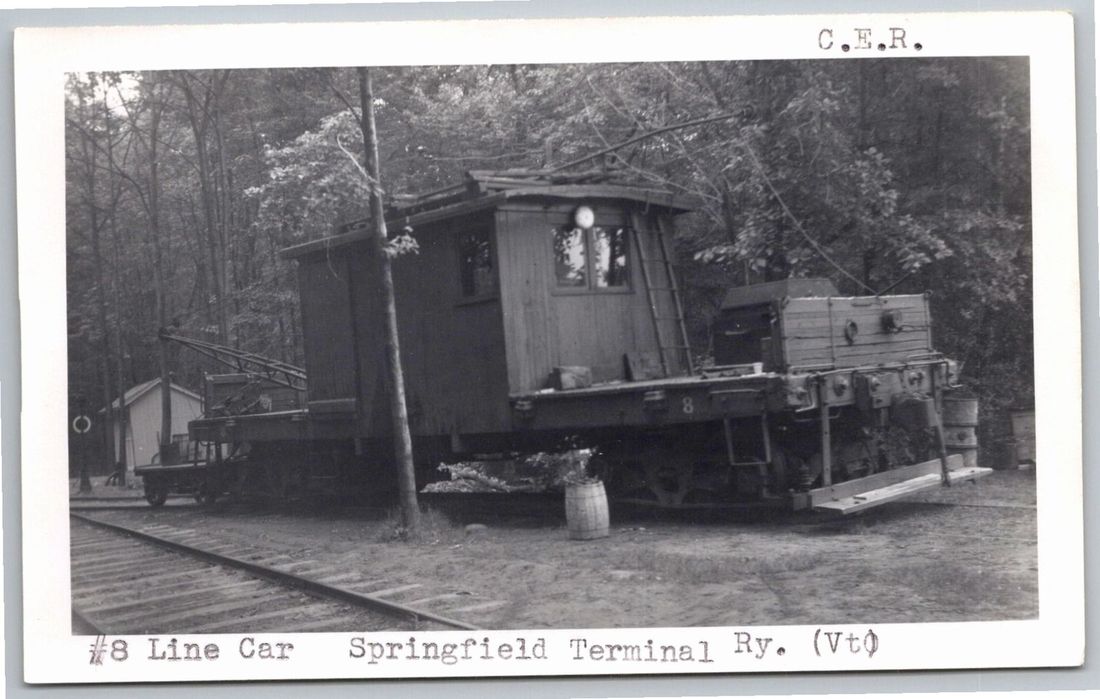
1936 Springfield Terminal Railway Vt Line Car #8 Photo
📸 Click any thumbnail to inspect Front, Back & Angles (2 Photos)
🔗 Embed / Cite This Archival Image (Free with Attribution)Get HTML Code
© USA RESELL. Bloggers, historians, and website owners may embed this image for free by copying the HTML code below (which includes the required credit link back to this page):
USA RESELL is a living historical archive. Because original artifacts are one-of-a-kind and source records change rapidly, use the button above to check live marketplace availability or locate surviving examples. As an eBay Partner, we may earn a commission on qualifying purchases.
Item Specifications
- City: Springfield
- State: Vermont
- Country: United States
- Era: Vintage
- Subject: Electric Streetcar Line Car
- Theme: Transportation
- Category: Vintage Photography
- Format / Type: Vintage Photographs
Historical Context & Overview
In the mid-1930s, electric interurban railways and trolley systems provided indispensable service to communities across New England. The Springfield Terminal Railway in Vermont was renowned for its dedicated electric operation, serving local industrial centers and facilitating crucial freight transfers alongside passenger service. Maintaining the overhead catenary wire infrastructure required specialized utility rolling stock, such as the utility work car captured in this crisp original vintage photograph.
Springfield Terminal Railway Line Car No. 8
Captured on location along a shaded right-of-way, Line Car No. 8 stands as a remarkable example of purpose-built maintenance equipment. Electric streetcar line cars were engineered with elevated roof decks, access ladders, and specialized booms designed to allow crew members to repair overhead trolley wires and power lines while keeping the system energized. Featuring a rugged wooden cab structure, heavy-duty work platforms, and an extended trolley pole, Line Car No. 8 illustrates the practical craftsmanship of early 20th-century traction work stock.
Archival Gelatin-Silver Print Details
This original black-and-white photograph measures 5.7 by 3.5 inches and displays excellent contrast, rich tonal depth, and sharp focus throughout the track bed and surrounding timber. The lower margin is typed with the contemporary identification "#8 Line Car Springfield Terminal Ry. (Vt)" alongside a small printed "C.E.R." notation in the upper right border. The reverse side remains unposted and blank, bearing only a faint blue alphanumeric stamp reading "376L" and a light graphite notation. Preserved in excellent physical condition with clean borders and sturdy stock, this photograph offers an authentic piece of New England electric railway history for railroadiana enthusiasts and transportation history curators.
Industrial Utility in the Black River Valley
During the mid-1930s, the Springfield Terminal Railway occupied a vital niche in Vermont's industrial landscape. Operating primarily along the Black River valley, the electrified line moved heavy machine tools and manufactured goods between local plants and regional interchanges such as the Boston and Maine Railroad. Line Car No. 8 served as an indispensable maintenance platform, routinely deployed to repair overhead catenary sags, clear ice buildup, and repair storm damage during harsh New England winters. Without dedicated work equipment ensuring continuous power, the region's industrial freight corridor could not function.
1930s Darkroom Craft and Historical Provenance
The image itself exemplifies the refined gelatin-silver photographic process characteristic of 1930s field photography. Developed on heavy glossy paper stock, the silver-halide emulsion captured fine structural details, from the subtle wood grain of the car body to the dark tonal gradients of the surrounding timber and ballast. Unlike mass-produced lithographs of the era, genuine darkroom prints from this decade exhibit superior optical clarity and deep shadow contrast that have successfully resisted silver fading across nearly a century of preservation.
For collectors of New England transportation heritage, original photos of utility rolling stock are far rarer than standard passenger streetcar views. While revenue passenger cars were frequently photographed by visiting railfans, behind-the-scenes work cars were seldom documented in clear detail. The classic period margin markings link this print to early electric railway historical circles, turning a simple maintenance view into a highly desirable primary document of American traction history.