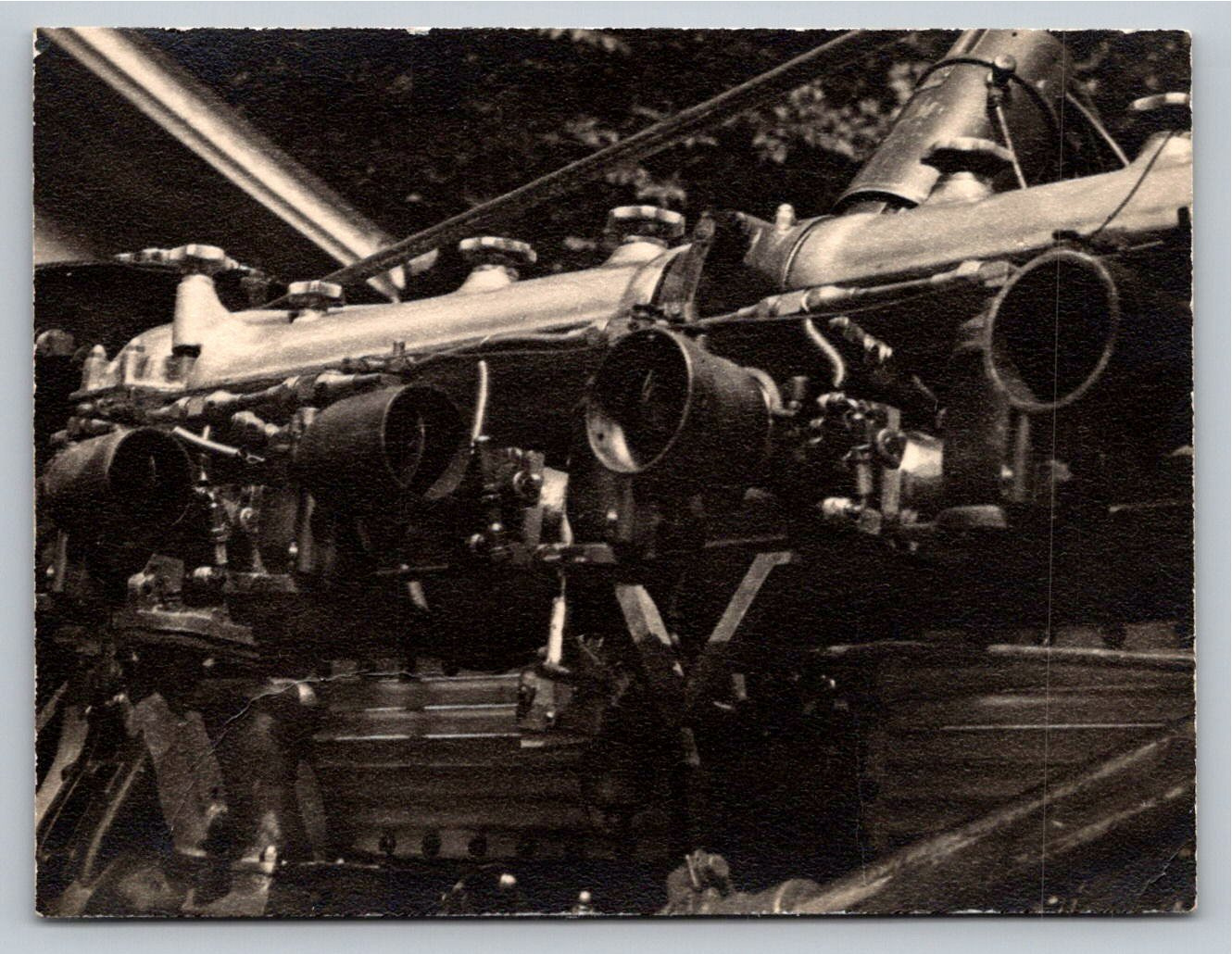
Vintage 1950s Racing Car Engine Bay Silver Gelatin Photo
📸 Click any thumbnail to inspect Front, Back & Angles (2 Photos)
🔗 Embed / Cite This Archival Image (Free with Attribution)Get HTML Code
© USA RESELL. Bloggers, historians, and researchers may embed this image for free by keeping the credit link below intact:
As an eBay Partner, we may earn a commission if you make a purchase.
Item Specifications
- City: Unspecified
- Country: United States
- Era: 1950s
- Subject: Automotive Engine
- Original/Licensed Reprint: Original Vintage
- Image Color: Black and White
- Category: Vintage Photography
- Format / Type: Snapshots
Looking for Modern Alternatives?
Explore top-rated, modern Vintage Photography and related historical accessories on Amazon.
Shop Vintage Photography on Amazon →As an Amazon Associate, we earn from qualifying purchases.
Historical Context & Overview
In the golden age of post-war motorsport, innovation occurred as much in small private garages and pit lanes as it did on grand factory proving grounds. Vernacular photography from the 1950s provides an unfiltered lens into this transformative decade, capturing the mechanical artistry and hands-on craftsmanship that defined high-performance automotive engineering. This original vintage silver gelatin snapshot stands as a extraordinary candid record of mid-century racing technology, offering an intimate vantage point directly into a tuned race car engine bay.
Engineering Masterpiece: Twin Camshafts and Velocity Stacks
During the 1950s, overhead twin-cam engine designs represented the pinnacle of high-revving racing performance. European pioneers like Jaguar, Alfa Romeo, and Coventry Climax, alongside ambitious American builders, utilized double overhead camshafts to maximize air flow and power output. This photograph captures those classic mechanical signatures in exquisite detail. The long, polished twin camshaft covers dominate the upper engine layout, flanked by a series of open carburetors equipped with distinct trumpet-style velocity stacks.
A closer inspection of the composition reveals the intricate web of mechanical controls required to sync multi-carburetor setups. Detailed throttle linkage arms, tension springs, and fine safety wire routing showcase the meticulous setup demanded by high-strung racing plants. Every bracket, fitting, and polished surface reflects an era when speed was crafted by hand and tuned by ear.
Human Connection and Vernacular Provenance
What elevates candid automotive photography beyond mere technical documentation is the personal narrative preserved on the physical print. Measuring approximately 4.1 by 3.1 inches, this compact black-and-white photograph features a period handwritten signature on the reverse reading "Eric Fore." Whether Mr. Fore was the mechanic who assembled this power plant, the driver who piloted the machine, or a dedicated spectator capturing pit-lane secrets, his inscription transforms an anonymous engine bay into a documented historical artifact.
Vernacular snapshots like this were rarely intended for commercial press kits; instead, they served as personal references, study material for rival mechanics, or treasured keepsakes from track weekends. The sharp image contrast and rich tonal depth of the gelatin silver process preserve every shadow and metallic sheen, carrying the atmospheric energy of 1950s paddock life into the present day.
Preserving Mid-Century Motorsport Heritage
For historians, automotive archivists, and vintage restoration specialists, period photographs serve as invaluable historical references. They document exact plumbing configurations, historic safety wiring techniques, and period-correct speed equipment that modern digital reproductions cannot replicate. Preserved with natural age toning and slight edge wear characteristic of authentic mid-century prints, this original photograph remains a compelling piece of vintage garage wall art and a authentic slice of American racing heritage.