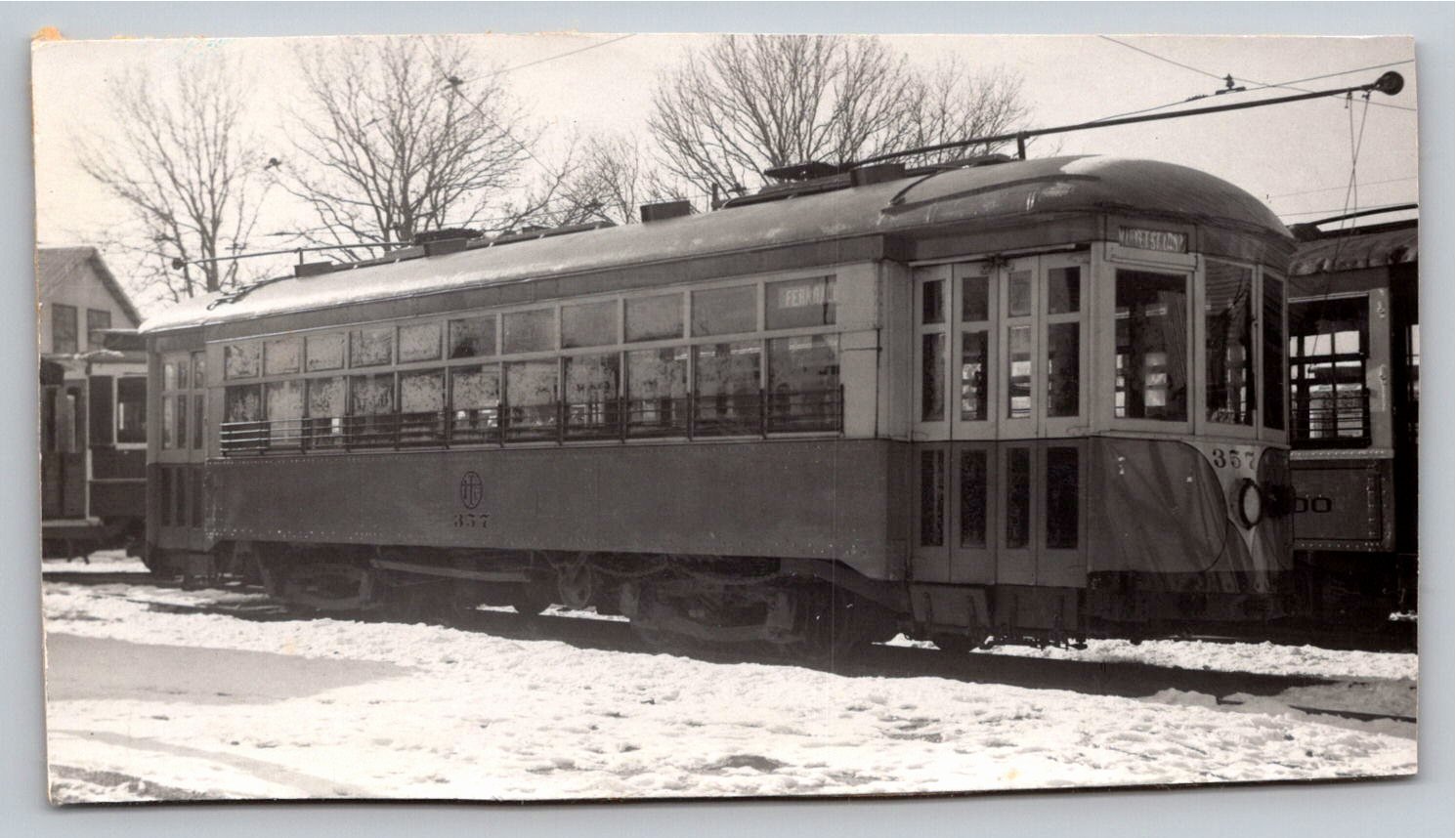
1950s Johnstown Traction Trolley Streetcar 357 Photo
📸 Click any thumbnail to inspect Front, Back & Angles (2 Photos)
🔗 Embed / Cite This Archival Image (Free with Attribution)Get HTML Code
© USA RESELL. Bloggers, historians, and website owners may embed this image for free by copying the HTML code below (which includes the required credit link back to this page):
USA RESELL is a living historical archive. Because original artifacts are one-of-a-kind and source records change rapidly, use the button above to check live marketplace availability or locate surviving examples. As an eBay Partner, we may earn a commission on qualifying purchases.
Item Specifications
- City: East Haven
- State: Connecticut
- Country: United States
- Era: Mid-20th Century (1950s-1960s)
- Subject: Transportation
- Year of Production: Unspecified
- Category: Vintage Photography
- Format / Type: Vintage Photographs
Historical Context & Overview
This original mid-20th-century gelatin-silver photograph offers an authentic glance into American transit preservation, depicting Johnstown Traction Company Streetcar No. 357 resting on snow-dusted tracks at the historic Branford Electric Railway (now recognized as the Shore Line Trolley Museum) in East Haven, Connecticut.
Engineering and Design of Streetcar No. 357
Constructed in 1926 by the renowned St. Louis Car Company, Car No. 357 represents classic double-end steel-body streetcar design. The vehicle features double-entry end doors, arched roofing, glass window casing, and an overhead trolley pole assembly designed to collect power from overhead catenary wires. Originally operating across the municipal transit network of Johnstown, Pennsylvania, this vehicle served commuters during the golden age of electric street railways.
Johnstown Traction Company & Preservation Legacy
The Johnstown Traction Company provided public transportation in western Pennsylvania from 1910 until 1960, earning distinction as one of the very last small-city streetcar operations in the United States. Following its retirement from regular commercial service, Car 357 was acquired by early railway preservationists and moved to the Branford Electric Railway in Connecticut, where historic streetcars from across the nation were saved from scrap yards.
Artifact Details and Provenance
Measuring 4.7 by 2.6 inches, this original glossy black-and-white print exhibits crisp contrast and fine visual detail across the car body and surrounding yard scenes. The reverse side features a period handwritten ink annotation reading "#357 Johnstown Traction at Branford Elec Ry." along with paper remnants from prior scrapbook mounting. It remains a superb historical artifact for collectors of vintage transportation photography, streetcar memorabilia, and rail transit history.
Evolution of American Electric Street Railways
The broader historical context of Streetcar No. 357 traces back to the late 19th-century transit revolution pioneered by inventors such as Frank Julian Sprague. By replacing labor-intensive horse-drawn carriages with electric overhead trolley systems, street railways reshaped American urban geography, enabling municipal networks to expand beyond dense city centers into early suburban neighborhoods. Small-city transit systems like the Johnstown Traction Company relied heavily on durable, standardized rolling stock to maintain affordable public mobility across regional industrial corridors, making survivors like No. 357 vital tangible links to early 20th-century municipal growth.
Gelatin-Silver Print Characteristics and Storage
Photographically, this mid-century gelatin-silver print captures subtle tonal ranges between the dark steel car body and the snow-covered railway ballast, reflecting the enduring stability of classic silver halide chemistry on glossy paper stock. While the reverse side retains heavy paper remnants and glue from historical scrapbook album mounting, the primary image surface remains unblemished with crisp focus across the window frames and overhead equipment. For ephemera collectors and rail transit archivists, preserving such original prints in acid-free polyester sleeves ensures these mid-century visual records of American trolley heritage endure without further tonal degradation.