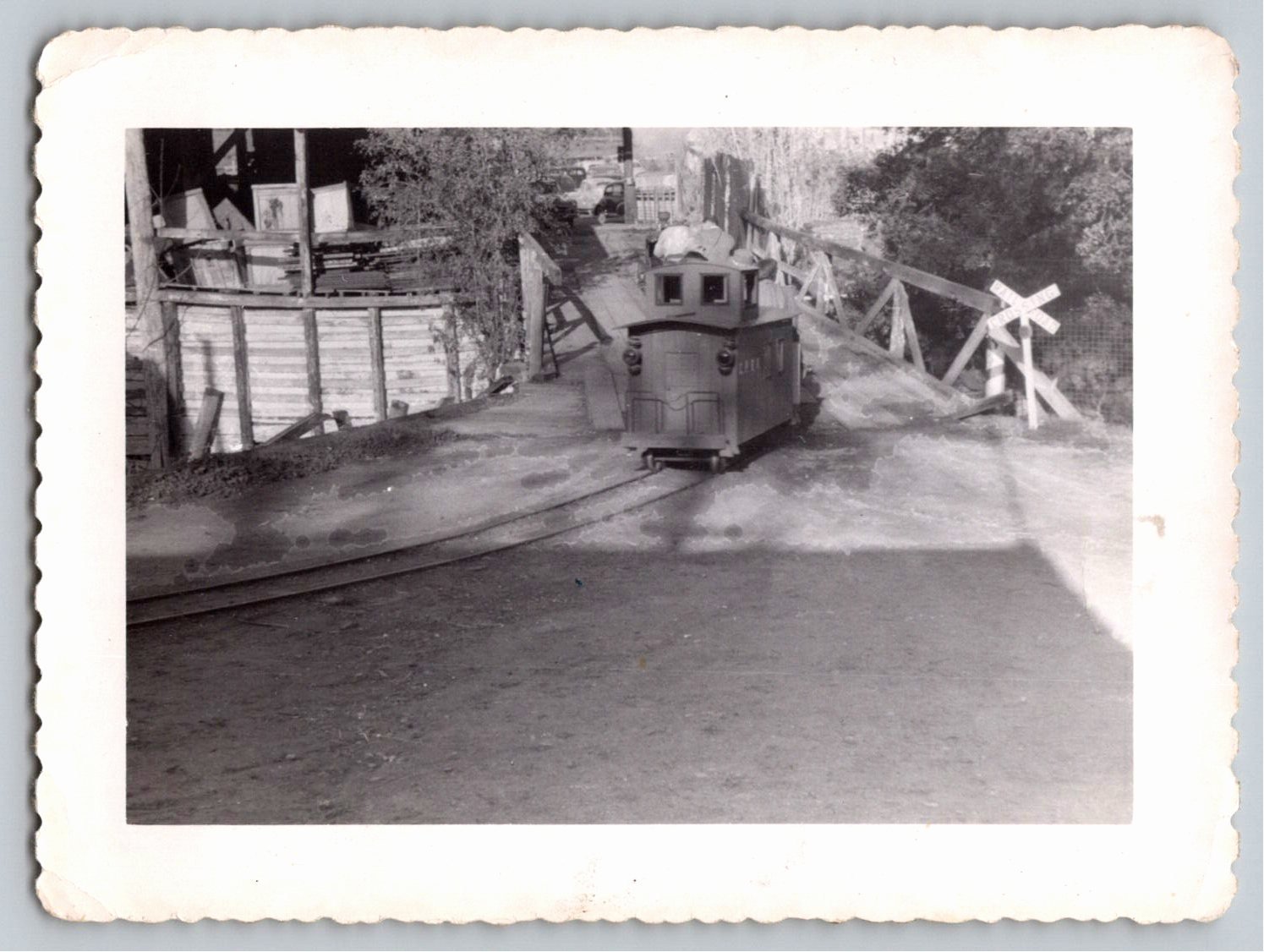
1948 Miniature Train Trestle Bridge Vintage Snapshot Photo
📸 Click any thumbnail to inspect Front, Back & Angles (2 Photos)
🔗 Embed / Cite This Archival Image (Free with Attribution)Get HTML Code
© USA RESELL. Bloggers, historians, and website owners may embed this image for free by copying the HTML code below (which includes the required credit link back to this page):
USA RESELL is a living historical archive. Because original artifacts are one-of-a-kind and source records change rapidly, use the button above to check live marketplace availability or locate surviving examples. As an eBay Partner, we may earn a commission on qualifying purchases.
Item Specifications
- City: Unspecified
- Country: United States
- Era: 1940s
- Subject: Miniature Railroad Trains Bridge Trestle
- Theme: Transportation Americana
- Year of Production: 1948
- Category: Vintage Photography
- Format / Type: Snapshots
Historical Context & Overview
A Mid-Century Glimpse into Miniature Railroading
Dating to approximately 1948, this captivating original vintage black-and-white snapshot captures a delightful scene from the golden age of American recreational engineering. The photograph frames a custom miniature ride-on railway car—designed in the style of a traditional cupola caboose—as it traverses a hand-constructed wooden trestle bridge. Passengers can be glimpsed inside the elevated observation cupola, riding along the narrow-gauge steel tracks that gently sweep past a rustic timber retaining wall. A miniature railroad crossbuck warning sign stands vigilantly beside the bridge approach, adding an extra layer of authentic trackside detail to the hand-crafted layout.
Beyond the wooden superstructure and miniature right-of-way, the background offers rich contextual elements of everyday life in the late 1940s. A classic mid-century coupe automobile is parked along a nearby roadway, providing an unmistakable temporal marker for the scene. The contrast between the rugged natural landscape, the hand-laid wooden trestles, and the scaled-down rolling stock encapsulates the post-World War II enthusiasm for family-run roadside attractions, backyard live-steam clubs, and community amusement parks that flourished across the United States.
Postwar Backyard Engineering and Hobbyist Americana
The post-World War II era witnessed a massive resurgence in mechanical hobbies, with miniature live-steam and gasoline-powered backyard railroads capturing the public imagination. Returning servicemen and skilled tradesmen applied their mechanical expertise to fabricating working scale trains, laying miniature tracks across private farms, estates, and municipal parks. These bespoke lines often mirrored full-size Class I railroads with astounding accuracy, featuring custom lettering, functioning marker lanterns, and meticulously engineered bridges designed to hold the weight of both locomotives and riders.
This candid snapshot celebrates that ingenuity, recording not just a piece of rolling stock, but an entire environment built out of passion and recreational pride. Whether constructed as part of an early roadside tourist park or a dedicated private live-steam club layout, the scene conveys the sheer joy of personal craftsmanship. The car's scale, the hand-joined timbers of the trestle, and the detailed safety signage speak to a meticulous builder who sought to recreate the grandeur of the American railroad on an intimate, accessible scale.
Print Characteristics, Scalloped Borders, and Preservation
The physical artifact itself is a classic example of late 1940s commercial snapshot processing. Measuring approximately 4.7 by 3.5 inches, the print is finished with traditional scalloped deckle edges—a decorative border technique widely popularized by commercial photo-finishing laboratories during the 1940s and 1950s. The gelatin-silver photographic emulsion exhibits rich tonal separation, capturing crisp details in the wood grain of the bridge, the shadow play beneath the trestle, and the gleaming surfaces of the miniature rail car.
Turned to the reverse, the photograph reveals an entirely blank, clean paper surface free of postal printing, stamps, or heavy annotations, confirming its status as an authentic private camera snapshot rather than a commercial photograph. The fiber cardstock remains remarkably flat and structurally sound, showing only gentle, age-appropriate perimeter handling that honors its decades in archival storage. For collectors of vernacular photography, vintage transportation ephemera, and early Americana miniatures, this candid photograph remains an exceptional historical document.