Vintage Chicago Museum of Science & Industry Steel Postcard
📸 Click any thumbnail to inspect Front, Back & Angles (2 Photos)
As an eBay Partner, we may earn a commission if you make a purchase.
Item Specifications
- Era: 1960s Chrome
- Publisher: Cameo Greeting Cards
- Printer: Dexter Press
- Location: Chicago, Illinois
- Subject: Museum of Science & Industry Showcase For Steel
- Photographer: Penrod Studio
- Category: Postcards & Ephemera
- Format / Type: Vintage Postcards
Looking for Modern Alternatives?
Explore top-rated, modern Postcards & Ephemera and related historical accessories on Amazon.
Shop Postcards & Ephemera on Amazon →As an Amazon Associate, we earn from qualifying purchases.
Historical Context & Overview
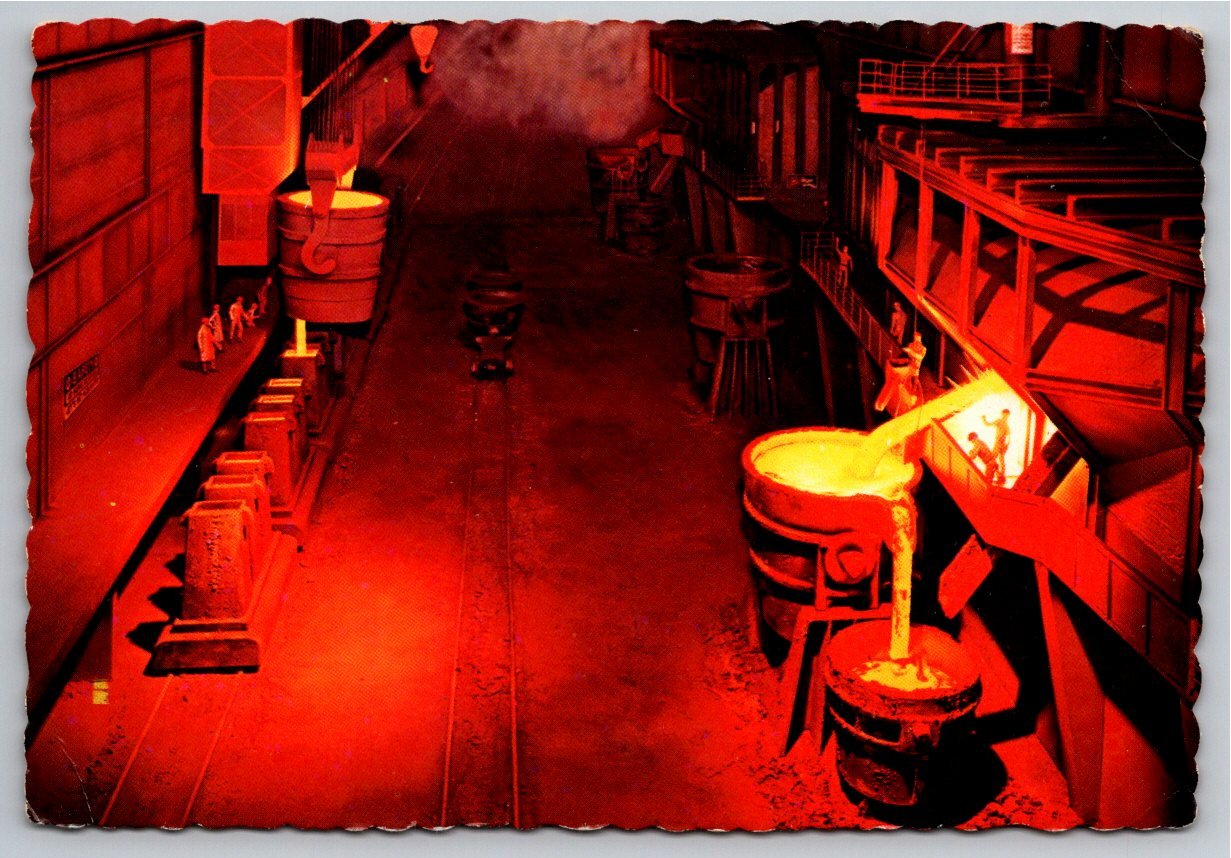
Drenched in a fiery, infernal red lighting scheme, this vivid vintage postcard captures one of the most iconic mid-century exhibits at Chicago’s world-renowned Museum of Science and Industry (MSI): the Showcase for Steel. The dramatic image depicts a miniature modern steel mill in simulated operation, complete with glowing ladles, pouring molten metal, overhead cranes, and tiny figures standing along the elevated catwalks. Produced during the golden era of American industrial manufacturing, the postcard serves as a stunning visual relic of mid-20th-century museum design and Chicago's identity as an industrial powerhouse.
The Magic of the "Showcase for Steel" Exhibit
Opening during an era when industrial giants partnered with major museums to inspire young minds and demonstrate technological progress, the Showcase for Steel exhibit was a masterpiece of educational display. Sponsored in large part by the steel industry—most notably companies like Inland Steel, headquartered in Chicago—the display offered visitors an intimate, safe look into the intense, dangerous environment of a blast furnace and open-hearth steel manufacturing facility.
The centerpiece featured a meticulously detailed, animated scale model that simulated the complete journey of steel production. Automated lighting sequences illuminated streams of simulated molten pig iron pouring into gigantic ladles, giving guests the vivid impression of extreme heat and heavy industry right before their eyes. For generations of Midwestern families visiting Hyde Park, watching the miniature steel mill operational sequence was a captivating highlight of their museum journey.
Mid-Century Industrial Optimism & Chicago Heritage
During the mid-20th century, the Greater Chicago area—stretching from the South Side along Lake Michigan down through Gary, Indiana—was the unquestioned steelmaking capital of North America. Facilities such as U.S. Steel’s South Works and Inland Steel's Indiana Harbor Works employed tens of thousands of workers and produced the structural beam foundation for America's post-war infrastructure and skyline expansion.
Exhibits like MSI’s Showcase for Steel translated this heavy regional industry into an accessible narrative of national progress and technological triumph. The striking red lighting visible on the postcard was intentionally designed to evoke the incandescent radiation of freshly tapped steel, romanticizing the brutal work of the mills into an awe-inspiring spectacle.
Collector & Production Notes
This postcard is a classic example of mid-century chrome postcard production, featuring distinctive scalloped deckle edges popular during the 1950s and 1960s. Photographed by Penrod Studio and published by Cameo Greeting Cards Inc. of Chicago, the postcard was manufactured by the premier postcard printer of the era, Dexter Press Inc. of West Nyack, New York. Bearing the publisher's identifier code 6833-C, the card features a rich color saturation that remains vibrant decades after its initial sale in the museum's gift shop, making it a desirable piece for collectors of Chicago history, museum memorabilia, and industrial iconography.