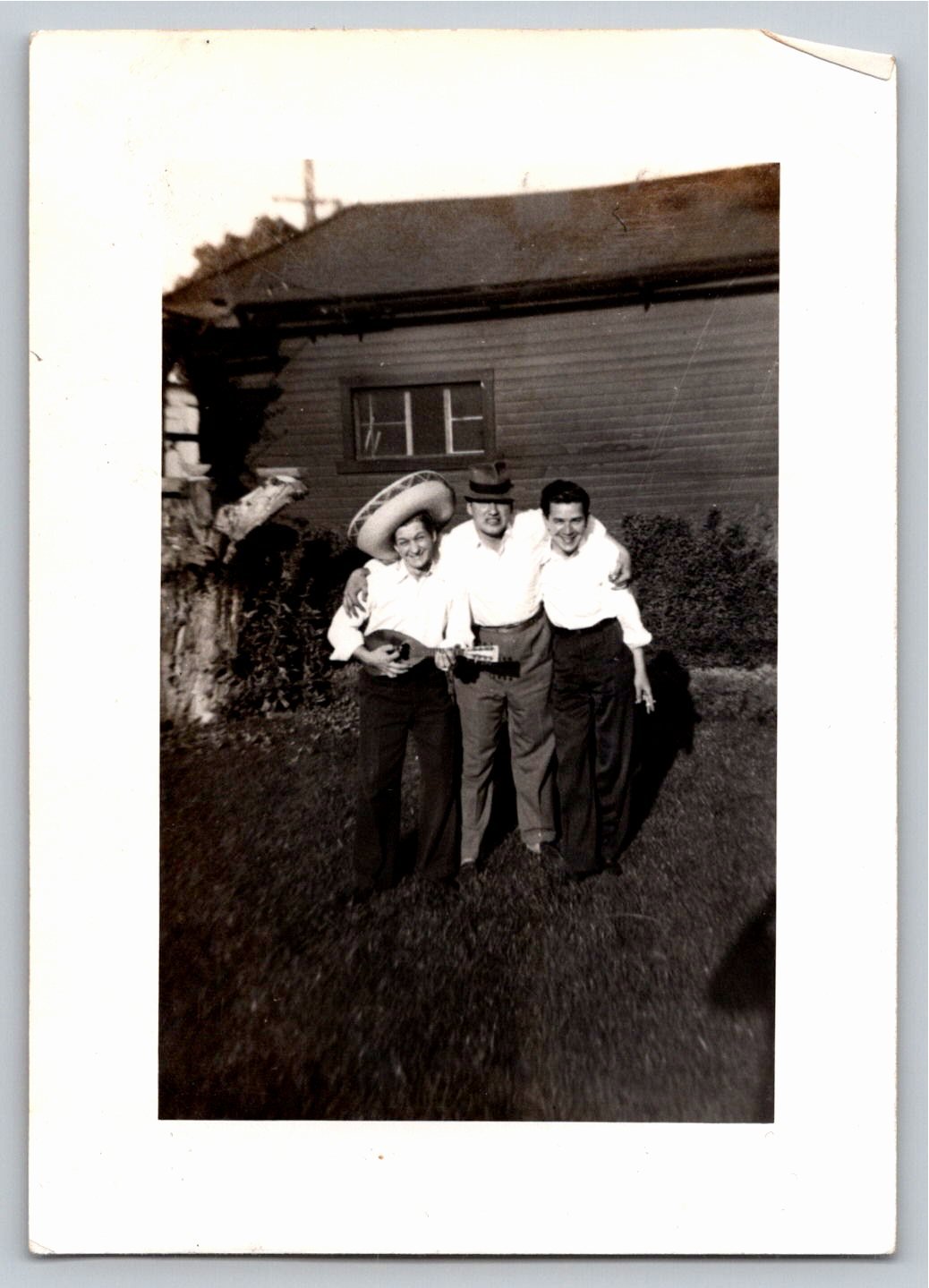
1940s Men in Sombrero & Fedora Playing Mandolin Photo
📸 Click any thumbnail to inspect Front, Back & Angles (2 Photos)
🔗 Embed / Cite This Archival Image (Free with Attribution)Get HTML Code
© USA RESELL. Bloggers, historians, and website owners may embed this image for free by copying the HTML code below (which includes the required credit link back to this page):
USA RESELL is a living historical archive. Because original artifacts are one-of-a-kind and source records change rapidly, use the button above to check live marketplace availability or locate surviving examples. As an eBay Partner, we may earn a commission on qualifying purchases.
Item Specifications
- City: Unspecified
- Country: United States
- Era: 1940s
- Subject: Men Sombrero Mandolin Musicians Friends
- Theme: Americana Music Domestic and Family Life Humor
- Year of Production: 1945
- Category: Vintage Photography
- Format / Type: Snapshots
Historical Context & Overview
Mid-Century Camaraderie and Back-Yard Musical Merriment
Dating to the mid-1940s, this candid gelatin silver photograph encapsulates the lighthearted humor and domestic camaraderie of post-war Americana. Standing in the sun-drenched yard of a clapboard home, three young men pose arm-in-arm with bright grins. The central character on the left playfully embraces theatricality, sporting a wide-brimmed Mexican sombrero while holding a round-backed bowlback mandolin across his chest as if serenading the photographer. Beside him, an amused companion anchors the center wearing a crisp fedora, while their friend on the right beams with infectious youthful energy.
The visual details of the image offer an evocative snapshot of 1940s civilian men's fashion. All three figures wear classic high-waisted pleated trousers cinched securely at the waist, paired with light-toned dress shirts rolled casually to the elbows to cope with the warm outdoor sun. The relaxed posture, easy grins, and spontaneous spirit reflect a private moment of friendship, showcasing how everyday citizens entertained themselves with informal front-porch gatherings, homegrown music-making, and whimsical costume play.
The Evolution of Vernacular Photography and Home Music Culture
During the 1940s, the mandolin remained a beloved fixture in American folk, bluegrass, and immigrant household traditions. The instrument seen here is an authentic bowlback or "tater-bug" mandolin, which had gained widespread popularity in the early decades of the twentieth century via catalog sales and parlor performances. By capturing an impromptu backyard serenade, this snapshot serves as a testament to the enduring presence of acoustic stringed instruments in grassroots American social gatherings long before television dominated home entertainment.
The print itself represents the heyday of consumer vernacular photography, where roll-film cameras like the Kodak Brownie brought personal portraiture into everyday backyards. The reverse of the photograph features the faint, unmistakable watermark of Kodak's signature "Velox" photographic paper, alongside a dark violet laboratory processing stamp reading "004." These commercial processing markers provide physical testimony to the localized photo finishing labs that developed and printed personal family snapshots across mid-century American towns.
Physical Specifications, Preservation, and Archival Quality
Presented in its original authentic state, this black-and-white gelatin silver print measures approximately 3.2 by 4.5 inches, framed by traditional wide white borders that were customary for period darkroom prints. The image retains deep, rich shadow tones and clean highlights, demonstrating excellent contrast across the wooden clapboard siding in the background and the detailed fabric of the men's clothing. The tonal gradation in the foliage and sunlight remains remarkably vivid.
Condition-wise, the photograph is well preserved for an authentic vernacular artifact of its vintage. It exhibits minor, authentic signs of handling appropriate to its age, including slight softening at the corners and a small, delicate dog-ear crease at the upper right margin that remains well outside the focal image area. For collectors of mid-century Americana, folk instrument ephemera, and candid historical portraiture, this snapshot provides a spirited, genuine window into mid-1940s community life.