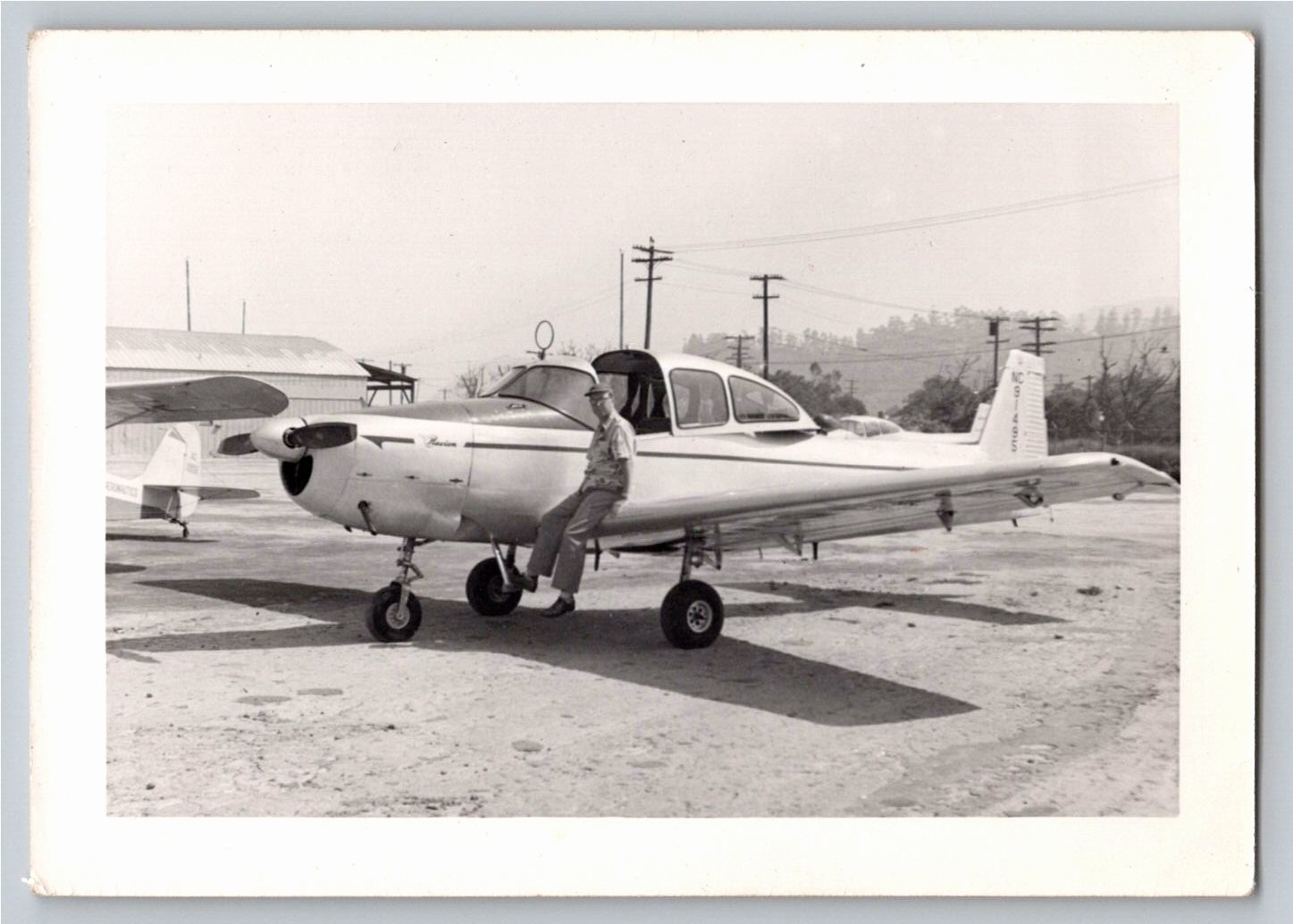
1947 North American Navion NC91495 Airfield Pilot Photo
📸 Click any thumbnail to inspect Front, Back & Angles (2 Photos)
🔗 Embed / Cite This Archival Image (Free with Attribution)Get HTML Code
© USA RESELL. Bloggers, historians, and website owners may embed this image for free by copying the HTML code below (which includes the required credit link back to this page):
USA RESELL is a living historical archive. Because original artifacts are one-of-a-kind and source records change rapidly, use the button above to check live marketplace availability or locate surviving examples. As an eBay Partner, we may earn a commission on qualifying purchases.
Item Specifications
- City: Unspecified
- State: California
- Country: United States
- Era: 1940s
- Subject: Aviation Pilot Airplane Airfield
- Theme: Transportation
- Category: Vintage Photography
- Format / Type: Snapshots
Historical Context & Overview
Visual & Historical Overview: The Post-War Personal Monoplane
Captured in crisp monochrome during the immediate aftermath of World War II, this original 1947 snapshot offers an intimate glimpse into the golden era of American civilian aviation. The composition centers on a pilot resting comfortably along the low wing edge directly beside the open sliding canopy of a North American Navion. Sporting typical mid-century aviator attire, the pilot sits in relaxed profile, perfectly framing the sleek, modern lines of an aircraft conceived to revolutionize private flight. Clearly visible across the vertical tail fin is the civil registration tail number NC91495, designating it as an authentic early-production post-war model.
The backdrop reveals the sun-bleached gravel and asphalt of an active regional airfield, likely situated in California where much of the nation's post-war aerospace manufacturing and general aviation thrived. In the background, utilitarian airport hangars, wooden utility poles carrying early telephone wires, and the tail section of an adjacent light monoplane complete the authentic atmosphere. The scene encapsulates the sudden democratization of flight, as thousands of wartime aviators returned home eager to pilot modern, high-performance light aircraft for business and pleasure.
Engineering Heritage: From P-51 Mustang to civilian Navion
The Navion—originally designated the NA-145—was developed by North American Aviation, the venerable manufacturer responsible for the legendary P-51 Mustang fighter and the B-25 Mitchell bomber. Anticipating an enormous commercial boom in civil aviation following the Allied victory, North American applied military-grade manufacturing techniques to create a rugged, all-metal, four-seat touring plane. Its heavy-gauge aluminum skin, durable tricycle landing gear, and distinctive sliding bubble canopy reflected direct influence from wartime fighter design, offering unprecedented visibility, structural strength, and stability.
Although North American Aviation produced roughly 1,100 units before selling the rights to the Ryan Aeronautical Company in late 1947, these early North American-built Navions retain a revered place in aeronautical history. Aircraft NC91495 represents this initial, celebrated production run. Pilots admired the aircraft for its docile handling characteristics, short-field performance, and spacious cabin layout, making surviving artifacts and original documentary photographs of these aircraft intensely sought after by classic aircraft restorers and aviation historians.
Physical Print Characteristics, Provenance & Preservation
This original black-and-white print is executed on classic gelatin silver photographic paper measuring approximately 4.5 by 3.1 inches. The image exhibits outstanding optical clarity and tonal gradation, capturing the gleaming reflective finish of the airplane's polished fuselage, the deep shadow cast beneath the wing, and the textural detail of the airfield surface. The glossy finish remains well-preserved, showcasing the rich contrast characteristic of mid-twentieth-century darkroom processing.
Physical inspection indicates remarkable structural preservation, with clean white borders, sharp edges, and negligible handling wear accumulated over its decades of storage. The reverse side features a completely unprinted photographic paper back, marked only by faint vintage pencil notation along the lower perimeter, confirming its status as an authentic private snapshot rather than a commercial photograph or modern reprint. As a tangible visual record from the dawn of modern general aviation, this artifact stands as an exceptional collector piece documenting classic American aeronautical design.