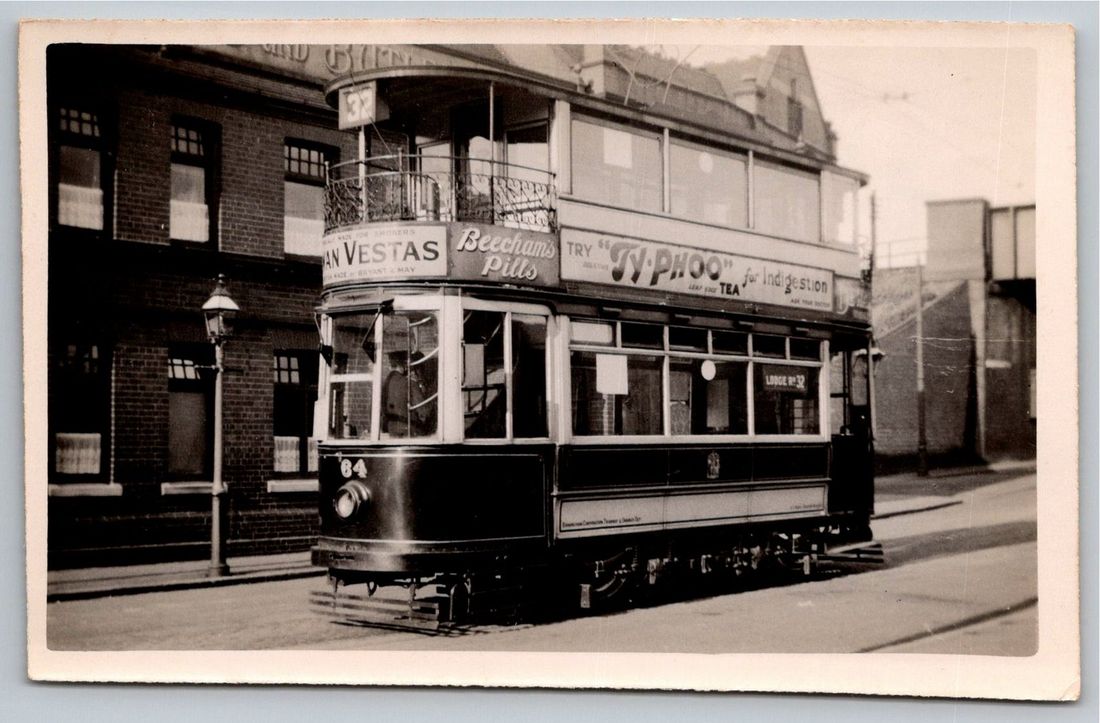
Birmingham Corporation Tramways No 64 Streetcar Photo
📸 Click any thumbnail to inspect Front, Back & Angles (2 Photos)
🔗 Embed / Cite This Archival Image (Free with Attribution)Get HTML Code
© USA RESELL. Bloggers, historians, and website owners may embed this image for free by copying the HTML code below (which includes the required credit link back to this page):
USA RESELL is a living historical archive. Because original artifacts are one-of-a-kind and source records change rapidly, use the button above to check live marketplace availability or locate surviving examples. As an eBay Partner, we may earn a commission on qualifying purchases.
Item Specifications
- City: Birmingham
- State: Unspecified
- Country: United Kingdom
- Era: Mid-Century
- Subject: Tram Streetcar Birmingham Corporation Tramways
- Theme: Transportation Transit
- Category: Vintage Photography
- Format / Type: Vintage Photographs
Historical Context & Overview
This original vintage black-and-white photograph offers a clear historical view of British municipal urban transit, capturing Birmingham Corporation Tramways double-deck streetcar No. 64 along its Lodge Road service route (Route 32). Operating across an extensive narrow-gauge network from 1904 until its closure in 1953, Birmingham Corporation Tramways served as the backbone of public transit for thousands of daily industrial workers and urban commuters throughout the West Midlands.
Mid-Century Transit Architecture & Commercial Ephemera
The vehicle captured in this photograph represents classic early-to-mid 20th-century British streetcar engineering. Double-decker cars like No. 64 maximized passenger capacity along narrow city thoroughfares. Adorning the exterior upper and lower deck panels are prominent period advertising banners featuring legacy British brands of the era, including Swan Vestas matches, Beecham's Pills, and Ty-Phoo Tea.
Physical Print & Provenance Details
Printed on durable fiber paper stock with a glossy finish, this physical snapshot measures 5.4 by 3.4 inches. The reverse side bears authentic archival documentation, including a stamped green cataloging grid marked for the Birmingham Corp. Tramways system and a crisp photographer stamp reading "Photograph by M. J. O'CONNOR". The print displays excellent contrast, sharp focus on vehicle trim and lettering, and light handling wear consistent with its age, making it an exemplary piece for railway enthusiasts and collectors of vintage transit photography.
The Role of Municipal Tramways in Industrial Birmingham
During its mid-century peak, Birmingham's municipal transit system stood as the largest narrow-gauge street railway network in Great Britain. Navigating tight turnouts and dense industrial corridors, these double-deck cars connected suburban residential neighborhoods directly with heavy manufacturing plants and urban commercial hubs. Visual documentation of individual cars operating along specific service lines offers transit historians invaluable evidence regarding mid-century route configurations, overhead wiring infrastructure, and the daily rhythm of West Midlands working-class life.
Photographic Craft & Archival Significance
Captured using standard mid-century gelatin-silver production techniques, the image demonstrates the remarkable longevity of traditional darkroom silver halide chemistry. Fine silver deposits preserve crisp structural details—from the detailed window framing of the tram's exterior to the delicate typography on the period commercial banners. Dedicated transport photographers of the era played a pivotal role in systematically documenting municipal fleets just prior to the post-war conversion to diesel motorbuses, preserving an irreplaceable visual ledger of British urban rail heritage.
For collectors of vintage transport ephemera and British municipal history, original physical prints containing authentic stamped provenance remain highly sought after. Unlike modern digital reproductions, vintage darkroom prints retain a tangible historical connection to mid-century transit operations. When stored in archival-grade protective sleeves, these physical snapshots serve as vital historical records and impressive display pieces for railway archivists and regional history enthusiasts alike.