Antique Early 1900s Family Portrait Outdoor RPPC AZO Postcard
📸 Click any thumbnail to inspect Front, Back & Angles (2 Photos)
As an eBay Partner, we may earn a commission if you make a purchase.
Item Specifications
- Stamp Box: AZO (4 Triangles Up)
- Era: Divided Back Era (1904-1918)
- Subject: Family Group Portrait
- Setting: Outdoor Countryside
- Condition: Unposted / Unused
- Originality: Original Vintage
- Category: Postcards & Ephemera
- Format / Type: Real Photo Postcards (RPPC)
Looking for Modern Alternatives?
Explore top-rated, modern Postcards & Ephemera and related historical accessories on Amazon.
Shop Postcards & Ephemera on Amazon →As an Amazon Associate, we earn from qualifying purchases.
Historical Context & Overview
A Window into Edwardian America: The RPPC Phenomenon
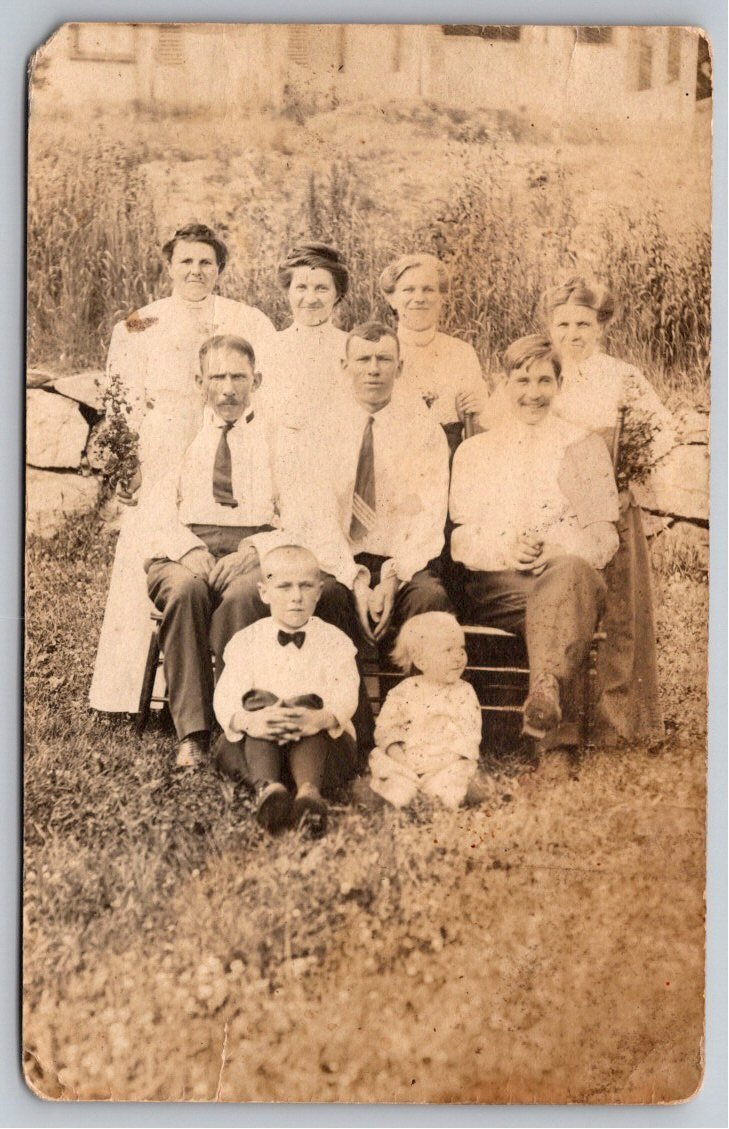
In the first two decades of the twentieth century, the popularity of real photo postcards (RPPCs) revolutionized personal photography across the United States. Following George Eastman’s introduction of the Kodak No. 3A Folding Pocket camera in 1903, everyday Americans could capture intimate, full-sized postcard negatives on location and print them directly onto postcard paper stock. This authentic antique RPPC captures a multi-generational family gathering outdoors, showcasing nine individuals arranged thoughtfully in an open rural setting.
Dating the Artifact: The AZO Four-Triangles-Up Stamp Box
For vintage photo postcard collectors and historians, the back of an RPPC provides invaluable evidence for precise dating. The stamp box printed on the reverse side of this card features the trademark "AZO" emblem flanked by four solid triangles all pointing upwards. Kodak manufactured this specific paper stock between 1904 and 1918, perfectly placing this photograph in the heart of the late Edwardian era and World War I period. The card remains unposted, preserving the clear contrast of the original photographic image and the clean divided-back typography.
Fashion and Social History in the Frame
The attire worn by the family members offers a fascinating glimpse into early 20th-century dress standards and vernacular lifestyle:
- Women's Attire: The four women standing in the rear row wear light-colored, high-collared blouses characteristic of the Gibson Girl era, featuring subtle delicate embroidery and modest, structured tailoring.
- Men's Fashion: Seated in the middle row, three men pose neatly in long-sleeved dress shirts and neckties, balancing formal decorum with a candid outdoor backdrop.
- The Children: Seated on the grass in the foreground, a young boy in a dark bowtie and dark trousers sits beside a young toddler, completing a full three-generation portrait.
Preserving Vernacular Photography
Unlike formal, rigid studio portraiture of the late 19th century, outdoor RPPCs from the 1900s and 1910s reflect a shift toward natural lighting, open environments, and relaxed compositions. Framed against a stone retaining wall, tall summer grasses, and a timber structure in the background, this card stands as a remarkable piece of American social history and a fine addition to any vintage photography or genealogy collection.