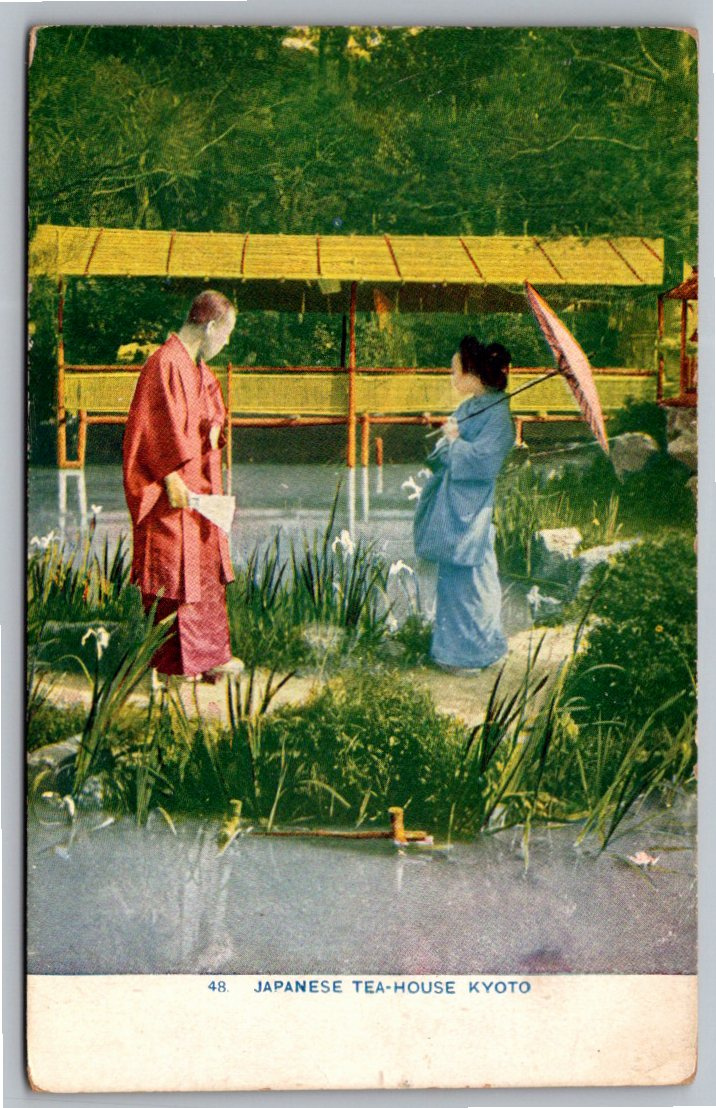
Antique Kyoto Japanese Tea House Garden Color Postcard c. 1900s
📸 Click any thumbnail to inspect Front, Back & Angles (2 Photos)
As an eBay Partner, we may earn a commission if you make a purchase.
Item Specifications
- Type: Hand-Tinted Lithograph
- Era: c. 1900s-1910s
- Location: Kyoto, Japan
- Subject: Japanese Tea House & Garden
- Originality: Original Vintage Postcard
- Condition: Unposted
- Category: Postcards & Ephemera
- Format / Type: Vintage Postcards
Looking for Modern Alternatives?
Explore top-rated, modern Postcards & Ephemera and related historical accessories on Amazon.
Shop Postcards & Ephemera on Amazon →As an Amazon Associate, we earn from qualifying purchases.
Historical Context & Overview
A Window into Late Meiji-Era Kyoto Teahouse Culture
At the turn of the twentieth century, Western fascination with Japan reached a fever pitch. Following the reopening of Japan to foreign commerce during the Meiji Restoration (1868–1912), cities like Kyoto became magnet destinations for international travelers, artists, and souvenir collectors. Among the most cherished keepsakes brought home from these journeys were hand-tinted photograph postcards depicting traditional Japanese landscapes, architecture, and refined social customs. This original vintage postcard, titled "Japanese Tea-House Kyoto," offers a serene look at early 1900s tea culture set against a tranquil Japanese garden landscape.
Artistic Composition and Traditional Aesthetics
featured on the card is a carefully staged composition capturing two figures dressed in traditional attire beside a scenic pond garden. The woman stands gracefully beneath a classic paper and bamboo parasol (wagasa), clad in a vibrant blue kimono. Opposite her stands a gentleman wearing a rich red robe holding a folding fan (sensu). In the background, an elevated thatched-roof pavilion arches gracefully over calm waters filled with blooming irises and lush foliage, showcasing the meticulous design of Kyoto's famous stroll gardens (kaiyū-shiki teien).
During this golden age of postcard production, local photography studios in Japan perfected a hand-tinting process using translucent watercolors applied delicate brushstrokes over monochrome prints. This art form infused real-life scenes with subtle painterly warmth, giving prints a romanticized, dreamlike quality tailored specifically for overseas audiences eager to experience the exotic elegance of Asia.
Historical Context and Postcard Philately
Kyoto’s traditional teahouses (ochaya) and tea gardens served as vital cultural sanctuaries for centuries, preserving refined arts such as the tea ceremony (chanoyu), music, and dance. The reverse side of this postcard features a divided back with green typography—a layout standard adopted globally after 1907 that allowed senders to write messages on the left half while reserving the right half exclusively for the destination address.
Collector Appeal and Preservation
For collectors of Japanese ephemera, Asia-Pacific travel history, or early hand-colored photography, this card represents an exceptional artifact. Preserved in clean, unposted condition with vivid color retention, it provides a timeless bridge to a bygone era of early global tourism and classical Japanese visual heritage.