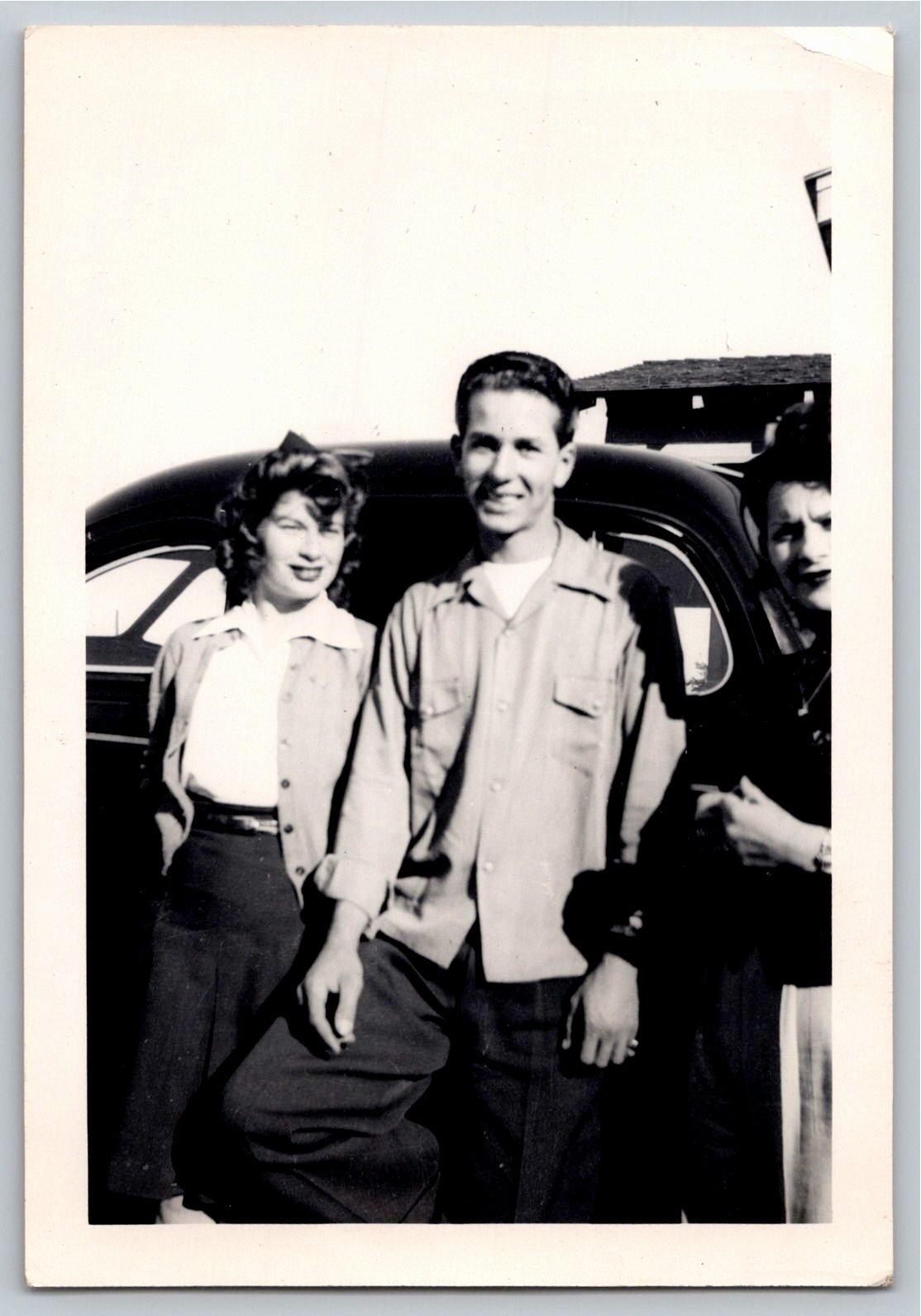
1940s Young Couple & Classic Coupe Car Vintage Photograph
📸 Click any thumbnail to inspect Front, Back & Angles (2 Photos)
🔗 Embed / Cite This Archival Image (Free with Attribution)Get HTML Code
© USA RESELL. Bloggers, historians, and website owners may embed this image for free by copying the HTML code below (which includes the required credit link back to this page):
USA RESELL is a living historical archive. Because original artifacts are one-of-a-kind and source records change rapidly, use the button above to check live marketplace availability or locate surviving examples. As an eBay Partner, we may earn a commission on qualifying purchases.
Item Specifications
- City: Unspecified
- Country: United States
- Era: 1940s
- Subject: Young Couple Classic Car 1940s Fashion Automobile
- Theme: Americana Transportation Domestic and Family Life
- Year of Production: 1948
- Category: Vintage Photography
- Format / Type: Snapshots
Historical Context & Overview
Postwar Youth Culture and Classic Automotive Styling
Dating to circa 1948, this evocative original black-and-white snapshot offers an authentic window into American life in the immediate aftermath of World War II. The frame centers on a stylish young man and woman leaning casually against the deep gloss finish of an American coupe automobile. The young man projects effortless cool in a loose button-down overshirt worn over a white crewneck tee, his relaxed stance accentuated by one foot perched upon the car's bumper or running board. Standing closely at his side, the young woman radiates mid-century poise, dressed in high-waisted pleated trousers cinched with a dark belt, a buttoned collared blouse, and an open knit cardigan.
Her hair is carefully styled in elegant rolls and soft waves reminiscent of the wartime victory-roll aesthetic that persisted into late-1940s civilian hair trends. Partially visible along the right edge of the frame, a third companion adds candid spontaneity to the composition, caught mid-movement. Dominating the background is the sleek silhouette of a postwar or late prewar coupe, characterized by its aerodynamic curved roofline, distinctive split rear windshield, and rounded fenders. The deep tonal contrast between the gleaming black automotive paint and the bright daylight highlights the sunny optimism that defined mid-century personal photography.
The Rise of Private Car Ownership and Vernacular Snapshots
In late 1940s America, the personal automobile was far more than mere transportation; it represented autonomy, romantic freedom, and the boundless horizons of the burgeoning open road. Following the material shortages and fuel rationing of the war years, young adults embraced motoring culture with unprecedented vigor. Posing proudly with an automobile became a staple ritual of social gatherings, road trips, and courtyard dates, turning vernacular photography into a celebration of newfound prosperity and mobility.
The candid nature of this portrait exemplifies the democratic revolution brought about by roll-film handheld cameras. Unlike stiff commercial studio portraits, this photograph captures informal body language, genuine smiles, and unscripted everyday attire. The stark sunlight casts defined shadows that give three-dimensional depth to the figures and the vehicle's bodywork, capturing an unvarnished glimpse of small-town or suburban leisure during a pivotal decade of societal transformation.
Physical Attributes, Archival Lab Markings, and Preservation
Measuring approximately 3.4 by 5.0 inches, this physical artifact is printed on authentic mid-twentieth-century photo paper stock featuring a subtle semi-gloss surface sheen. The focal sharpness across the central subjects remains crisp, retaining exceptional mid-tone definition, clean highlights, and rich shadow detail in the car's enamel finish. White framing borders typical of late 1940s automated commercial photo finishing frame the scene on all four sides.
The reverse of the photograph remains entirely blank and uncaptioned, free of manuscript handwriting, scrapbook adhesive residue, or mounting damage. Near the left perimeter, a faint black ink stamp reads "760," denoting the commercial processing batch or laboratory roll number used by the technician who developed the negative. Exhibiting only gentle age-related handling along the edges and minimal surface toning, this genuine historical photograph remains a well-preserved collector's artifact documenting 1940s youth, transportation, and classic Americana.