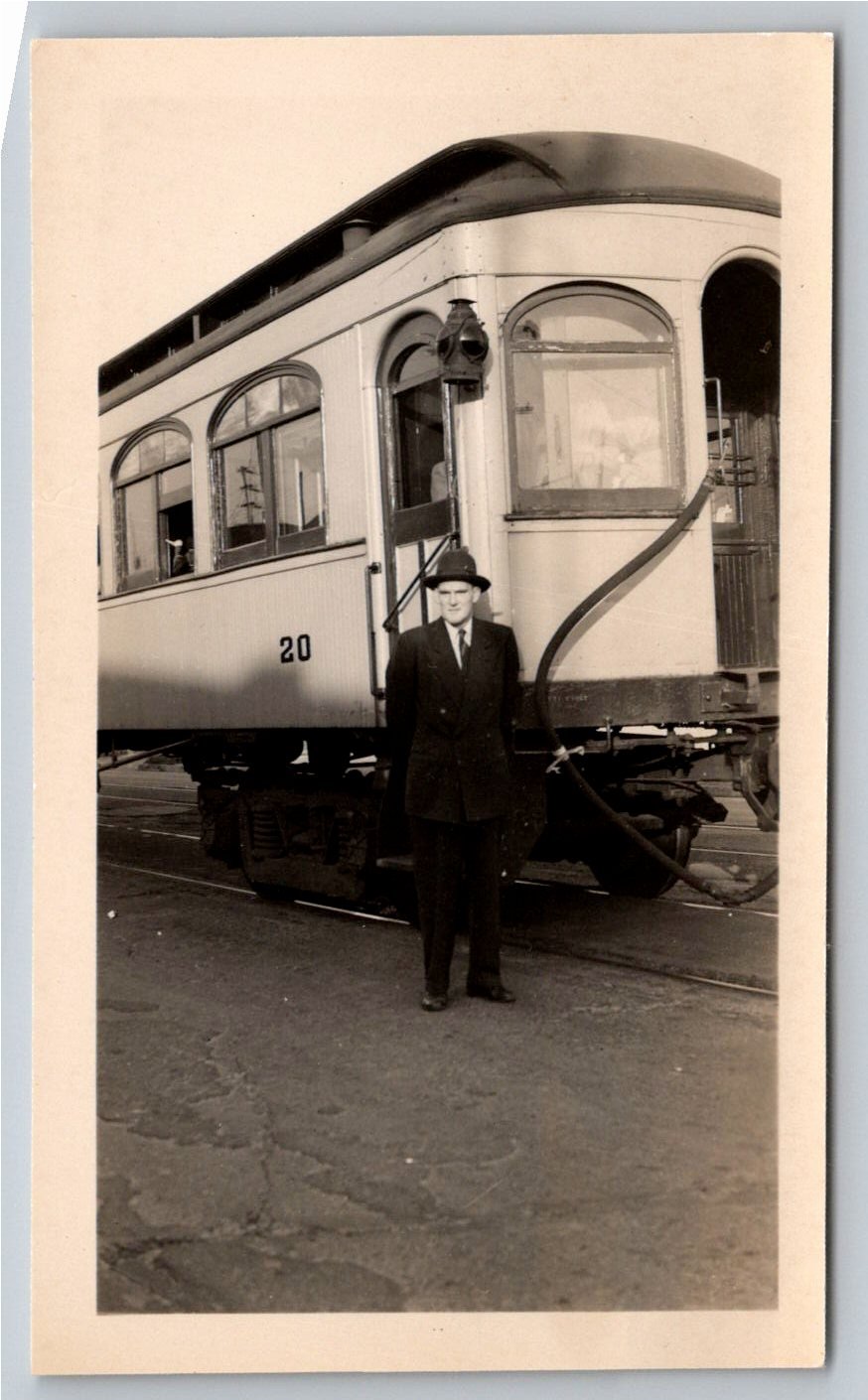
1940s Vintage Photo Man in Fedora by Interurban Trolley Car 20
📸 Click any thumbnail to inspect Front, Back & Angles (2 Photos)
🔗 Embed / Cite This Archival Image (Free with Attribution)Get HTML Code
© USA RESELL. Bloggers, historians, and website owners may embed this image for free by copying the HTML code below (which includes the required credit link back to this page):
USA RESELL is a living historical archive. Because original artifacts are one-of-a-kind and source records change rapidly, use the button above to check live marketplace availability or locate surviving examples. As an eBay Partner, we may earn a commission on qualifying purchases.
Item Specifications
- City: Unspecified
- Country: United States
- Era: 1940s
- Subject: Streetcar Man
- Theme: Transportation
- Time Period Manufactured: 1940-1949
- Category: Vintage Photography
- Format / Type: Snapshots
Historical Context & Overview
This original black-and-white snapshot captures an evocative moment from mid-century American transit history. Posing directly in front of electric interurban trolley car number 20, a well-tailored gentleman clad in a double-breasted overcoat and classic fedora hat embodies the timeless fashion of the 1940s era. The photograph offers a rich slice of everyday life during an age when municipal and interurban rail systems connected cities and towns across the nation.
Mechanical and Architectural Details of Interurban Car 20
For transit historians and railway enthusiasts, the snapshot reveals intriguing physical details of early to mid-20th-century rolling stock. Clearly visible on car number 20 are its rounded wooden window frames, intricate end hose connections, side panel riveting, and overhead electrical pole assemblies. These interurban cars provided vital regional transport, bridging the gap between local city streetcars and full-scale steam locomotives before the expansion of postwar highway infrastructure.
A Primary Source Record of Mid-Century Transit Culture
Vernacular photography of this caliber offers an authentic window into American streetcar operations prior to their widespread retirement. As municipal transit authorities transitioned away from electric streetcars in favor of motor buses, original visual records of specific numbered cars became rare artifacts. This photograph captures both the scale of the machinery and the human connection to everyday public transportation.
Archival Quality and Collector Value
Printed as a glossy gelatin-silver snapshot measuring approximately 2.6 by 4.4 inches, this physical photograph features crisp clarity and natural paper toning characteristic of authentic period prints. The reverse side remains entirely unwritten, and the paper has been preserved flat without major creasing or severe surface degradation. It represents an exceptional addition for collectors of urban railway history, historical fashion, or 1940s Americana.
The Vernacular Artistry of 1940s Amateur Photography
During the 1940s, personal candid cameras empowered everyday Americans to document localized infrastructure alongside personal moments. Unlike polished commercial publicity shots or posed promotional prints, personal snapshots like this capture unvarnished street scenes with remarkable intimacy. The gelatin-silver emulsion used during this era offered deep contrast and rich tonal depth, preserving subtle gradients in the gentleman's tailored wool coat as well as the metallic luster of trolley car 20's riveted casing. These candid exposures serve as invaluable micro-histories, recording how working citizens naturally interacted with the public transit machinery that defined their daily routines.
Preservation Standards and Display for Railway Ephemera
To maintain the visual integrity of mid-century paper ephemera, environmental light exposure and improper handling must be carefully managed. Given its clean borders and lack of severe silvering, housing this vintage print in an acid-free, archival polypropylene sleeve or displaying it behind UV-filtering glass ensures long-term protection against fading and chemical degradation. Rail enthusiasts, regional historians, and photo collectors value unwritten original prints for their pristine condition and narrative honesty. Whether framed as a piece of mid-century transportation decor or preserved within a municipal transit binder, this photograph stands as an enduring emblem of 1940s transit heritage.