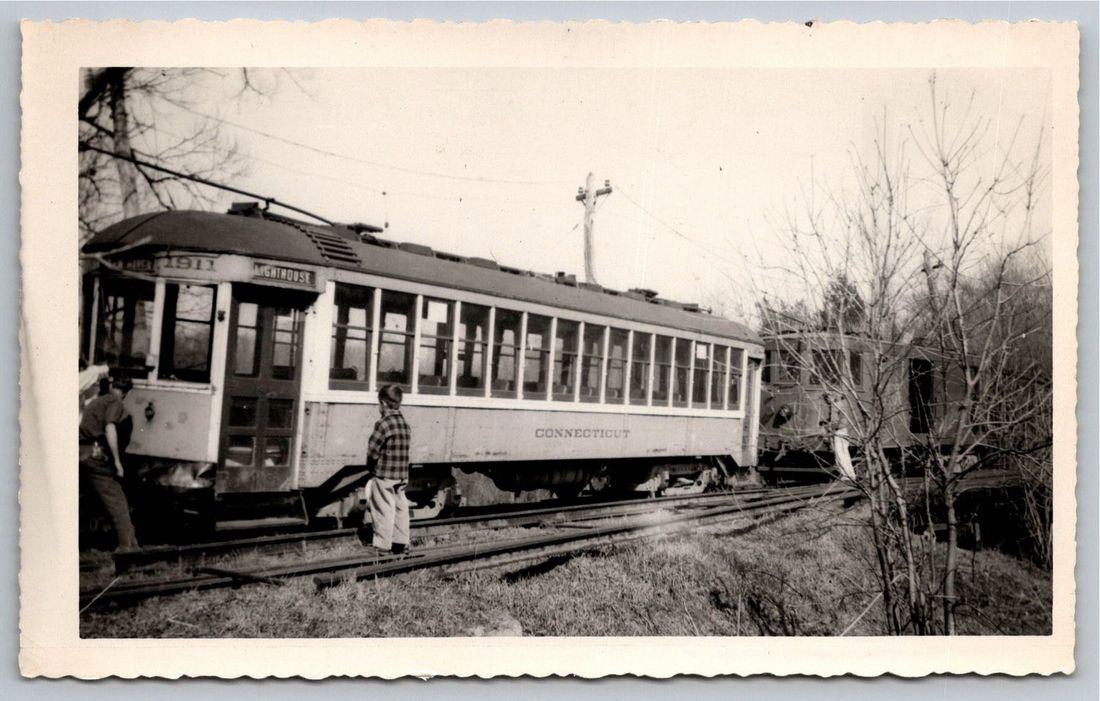
Connecticut Co Streetcar Trolley #1911 New Haven Photo 1940s
📸 Click any thumbnail to inspect Front, Back & Angles (2 Photos)
🔗 Embed / Cite This Archival Image (Free with Attribution)Get HTML Code
© USA RESELL. Bloggers, historians, and website owners may embed this image for free by copying the HTML code below (which includes the required credit link back to this page):
USA RESELL is a living historical archive. Because original artifacts are one-of-a-kind and source records change rapidly, use the button above to check live marketplace availability or locate surviving examples. As an eBay Partner, we may earn a commission on qualifying purchases.
Item Specifications
- City: New Haven
- State: Connecticut
- Country: United States
- Era: Mid-20th Century
- Subject: Connecticut Company Streetcar Trolley #1911
- Theme: Transportation
- Category: Vintage Photography
- Format / Type: Vintage Photographs
Historical Context & Overview
Mid-Century Transit History: Connecticut Company Streetcar #1911
This original black-and-white photograph offers a fascinating window into New England's electric railway era, featuring Connecticut Company interurban streetcar trolley #1911 along its New Haven division route. Printed on classic mid-20th-century deckle-edge photographic paper, the image measures 5.6 by 3.5 inches and displays exceptional visual clarity and contrast.
The photograph captures car #1911 resting on the rails, clearly showcasing its side lettering reading "CONNECTICUT", unit designation #1911, and a roller destination sign displaying "LIGHTHOUSE". Nearby, spectators add scale and human interest to the scene, including a young boy in a plaid jacket standing close to the tracks. Built as a 49-foot steam-roof interurban car by the J.G. Brill Company, car #1911 represents the high-water mark of electric interurban rail travel in southern Connecticut before motor coaches and personal automobiles reshaped local transit.
Archival Collector Provenance & Details
The reverse side of the print features extensive vintage documentation. Handwritten notes in vibrant teal ink detail the vehicle's historical profile: "# 1911 - Conn Co. - New Haven div. steam roof - interurban car 49' long. (only one existing today.) now Branford property." This reference highlights the trolley's eventual preservation as part of the historic Branford Electric Railway collection (Shore Line Trolley Museum).
Adding further provenance, a vintage ink stamp at the bottom right identifies the print's original owner: "Edw. G. Schimke, Kibbe St., Hartford 6, Conn.", along with a small numerical inventory stamp reading "534" along the upper margin. The photograph remains in very good vintage condition, exhibiting clean borders with mild age-appropriate corner softening, free of pinholes, tears, or structural creases.
The Lighthouse Route and New Haven Transit Legacy
The destination sign displaying "LIGHTHOUSE" connects car #1911 directly to New Haven's popular trolley line leading to Lighthouse Point Park on Long Island Sound. During the height of the electric railway era, the Connecticut Company relied on heavy-duty interurban cars featuring classic steam-roof architecture to service both dense municipal corridors and scenic coastal excursion routes. As post-World War II infrastructure shifted rapidly toward paved highways and suburban motor buses, streetcar systems throughout southern New England were systematically dismantled, making mid-century photographic captures essential primary records of the state's once-dominant public transportation network.
Railfan Heritage and Mid-Century Photographic Craft
Beyond its value to transit historians, this snapshot exemplifies the passionate subculture of mid-20th-century transportation enthusiasts who systematically cataloged regional rolling stock. Dedicated railfans documented vehicles in active service, applying personal hand stamps and scribing precise technical notes across darkroom paper backs to preserve historical accuracy for future generations. The surviving print—distinguished by its characteristic deckle-edge cut and rich silver halide tonal range—serves as a tangible artifact of vintage photographic craft while honoring the legacy of survivor streetcars that helped shape modern transit preservation.