1930s Man Smoking Silhouette Waterfront Pavilion Snapshot
📸 Click any thumbnail to inspect Front, Back & Angles (2 Photos)
🔗 Embed / Cite This Archival Image (Free with Attribution)Get HTML Code
© USA RESELL. Bloggers, historians, and website owners may embed this image for free by copying the HTML code below (which includes the required credit link back to this page):
USA RESELL is a living historical archive. Because original artifacts are one-of-a-kind and source records change rapidly, use the button above to check live marketplace availability or locate surviving examples. As an eBay Partner, we may earn a commission on qualifying purchases.
Item Specifications
- City: Unspecified
- Country: United States
- Era: Interwar (1918-1939)
- Subject: Man Smoking Waterfront Pavilion Travel
- Theme: Americana People Travel
- Year of Production: 1930
- Category: Vintage Photography
- Format / Type: Snapshots
Historical Context & Overview
Atmospheric Silhouette and Waterfront Composition
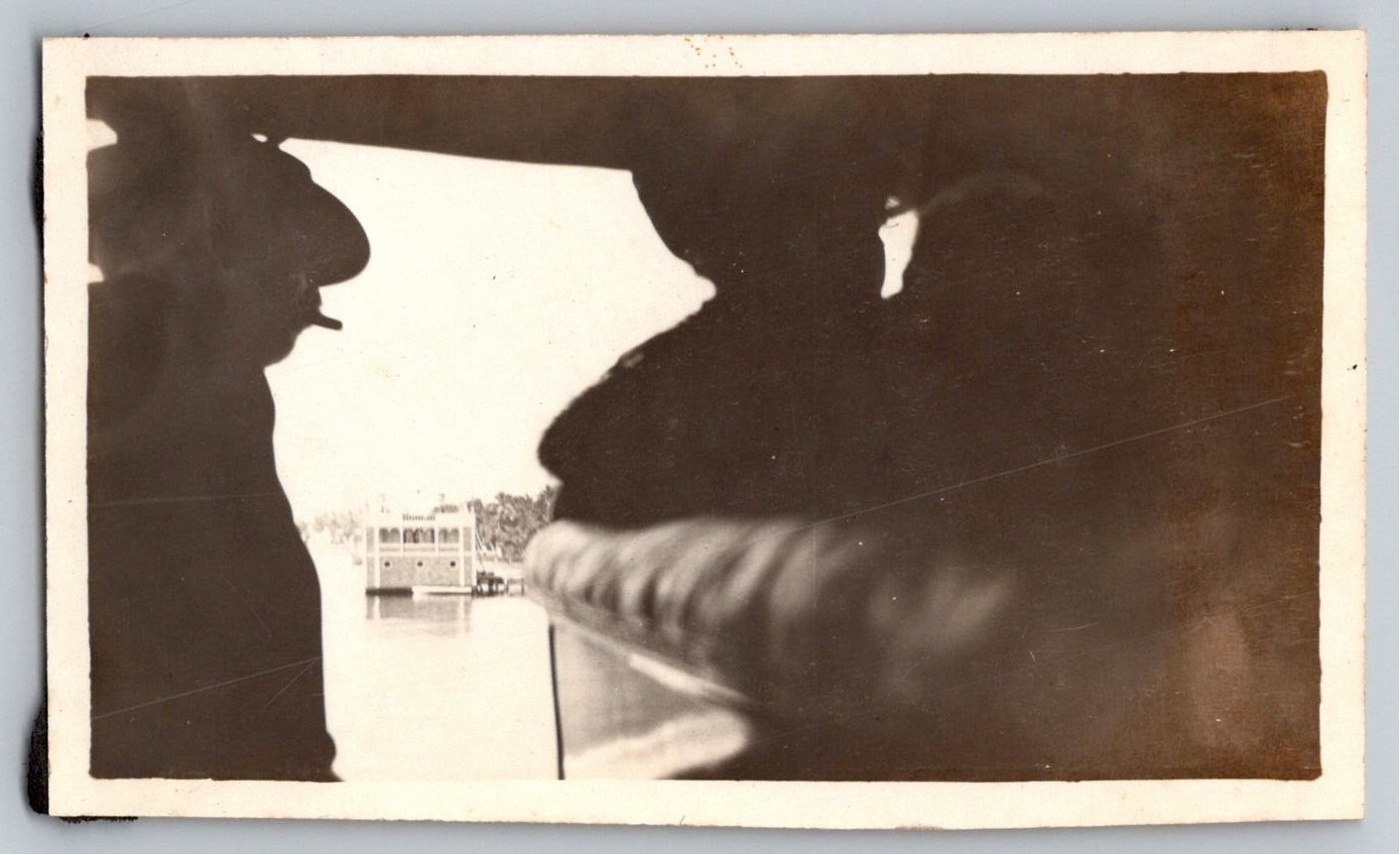
This striking original interwar photograph presents an evocative visual narrative framed from within an interior enclosure, likely an automobile cabin or boat interior. In the left foreground, the sharp profile of a man wearing a classic fedora emerges against the bright outdoor exposure, a lit cigarette or small cigar projecting from his mouth. Beside him, the blurred form of a companion leans against a window sill or railing, guiding the viewer's eye across the water toward the sunlit background. The intense contrast between the deep interior shadows and the sparkling outdoor light creates a dramatic chiaroscuro effect reminiscent of classic early cinema.
Across the calm surface of the lake or river stands an ornate waterfront structure, suggestive of a pavilion, public bathhouse, or lakeside resort casino. Nestled before a dense wall of trees along the opposite bank, the building features arched architectural accents and a low-slung roofline characteristic of North American resort architecture during the 1920s and 1930s. The interplay between foreground intimacy and distant scenic leisure captures a quintessential moment of casual motoring and weekend retreat during the interwar era.
Interwar Vernacular Photography and Visual Culture
During the late 1920s and early 1930s, roll-film cameras allowed amateur photographers to document spontaneous, unposed moments with newfound artistic freedom. Rather than setting up rigid family portraits, travelers began experimenting with framing through car windows, train compartments, and shaded porches. This snapshot exemplifies how ordinary vacationers instinctively utilized natural backlighting and bold silhouetted forms to capture the mood of a journey rather than merely a record of faces.
The imagery resonates deeply with the popular aesthetics of early twentieth-century Americana. Fedora hats, automotive leisure trips, and lakeside destinations formed the core of modern recreation during this transitional decade. By capturing the relaxed posture of travelers observing the waterfront from the shade, the photograph serves as an authentic document of period travel culture and the everyday visual language of everyday snapshot photography.
Physical Characteristics, Provenance, and Condition
Printed on vintage glossy photographic paper stock with classic white borders, this original snapshot measures approximately 4.4 by 2.6 inches. The print exhibits rich tonal values, with deep, velvety dark tones balancing the bright sky and reflective water. The paper surface remains clean with gentle handling toning appropriate for its age, retaining sharp focus on the architectural subject across the water and clean edges along its original perimeter.
The reverse of the photograph is unwritten, bearing only faint, stamped green numeric processing marks reading "86" and "2." Three corners retain fragments of black paper album mounting hinges, confirming that the photograph was preserved for decades within a private family scrapbook before entering the archival market. Free from modern reproduction markings, this piece stands as an authentic and evocative survivor of early twentieth-century American vernacular photography.