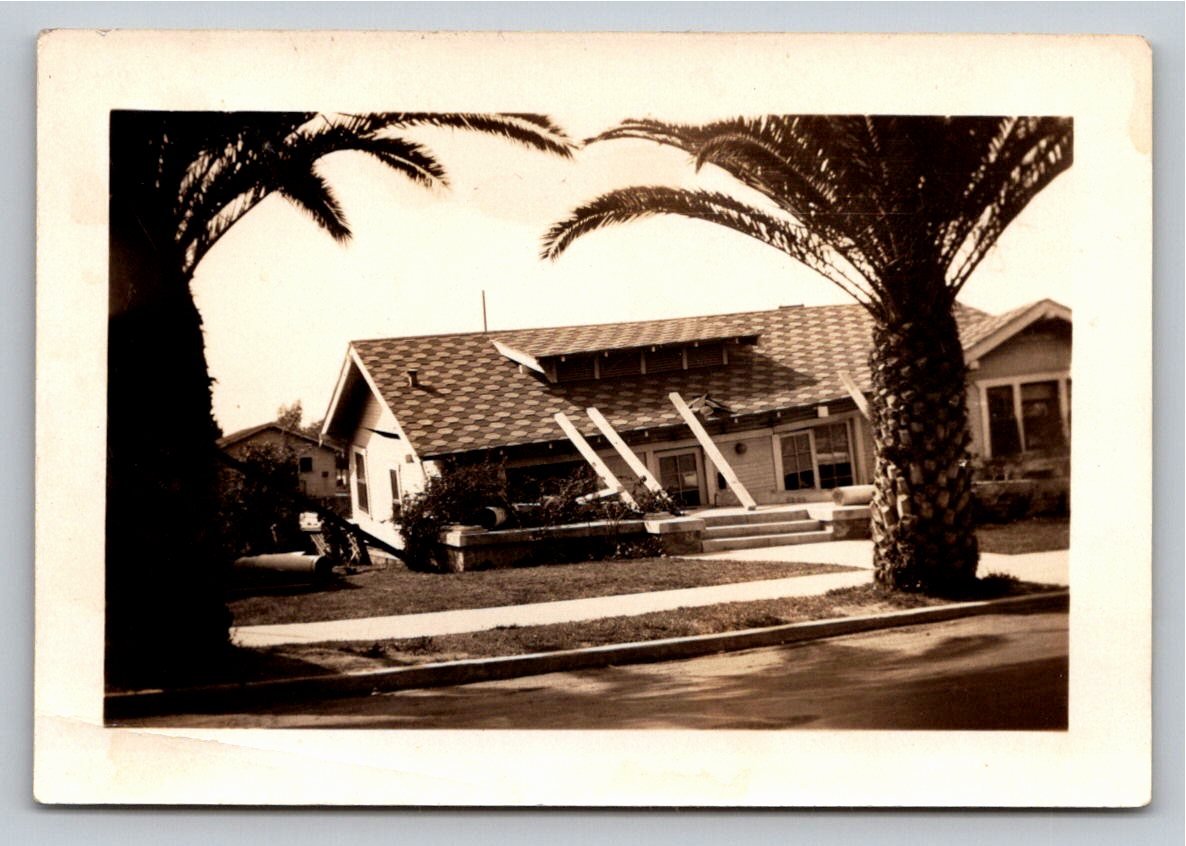
1933 Long Beach CA Earthquake Damage Temple St Photo
📸 Click any thumbnail to inspect Front, Back & Angles (2 Photos)
🔗 Embed / Cite This Archival Image (Free with Attribution)Get HTML Code
© USA RESELL. Bloggers, historians, and website owners may embed this image for free by copying the HTML code below (which includes the required credit link back to this page):
USA RESELL is a living historical archive. Because original artifacts are one-of-a-kind and source records change rapidly, use the button above to check live marketplace availability or locate surviving examples. As an eBay Partner, we may earn a commission on qualifying purchases.
Item Specifications
- City: Long Beach
- State: California
- Country: United States
- Era: 1930s
- Subject: 1933 Long Beach Earthquake Disaster Damage House Architecture
- Theme: Disaster and Historical Events
- Category: Vintage Photography
- Format / Type: Vintage Photographs
Historical Context & Overview
Visual & Historical Overview
This original black-and-white gelatin silver snapshot offers a stark, candid perspective on the immediate aftermath of the devastating March 10, 1933 earthquake in Long Beach, California. Framed prominently by two mature, towering palm trees, the photo depicts a residential Craftsman-style house situated along Temple Avenue. The violent ground motion displaced the building off its foundation, leaving it tilted at an precarious angle. Heavy wooden shoring props are visible along the exterior wall, engineered to stabilize the roof line and prevent total structural collapse.
The contrast of typical Southern California suburban architecture framed by idyllic flora against severe disaster recovery efforts creates a poignant visual dynamic. Captured during the height of the Great Depression, images like this document not only the physical Destruction wrought by sudden natural hazards but also the rapid, community-driven emergency stabilization measures enacted across Los Angeles County immediately following the temblor.
The 1933 Long Beach Earthquake & Structural Impact
Occurring along the Newport-Inglewood fault zone, the magnitude 6.4 Long Beach earthquake struck during late afternoon, resulting in over 120 fatalities and causing millions of dollars in localized property damage. The catastrophe highlighted critical vulnerabilities in unreinforced masonry and residential timber framing that lacked adequate structural anchorage to concrete footings. In response, California legislators enacted the historic Field Act and Riley Act, forever altering state building codes and seismic construction requirements.
The handwritten blue ink inscription on the reverse side explicitly pinpoints the exact location of this image: "A house on Temple St. near 10th -11th after the 1933 earthquake in Long Beach." Alongside the handwriting is an inverted alphanumeric stamp code ("A38"), typical of period commercial photo finishing labs or personal filing archives. Such precise contemporary notations make this artifact a vital historical document for regional researchers studying early 20th-century disaster response in Southern California.
Format, Paper & Collector Significance
Measuring approximately 3.7 by 2.5 inches, this authentic vintage snapshot was developed using standard gelatin silver techniques on matte snapshot paper stock. The photograph presents strong focal clarity, deep dark tones, and crisp highlight details throughout the shored facade, tiled roof, and surrounding foliage, capturing the texture of the damaged dwelling with impressive precision.
Preserved in solid archival condition, the print displays modest signs of age including faint edge wear, subtle corner softening, and natural paper toning on the reverse that does not interfere with the primary view. Original disaster photo ephemera from the 1930s remains highly sought after by California history enthusiasts, paper ephemera collectors, and architectural historians alike.