1944 WWII Soldier & Family Bus Station Farewell Photo
📸 Click any thumbnail to inspect Front, Back & Angles (2 Photos)
🔗 Embed / Cite This Archival Image (Free with Attribution)Get HTML Code
© USA RESELL. Bloggers, historians, and website owners may embed this image for free by copying the HTML code below (which includes the required credit link back to this page):
USA RESELL is a living historical archive. Because original artifacts are one-of-a-kind and source records change rapidly, use the button above to check live marketplace availability or locate surviving examples. As an eBay Partner, we may earn a commission on qualifying purchases.
Item Specifications
- Type: Photograph
- Original/Licensed Reprint: Original
- Image Color: Black and White
- Production Technique: Gelatin-Silver Print
- Theme: Militaria
- Subject: WWII Soldier Family Bus Station
- Category: Vintage Photography
- Format / Type: Snapshots
Historical Context & Overview
Visual & Historical Overview: Wartime Partings on the Home Front
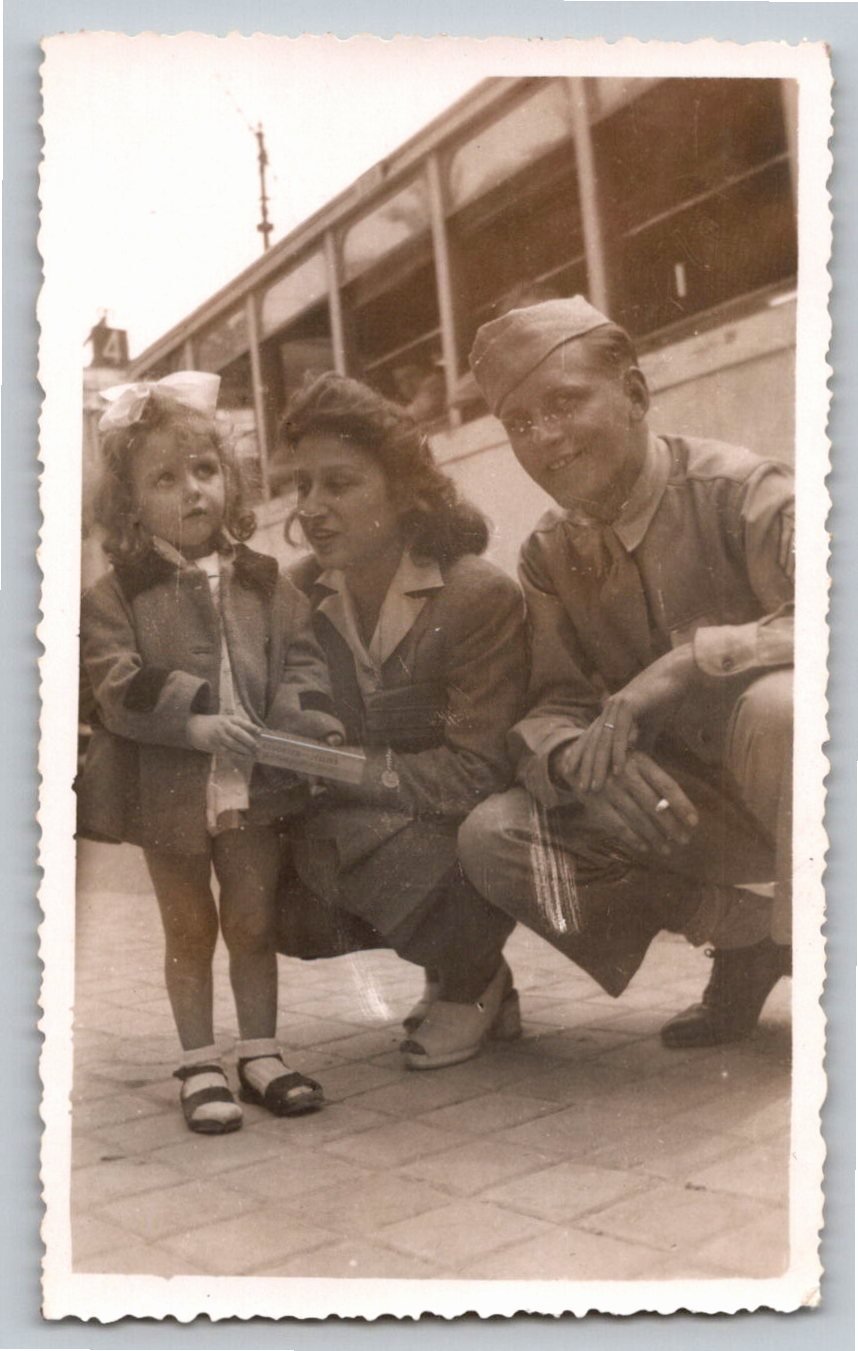
This evocative original gelatin silver snapshot captures an intimate glimpse of American life during the height of the Second World War. Centered in the frame is a young serviceman dressed in standard summer service attire, complete with a side-tilted garrison cap, kneeling beside a fashionable woman and a young girl holding a travel ticket or small keepsake box. Set on a paved loading apron beside a municipal passenger coach or intercity bus clearly marked with bay number four, the scene preserves the quiet emotion of departure as troops transited across the country to training centers, embarkation staging areas, or fleeting leaves with loved ones.
The visual details ground the print squarely in mid-1940s Americana. The serviceman holds a lit cigarette casually between his fingers while flashing a warm, brave smile for the lens, masking the uncertainty that accompanied every wartime parting. Beside him, the woman’s victory rolls, sharp tailored lapels, and open-toed platform slingback wedge shoes epitomize civilian style of the home front. Meanwhile, the toddler stands politely in Mary Jane shoes and an oversized bow, looking inquisitively off-camera as her mother guides her hand, encapsulating the domestic sacrifice felt across millions of households during the war.
Transit Hubs and the Mechanics of Mobilization
During World War II, bus terminals, train depots, and transit hubs served as pivotal crossroads for military personnel and their families. With gasoline and tire rationing strictly enforced, bus transit lines such as Greyhound, Trailways, and local municipal carriers handled record volumes of passenger traffic. Servicemen navigating furloughs or redeployments often traveled via commercial coach, making depot platforms common backdrops for tender reunions and bittersweet farewells. Snapshots like this document the daily friction and emotional resilience required of civilians and soldiers alike.
Vernacular snapshots taken outside professional photography studios remain some of the most reliable primary visual records of everyday wartime dress and demeanor. Because amateur cameras captured spontaneous, unposed gestures, they offer candid insights into posture, clothing fit, and subtle interpersonal bonds that official War Department photo releases rarely showcased. The unstudied dynamic among the trio conveys tenderness and stoicism, serving as a microcosm of the millions who gathered at departures nationwide before loved ones boarded buses bound for military bases.
Material Format, Physical Condition, and Archival Value
Measuring approximately 2.6 inches by 4.2 inches, this original vintage print is executed on classic mid-century silver gelatin photographic paper. The image is framed by authentic deckled, scalloped borders produced by mechanical trimming shears popular in commercial photo developing laboratories throughout the 1930s and 1940s. The exposure exhibits rich sepia-toned warmth, excellent contrast, and sharp mid-tone clarity, retaining fine textures on the coach's windows, clothing weaves, and pavement bricks.
Preserved in strong vintage condition, the print shows only subtle surface age patina and gentle corner handling consistent with private family album keeping. The reverse side remains blank and free of major creasing, adhesive residue, or paper thinning, preserving its original structural integrity. For collectors of World War II military ephemera, vernacular photography, and American social history, this genuine 1944 photograph stands as an emotionally powerful, authentic testament to personal sacrifice during a defining global conflict.