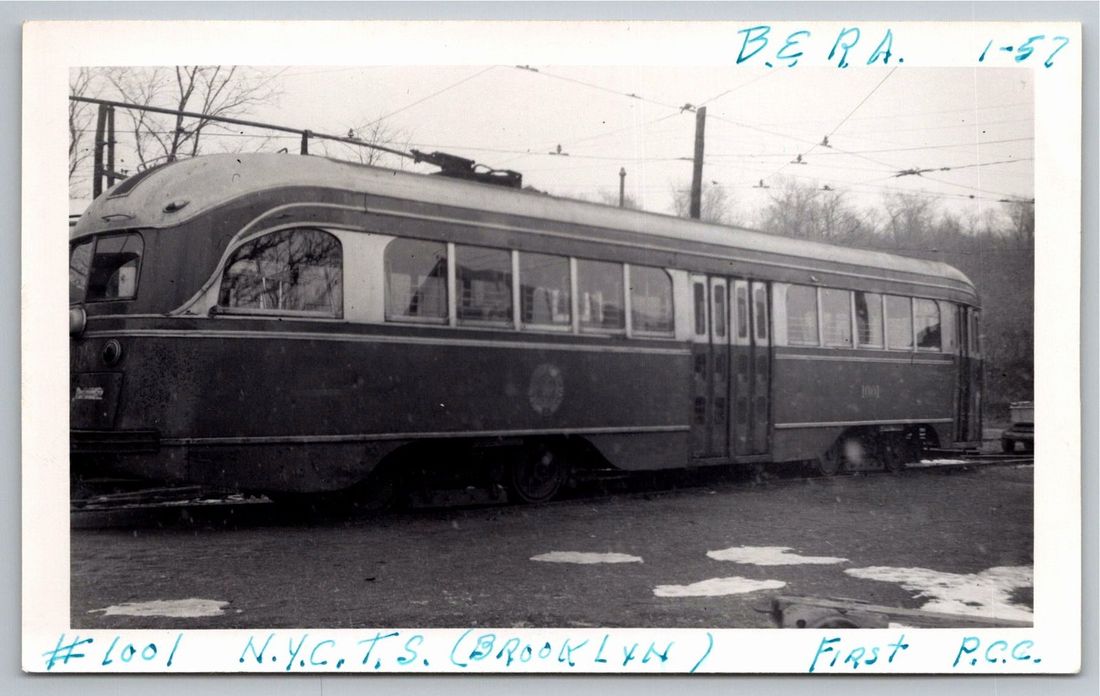
1957 Brooklyn NYCTS PCC Streetcar #1001 Trolley Photo Print
📸 Click any thumbnail to inspect Front, Back & Angles (2 Photos)
🔗 Embed / Cite This Archival Image (Free with Attribution)Get HTML Code
© USA RESELL. Bloggers, historians, and website owners may embed this image for free by copying the HTML code below (which includes the required credit link back to this page):
USA RESELL is a living historical archive. Because original artifacts are one-of-a-kind and source records change rapidly, use the button above to check live marketplace availability or locate surviving examples. As an eBay Partner, we may earn a commission on qualifying purchases.
Item Specifications
- City: Brooklyn
- State: New York
- Country: United States
- Era: 1950s
- Subject: Streetcar Trolley NYCTS PCC Car #1001
- Theme: Transportation Rail Transport Americana
- Category: Vintage Photography
- Format / Type: Vintage Photographs
Historical Context & Overview
A Monumental Chapter in New York City Transit History
In the mid-1930s, municipal transit authorities across North America sought a revolutionary solution to modernizing urban rail networks. The answer emerged through the Presidents' Conference Committee (PCC), which standardized an aerodynamic, streamlined streetcar featuring quiet electric propulsion and remarkably smooth acceleration. Among these ground-breaking vehicles, unit #1001 held a singular status: it was the very first production PCC streetcar delivered to Brooklyn, New York, in 1936.
Operating under the Brooklyn & Queens Transit Corporation and later the New York City Transit System (NYCTS), PCC car #1001 traversed Brooklyn's extensive trolley lines for two decades. Following the final abandonment of Brooklyn streetcar operations in 1956, this pivotal vehicle was saved from the scrap heap and secured for long-term preservation by the Branford Electric Railway Association (BERA) in Connecticut.
Detailed Visual Overview & Photographic Provenance
Captured in January 1957 by noted transport photographer and collector Edward G. Schimke of Hartford, Connecticut, this authentic gelatin-silver print documents car #1001 shortly after its arrival at BERA. The photograph clearly highlights the car's Art Deco-inspired streamlined profile, Clark trucks, folding center doors, and overhead trolley pole assembly resting beneath overhead wire infrastructure.
The original glossy single-weight paper print measures approximately 5.7 by 3.5 inches and exhibits crisp tonal contrast with sharp focus throughout. The front border bears period blue ink annotations stating "#1001 N.Y.C.T.S. (BROOKLYN) FIRST P.C.C." alongside "B.E.R.A. 1-57". The reverse features clean typewritten provenance explaining its history, a blue hand-stamped inventory code "0928", and the official photographer back stamp of Edw. G. Schimke.
Collector Significance
Original mid-century transit prints documenting pioneer PCC units remain highly sought after by rail transport historians and New York City archivists. Because #1001 represents the flagship model for Brooklyn's modernized street railway fleet, this vintage 1957 photograph stands as a vital primary-source document of early American electric railway preservation.
The Gelatin-Silver Medium & Darkroom Craftsmanship
Beyond its transit significance, this image exemplifies mid-century transportation darkroom photography. Captured on classic gelatin-silver single-weight glossy paper, the print displays remarkable tonal depth, capturing fine reflections off the car's curved metallic shell, crisp shadows around the Clark trucks, and intricate details of the trolley pole assembly. Rail enthusiasts of the 1950s, such as Edward G. Schimke, often developed and annotated their prints meticulously, transforming casual trackside photography into enduring archival documentation. The crisp image contrast and absence of chemical fading reflect both careful original darkroom processing and conscientious handling across the past seven decades.
Archival Preservation & Heritage Value
For contemporary collectors of vintage rail ephemera, maintaining the physical integrity of mid-century single-weight paper prints is essential. To safeguard the glossy emulsion layer and preserve the clear hand-written and typed annotations on the reverse, conservators recommend housing such original photographs in archival-grade, acid-free polypropylene sleeves away from direct ultraviolet light and fluctuating humidity. When properly protected, historical transportation prints featuring landmark municipal equipment—particularly pioneer units like Brooklyn's car #1001—serve as museum-quality artifacts that bridge early twentieth-century urban rail engineering with the birth of American transit preservation.