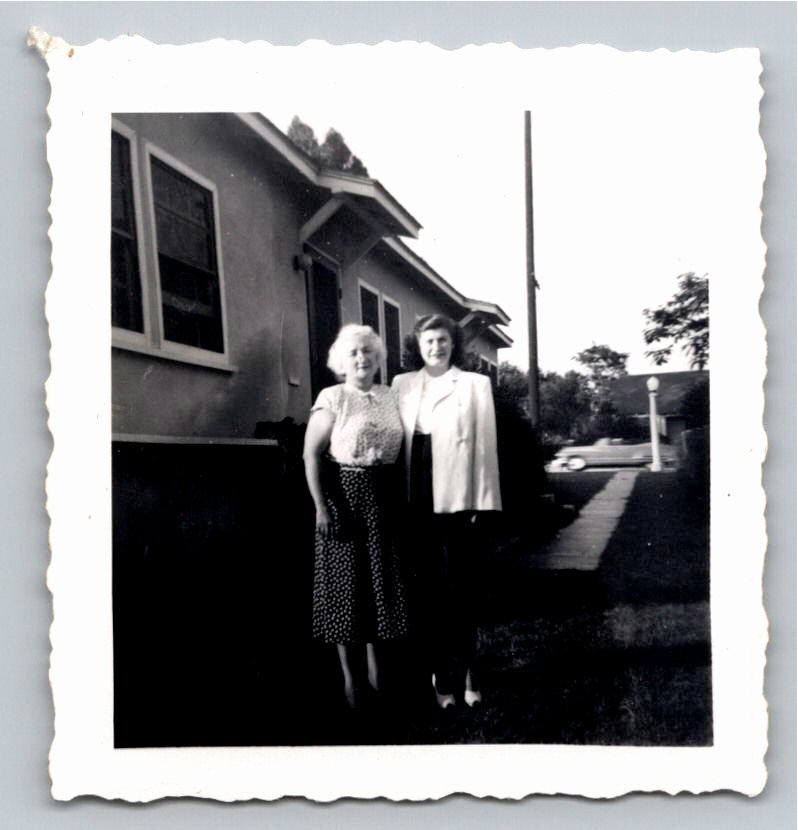
1940s Women Fashion House Convertible Car Vintage Photo
📸 Click any thumbnail to inspect Front, Back & Angles (2 Photos)
🔗 Embed / Cite This Archival Image (Free with Attribution)Get HTML Code
© USA RESELL. Bloggers, historians, and website owners may embed this image for free by copying the HTML code below (which includes the required credit link back to this page):
USA RESELL is a living historical archive. Because original artifacts are one-of-a-kind and source records change rapidly, use the button above to check live marketplace availability or locate surviving examples. As an eBay Partner, we may earn a commission on qualifying purchases.
Item Specifications
- City: Unspecified
- Country: United States
- Era: 1940s
- Subject: Women Fashion Classic Car
- Theme: Americana
- Time Period Manufactured: 1940-1949
- Category: Vintage Photography
- Format / Type: Snapshots
Historical Context & Overview
Visual & Historical Overview: Postwar Domestic Charm
This authentic 1940s silver gelatin snapshot provides an intimate window into everyday mid-century American life. Framed along a manicured residential walkway, two women pose close together in front of a stucco home with deep eaves and craftsman-style window casings. The younger woman stands poised in a sharply tailored, light-colored double-breasted blazer draped gracefully over dark bottoms, complemented by sculpted victory roll hair that epitomized the feminine style of the late World War II and immediate postwar era. Beside her, an elder matriarch radiates warmth in a patterned polka-dot dress with softly curled hair, reflecting classic domestic poise.
Beyond the primary subjects, the composition reveals evocative suburban iconography of the late 1940s. Parked curbside under the canopy of neighborhood trees is a classic early postwar convertible or coupe, its gleaming chrome accents softly blurred in the ambient background. A slender vintage light post accents the curb line along a straight concrete sidewalk, completing an idyllic snapshot of domestic peace during an era marked by suburban expansion, burgeoning automotive culture, and family-centered stability.
Mid-Century Photofinishing and Domestic Snapshots
Amateur photography flourished in the United States following the end of wartime materials rationing, giving rise to millions of personal keepsakes processed by commercial corner drugstores and neighborhood photo labs. This specific artifact displays classic deckled, or scalloped, white borders. These decorative die-cut edges were widely popularized by commercial photo-finishing equipment during the 1940s and early 1950s, lending vernacular snapshots a polished, album-ready presentation that distinguished them from simple straight-cut prints.
The reverse side of the print features clean, unprinted photographic paper bearing a simple machine-applied processing control number: "826". In mid-century commercial darkrooms, such alphanumeric ink stamps were routinely applied to batch-track roll films and matching negative strips through chemical development tanks. Free of commercial logos or advertising, this minimalist stamp confirms its origin as an authentic, privately taken household moment rather than a mass-market reproduction or promotional still.
Physical Condition, Technical Specifications & Collector Value
Measuring approximately 2.4 by 2.5 inches, this square-format snapshot was likely exposed using popular medium-format roll film such as 127 or 620 on a standard Kodak Brownie or similar box camera. Printed on traditional fiber-based photographic paper with a glossy gelatin silver emulsion, the image exhibits remarkable tonal depth, maintaining rich velvety blacks in the shadowed foundation of the house alongside crisp highlights across the tailored white coat.
The print remains in very good vintage condition, exhibiting honest age-appropriate toning along the scalloped margins. A tiny, minor nick is visible along the upper border, while the focal plane itself remains entirely free of distracting creases, bends, or chemical staining. For collectors of mid-century fashion history, automotive Americana, and vernacular photography, this snapshot stands as a pristine, tangible artifact of postwar family heritage.