1912 Southport Toastrack Tram 69 Promenade Photo Britain
📸 Click any thumbnail to inspect Front, Back & Angles (2 Photos)
🔗 Embed / Cite This Archival Image (Free with Attribution)Get HTML Code
© USA RESELL. Bloggers, historians, and website owners may embed this image for free by copying the HTML code below (which includes the required credit link back to this page):
USA RESELL is a living historical archive. Because original artifacts are one-of-a-kind and source records change rapidly, use the button above to check live marketplace availability or locate surviving examples. As an eBay Partner, we may earn a commission on qualifying purchases.
Item Specifications
- City: Southport
- State: Unspecified
- Country: United Kingdom
- Era: 1910-1919
- Subject: Streetcar Tram Transportation Circular Tour
- Theme: Transportation Regional History Leisure
- Category: Vintage Photography
- Format / Type: Vintage Photographs
Historical Context & Overview
Edwardian Seaside Transit: The Southport Toastrack Tram
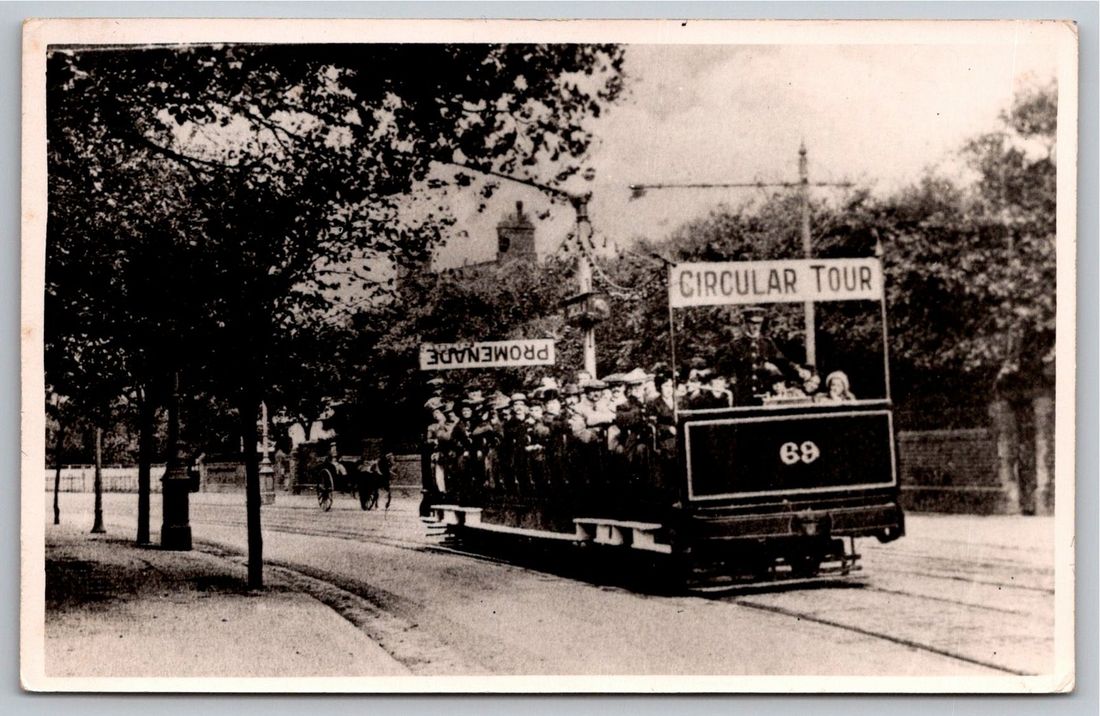
This original vintage snapshot captures a vibrant moment from 1912 featuring electric Tram Car 69 along the famed Promenade in Southport, England. Designed specifically for seaside resort leisure, open-sided "toastrack" streetcars offered passengers unobstructed views of coastal boulevards, serving as both popular municipal transportation and scenic circular tour attractions for holidaymakers during the Edwardian period.
Visual Details & Historical Context
The image shows Tram 69 packed with passengers dressed in classic early 20th-century attire, including flat caps, heavy overcoats, and wide-brimmed bonnets. Overhead banners reading "PROMENADE" and "CIRCULAR TOUR" highlight the car's intended route along Southport's waterfront. In the background, a horse-drawn carriage travels along the tree-lined avenue, illustrating the transitional era of urban transit when electric tramways operated alongside traditional horse-drawn vehicles.
Collector Value & Archival Authenticity
Measuring approximately 5.5 by 3.5 inches, this authentic vintage photograph is printed on period photo paper stock with a glossy finish. The reverse side remains blank of photograph formatting, featuring only handwritten archival collection marks that confirm its origin as an authentic photographic snapshot print. The image retains sharp contrast and remarkable clarity, preserving fine details of the tram's wooden bodywork and iron rails for municipal transit historians and British regional heritage collectors.
The Golden Age of British Seaside Tramways
The adoption of open-style toastrack trams represented a major innovation for early 20th-century British coastal resort towns like Southport and Blackpool. Electrified via overhead trolley poles, these specialized municipal streetcars operated efficiently across mixed-traffic urban street tracks, providing fresh sea air and unobstructed views for summer holidaymakers. Tram Car 69 illustrates how local transport authorities leveraged electric infrastructure to turn standard municipal transit into an exhilarating leisure amenity, shaping the visual identity of Edwardian promenade culture.
Archival Markings & Collector Appeal
Physical inspection of this original photographic print reveals distinct archival details that reinforce its historical authenticity. The reverse side of the clean paper stock features specific vintage cataloging notations, including "SOUTHPORT" written in blue ink alongside the inventory number "3445" in red marker. Exhibiting only mild handling wear typical of period photography, the print retains crisp structural clarity that exposes fine details, from the iron wheel assemblies and track rails to the subtle wood grain of the tramcar's bench framing.
For rail transportation historians, municipal transit archivists, and regional British history enthusiasts, authentic candid snapshots from this transitional era provide vital primary-source documentation. Rather than relying on commercial studio artwork, this artifact offers an unposed glimpse into everyday Edwardian leisure and early electric vehicle technology. Its strong contrast and historical integrity ensure it remains a prized piece for specialized transit collections and municipal heritage archives.